
Foot & Ankle Pain Treatment in Hayes, West London
Whether pain or stiffness is affecting walking, running, sport or simply being on your feet, treatment is tailored to help you get out of pain, restore comfortable movement and get back to the activities that matter to you.
Foot and ankle pain can make everyday activities surprisingly difficult - walking, standing, climbing stairs, exercising or simply spending longer periods on your feet. Symptoms may develop gradually over time or begin more suddenly following a sporting injury, fall, twist or increase in activity.
Pain may be felt around the heel, Achilles tendon, ankle, arch, ball of the foot or toes, sometimes alongside stiffness, swelling, weakness, numbness or tingling.
Who you'll see
You'll be seen by Arjun Mehra, dual-qualified osteopath and chartered physiotherapist. Your treatment and rehabilitation come from the same person, start to finish, with over a decade of experience helping people reduce pain and stay active.
Appointments usually available within 48 hours, Monday - Thursday.
The Painful Foot & Ankle
Foot and ankle pain can be felt in different areas depending on what is contributing to your symptoms. Heel pain, Achilles pain, pain around the ankle, arch or forefoot can each behave differently and become noticeable during different movements or activities.
Some symptoms develop with repeated loading or an increase in activity, while others follow a more obvious injury such as an ankle sprain.
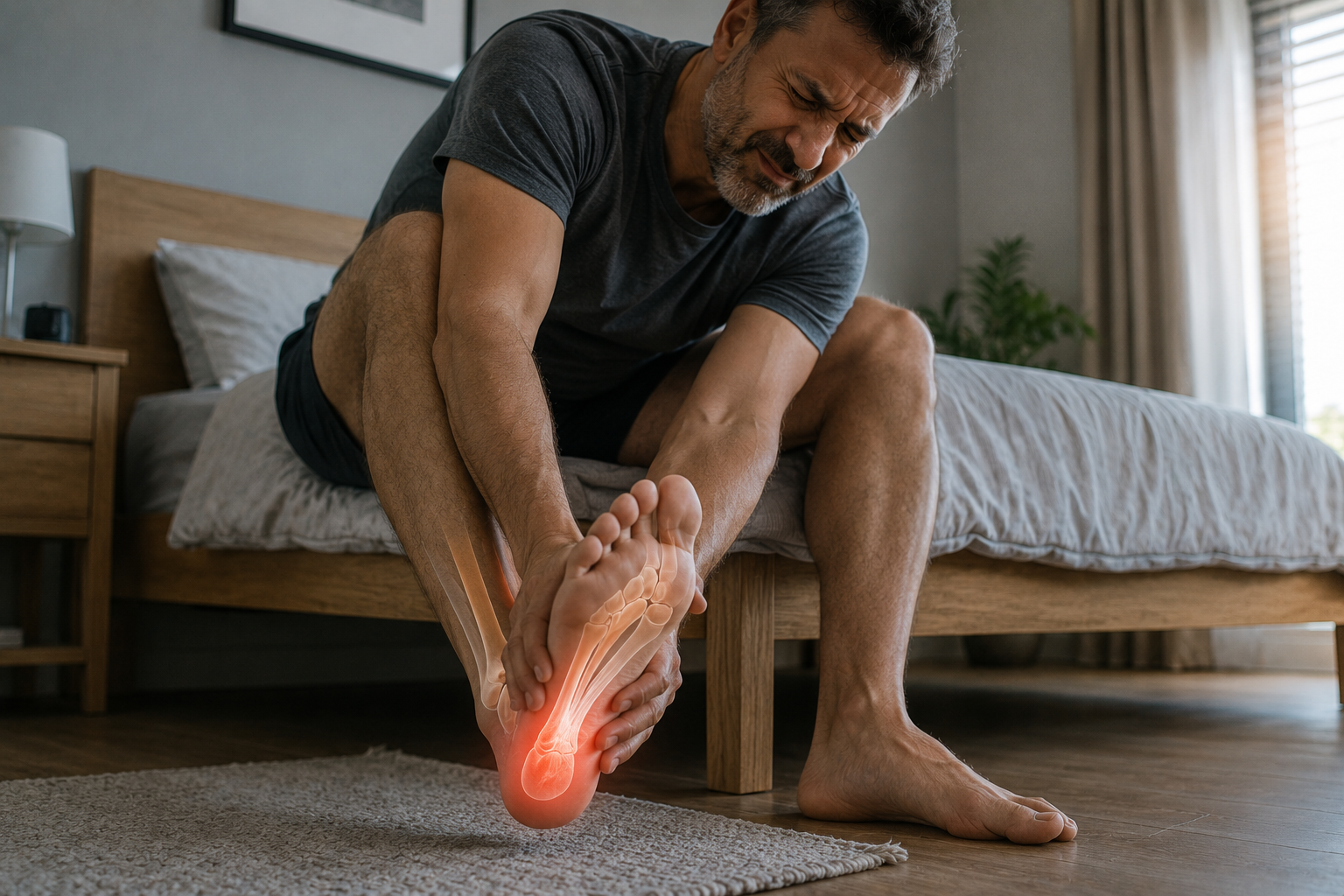
You may notice:
Heel pain when walking or standing
Pain around the Achilles tendon
Pain during or after running and exercise
Pain around the ankle following a twist or sprain
Pain in the ball of the foot or toes
Pain after spending longer periods on your feet
Heel & Arch Pain
Plantar Fasciitis (Plantar Heel Pain)
Plantar fasciitis, also commonly described as plantar heel pain, causes pain around the underside of the heel and sometimes into the arch of the foot. Symptoms may develop gradually, particularly following changes in walking, running or time spent on your feet.
Pain is often most noticeable with the first few steps in the morning or after sitting for a while, before easing as you start moving. Longer periods of standing, walking or exercise may cause symptoms to build again.
For persistent plantar fasciitis, you can also read more about our Shockwave Therapy service.
Achilles Tendinopathy
Achilles tendinopathy commonly causes pain and stiffness around the Achilles tendon at the back of the ankle or heel. Symptoms often develop gradually following repeated loading or an increase in walking, running, jumping or training volume.
Pain and stiffness may be more noticeable first thing in the morning, after rest or during the early stages of exercise, and symptoms can sometimes increase again after activity.
For persistent Achilles tendinopathy, you can also read more about our Shockwave Therapy service.
Outer Ankle Pain
Lateral Ankle Sprain
Lateral ankle sprains commonly occur when the foot rolls inwards, overstretching or injuring the ligaments on the outside of the ankle. Pain, swelling and bruising may develop around the outer ankle, making walking, running or changing direction uncomfortable.
Symptoms can vary considerably depending on the severity of the sprain, and some people are left with ongoing stiffness, weakness or a feeling of instability after the initial injury has settled.
Peroneal Tendinopathy
The peroneal tendons run behind the outside of the ankle and help support and control the foot during walking, running and changes of direction. Peroneal tendinopathy can cause pain or tenderness around the outer ankle, sometimes extending along the outside of the foot.
Symptoms may become more noticeable during running, walking on uneven ground or after longer periods of activity, particularly following an increase or change in training.
Inner Ankle & Shin Pain
Tibialis Posterior Tendinopathy
The tibialis posterior tendon runs along the inside of the ankle and plays an important role in supporting the arch of the foot during walking. Tibialis posterior tendinopathy can cause pain or tenderness around the inner ankle and arch, particularly during walking, running or prolonged periods on your feet.
Some people may also notice changes in the shape or height of the arch as symptoms progress.
Medial Ankle Sprain (Deltoid Ligament)
Medial ankle sprains affect the deltoid ligament on the inside of the ankle. They are less common than lateral ankle sprains and can occur when the ankle is forced outwards or during a more significant twisting injury.
Symptoms may include pain, tenderness and swelling around the inside of the ankle, particularly during walking, running or changing direction.
Shin Splints (Medial Tibial Stress Syndrome)
Shin splints, also known as medial tibial stress syndrome, typically cause pain and tenderness along the inner border of the shin bone (tibia). Symptoms commonly develop following an increase in running, walking or training load.
Pain may initially be noticeable during exercise and settle with rest, but can become more persistent if activity continues to aggravate the area.
Toe Pain
Hallux Valgus (Bunion)
A bunion (hallux valgus) develops when the big toe gradually shifts towards the smaller toes, creating a prominent bump on the inside of the foot. This can cause pain, swelling or irritation around the base of the big toe, particularly when walking or wearing certain shoes.
Hallux Rigidus
Hallux rigidus causes stiffness and reduced movement at the big toe joint, often associated with osteoarthritis within the joint. This can cause pain and restriction when pushing off during walking or running, climbing stairs or bending the big toe.
Bone Stress Injuries & Stress Fractures
Stress Fractures
Bone stress injuries can develop when repeated loading exceeds the bone's ability to recover, commonly following an increase in running, sport or training. Pain is often localised to a particular area of the foot or ankle and may initially occur during activity before becoming more persistent.
More advanced bone stress injuries can develop into a stress fracture and may require further investigation or imaging.
The Stiff Foot & Ankle
Foot or ankle stiffness can develop gradually over time or become noticeable following an injury, surgery or period of reduced activity. You may find the ankle, foot or toes don't move as comfortably as they used to, making everyday activities more difficult.
Stiffness can be particularly noticeable first thing in the morning, after sitting or when you first start moving, and may affect walking, stairs, squatting, running or getting out for a longer walk.

You may notice:
Difficulty moving the ankle up or down
Stiffness first thing in the morning
Difficulty squatting
Reduced movement in the big toe
Feeling like the ankle doesn't move as freely as it used to
Stiffness following a previous injury or surgery
Ankle Osteoarthritis
Ankle osteoarthritis can cause pain, stiffness and reduced movement within the joint. Stiffness may be particularly noticeable first thing in the morning or after periods of rest, while walking, stairs, squatting or spending longer periods on your feet can become uncomfortable.
Some people also notice a gradual reduction in how freely the ankle moves over time.
Reduced Foot & Ankle Mobility
Not all foot or ankle stiffness is caused by arthritis or structural changes within the joints. Previous ankle sprains, periods of reduced activity or reduced movement can contribute to an ankle or foot that doesn't move as freely as it once did.
This may become noticeable during squatting, running, walking on uneven ground or going down stairs, sometimes with relatively little pain.
Hallux Rigidus
Hallux rigidus can cause stiffness and reduced movement at the big toe joint, particularly when bending the toe upwards. This can make it more difficult to push off through the foot during walking or running, and may also affect lunging, climbing stairs or other movements that require the big toe to bend.
Numbness, Tingling & Burning
Burning pain, tingling, numbness or altered sensation around the foot and ankle can occur when a nerve becomes irritated or compressed. Symptoms may be felt around the ankle, across the foot or into the toes, depending on the nerve involved.
Sometimes the source is within the foot or ankle itself, while in other cases symptoms can originate from nerves further up the leg or from the lower back.
More widespread or persistent numbness, tingling or burning in the feet can also occur with peripheral neuropathy, which may be associated with conditions such as diabetes, vitamin deficiencies, certain medications or other medical conditions.
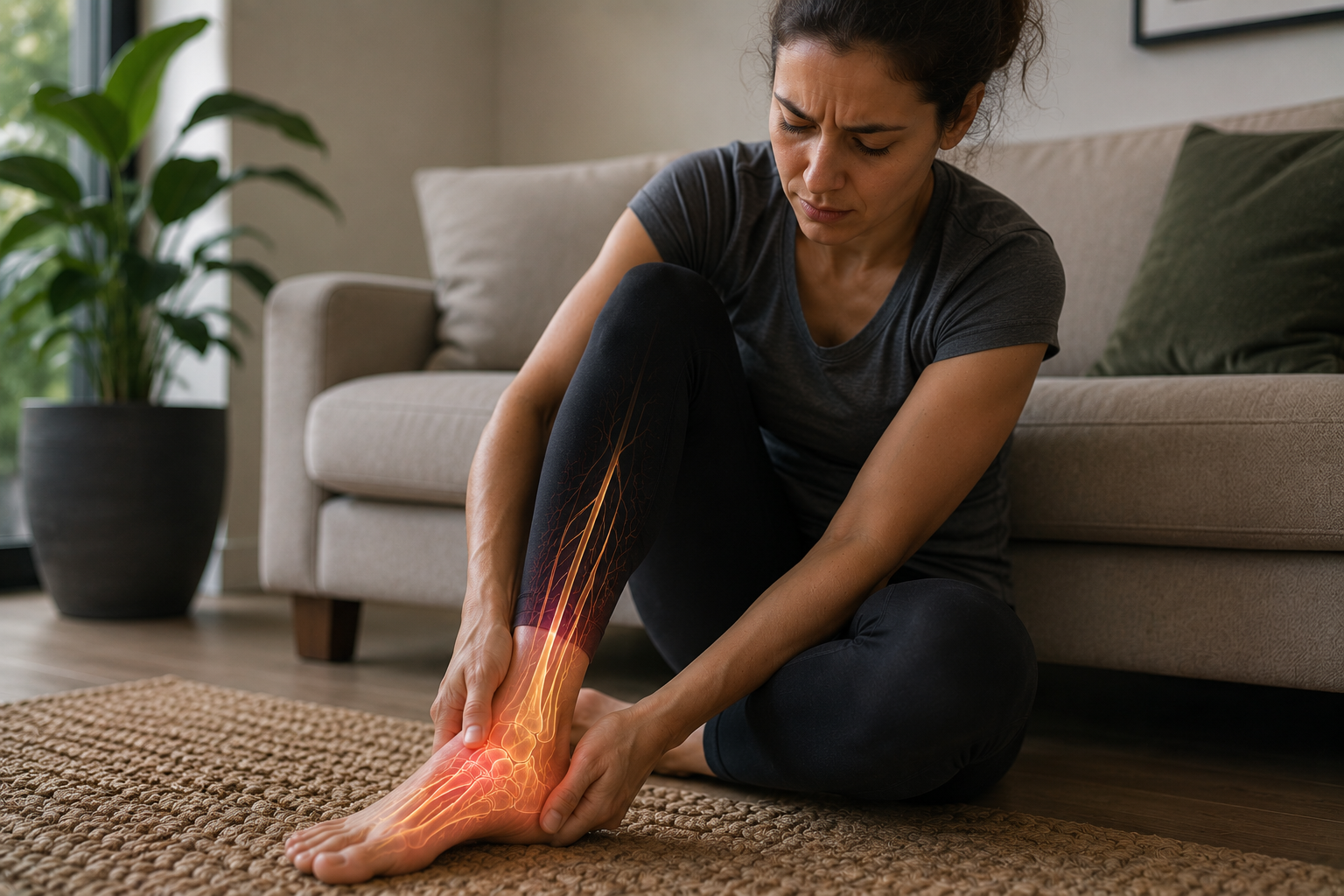
You may notice:
Burning pain in the foot or toes
Tingling or numbness
Altered sensation around the foot or ankle
A feeling of walking on a pebble or folded sock
Pain that travels into the foot or lower leg
Weakness affecting the foot or ankle
Morton's Neuroma (Forefoot)
Morton’s neuroma commonly causes burning pain, tingling or numbness in the forefoot, most often between the third and fourth toes. Some people describe the sensation as walking on a pebble or having a folded sock inside their shoe, and symptoms may become more noticeable when walking or wearing tighter footwear.
Tarsal Tunnel Syndrome (Inside of the Ankle)
Tarsal tunnel syndrome occurs when the tibial nerve becomes compressed as it passes along the inside of the ankle. It can cause burning pain, tingling or numbness around the inner ankle, heel, arch or sole of the foot, often becoming more noticeable during prolonged standing, walking or exercise.
Common Peroneal Nerve Compression
(Outer Leg & Top of the Foot)
The common peroneal nerve travels around the outside of the knee before continuing into the lower leg. Compression or irritation can cause numbness, tingling or altered sensation over the outer leg and top of the foot. More significant nerve involvement can also cause weakness when lifting the foot or toes.
Referred Symptoms from the Lower Back
Numbness, tingling or pain affecting the foot and ankle doesn't always originate from the foot itself. Irritation of nerves in the lower back can cause symptoms to travel through the buttock or leg and into the foot, sometimes even when there is little or no lower-back pain.
The Unstable Foot & Ankle
If your foot or ankle feels unstable, weak or like it might give way, this can develop following an ankle sprain or other injury affecting the ligaments and surrounding muscles. Some people continue to experience instability even after the initial pain and swelling have settled.
Symptoms can become particularly noticeable when walking on uneven ground, changing direction, running or returning to sport, and repeated episodes can affect confidence in the ankle.
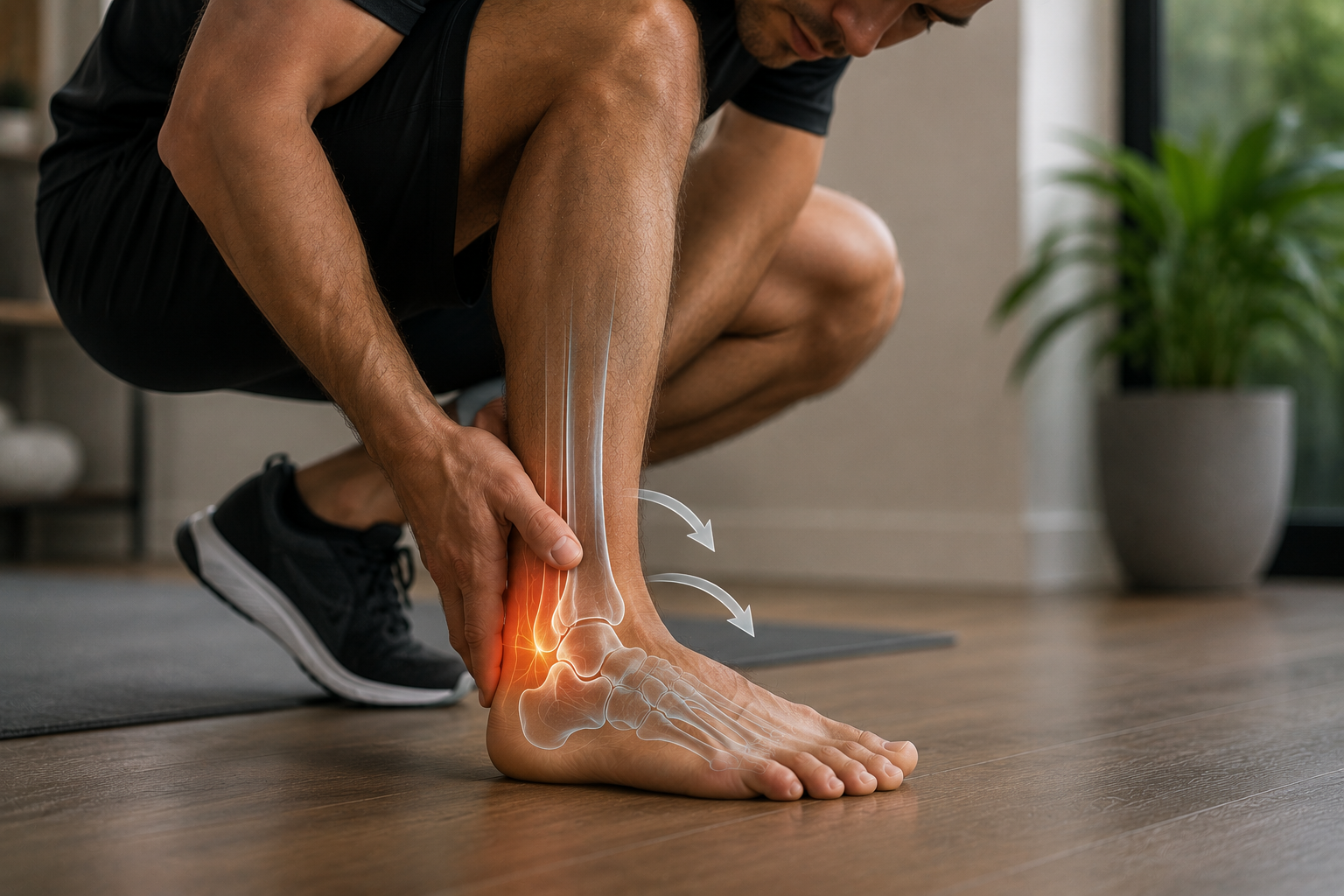
You may notice:
Your ankle repeatedly "giving way"
Recurrent ankle sprains
Feeling unsteady on uneven ground
Reduced confidence walking or running
Difficulty changing direction quickly
Ongoing weakness after a previous ankle injury
Chronic Ankle Instability & Recurrent Sprains
Following an ankle sprain, some people continue to experience repeated giving way, recurrent sprains or a feeling that the ankle can't be trusted, particularly when walking on uneven ground, changing direction or returning to sport.
This can happen when the injured ligaments remain more lax than before, or when strength, balance and proprioception haven't fully recovered. Together, these can leave the ankle feeling less stable and make further sprains more likely.
Syndesmotic (High Ankle) Sprain
A high ankle sprain affects the ligaments connecting the two lower-leg bones just above the ankle. Symptoms commonly follow a twisting injury and can cause pain above the ankle during walking, turning or pushing off. These injuries can take longer to settle than a typical lateral ankle sprain.
Foot & Ankle Pain During Gym & Sport
Feet and ankles tolerate significant force with every step, jump and change of direction, so training volume and how quickly it increases can have a big influence on symptoms. Achilles and heel pain in particular often follow a jump in running mileage, a change in pace or surface, or a return to training after time away.
That doesn't usually mean stopping. Adjusting training volume, temporarily changing which activities you load and gradually rebuilding tolerance can often let you keep training while symptoms settle. Footwear may also be relevant, particularly if symptoms followed a recent change.
Ankle mobility, calf strength, balance and control can also influence how comfortable running, jumping, squatting and changing direction feel.

You may notice:
Pain during running or jumping
Heel pain during or after exercise
Pain with squats, lunges or calf raises
Pain after increasing your training
Pain when changing direction
Reduced confidence returning to sport
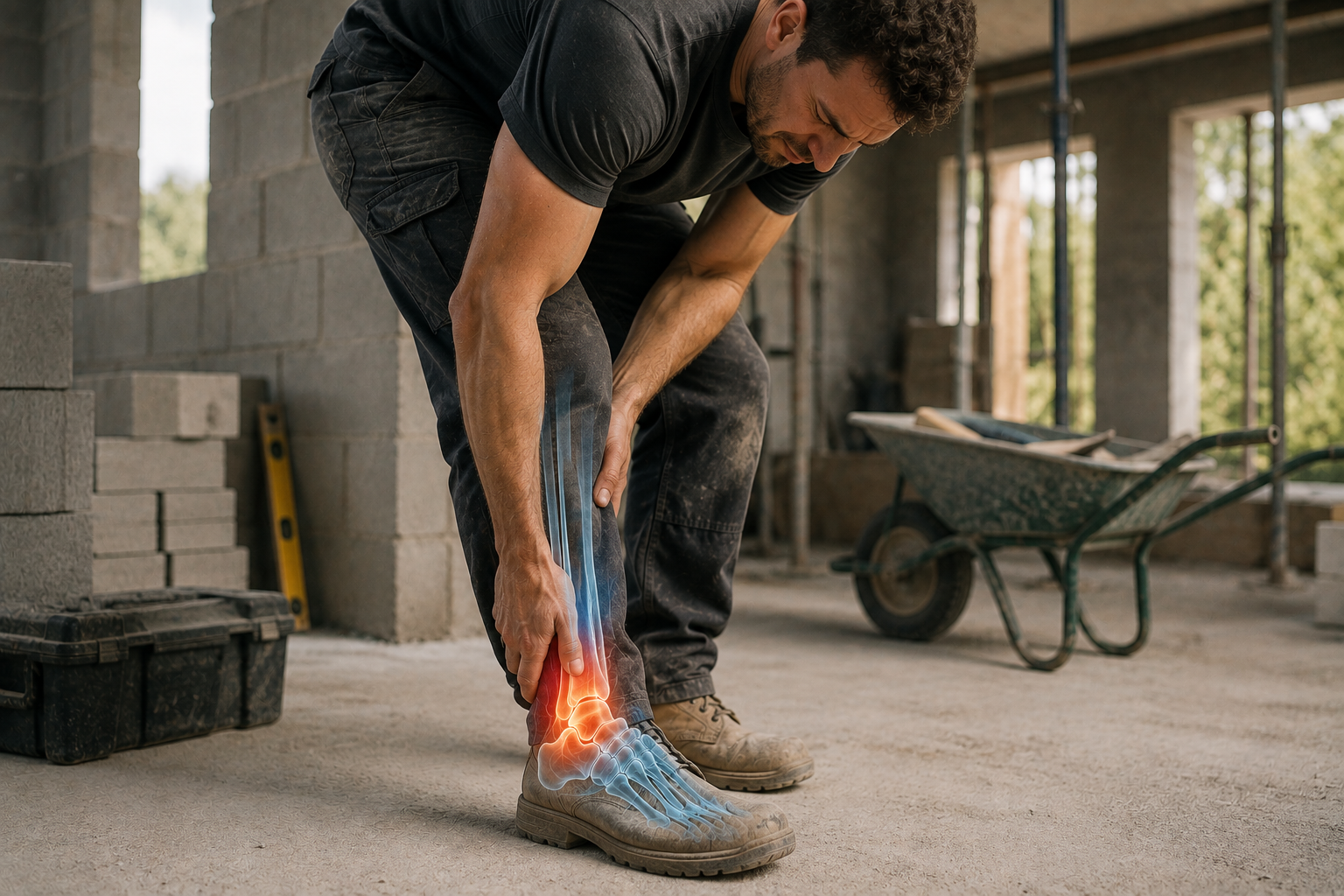
Foot & Ankle Pain at Work
Different jobs place different demands on the feet and ankles, whether you're working at a desk, driving, spending long periods on your feet or doing a physically demanding job. Symptoms can become more noticeable during prolonged standing or walking, or build throughout a particularly busy working day.
For jobs involving lots of time on your feet, prolonged standing, walking, climbing stairs or ladders and repeated lifting or carrying can all increase the demands on the foot and ankle.
Work footwear can also be relevant, particularly if you spend long periods in safety boots or other footwear that feels uncomfortable or places pressure around a painful area.
For desk-based work or driving, symptoms may be more noticeable when first getting up after sitting for longer periods, particularly when the foot or ankle is already stiff or irritated.
You may notice:
Heel pain after standing for long periods
Pain that worsens throughout the day
Stiffness after sitting or driving
Pain climbing ladders or stairs
Discomfort wearing work boots or safety footwear
Difficulty walking comfortably at the end of the day
After Foot & Ankle Surgery
Recovery after foot or ankle surgery varies depending on the type of surgery, stage of recovery and activities you want to return to. Rehabilitation plays an important role in rebuilding movement, strength and confidence as you progress.
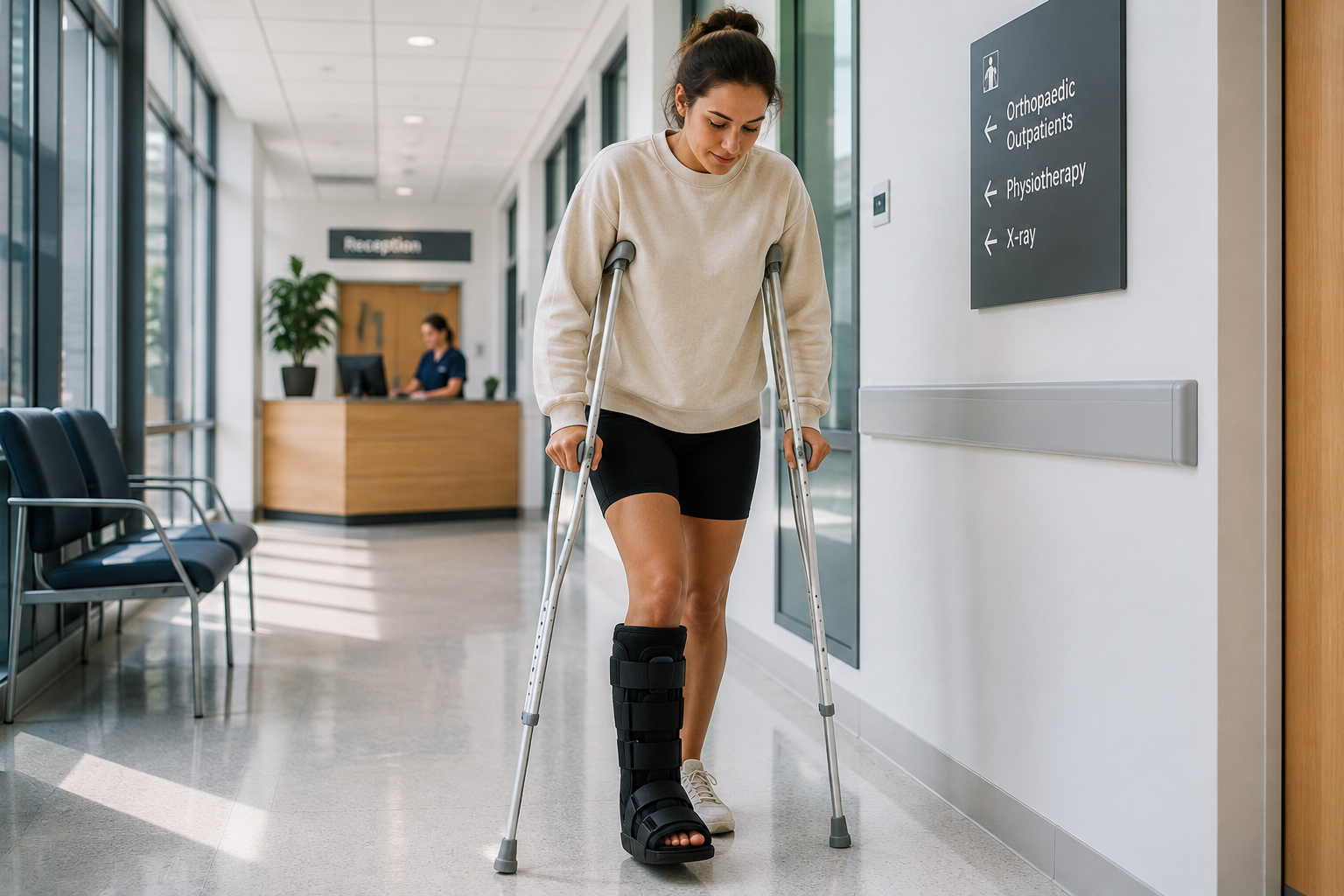
You may benefit from rehabilitation if you're:
Recovering following an Achilles tendon repair
Recovering after bunion surgery
Recovering following tendon or ligament surgery
Recovering following surgery for a fracture
Recovering following an ankle fusion or replacement
Looking to return to work, the gym, sport or everyday activities
Hands-on treatment can help with pain, stiffness and surrounding muscular tightness, alongside rehabilitation to progressively rebuild movement, strength and function. Treatment will be adapted to your procedure and stage of recovery, while working within your surgeon's post-operative guidelines and any restrictions they've provided.
How We Treat Foot & Ankle Pain
Treatment may combine hands-on techniques to help with pain and restricted movement, with exercises to improve mobility, strength and capacity through the foot, ankle and calf.
Your assessment helps guide what you need. We have a broad range of treatment techniques and tools available, allowing treatment to be adapted to you rather than following a set approach. Gradually building strength and tolerance to load is important for many foot and ankle problems, and for some longer-standing conditions, such as Achilles tendinopathy or plantar heel pain, shockwave therapy may also be considered alongside rehabilitation.
What Patients Say
Foot & Ankle FAQs
-
Not always. Many foot and ankle conditions can be diagnosed through a detailed history and physical examination. However, if your symptoms suggest a fracture, significant tendon injury, arthritis or another condition where imaging would influence treatment, I may recommend an X-ray, ultrasound scan or MRI, or refer you to the appropriate healthcare professional.
-
Not necessarily. While some injuries require a period of protection, many foot and ankle conditions improve with the right balance of activity and rest. In many cases, it's possible to modify your exercise or daily activities rather than stopping completely.
-
Recovery depends on the underlying condition, how long you've had symptoms and your individual goals. Some problems settle within a few weeks, while others, particularly tendon injuries or arthritis, may take longer. The aim is to help reduce pain, restore movement and get you back to the activities that matter most as safely and efficiently as possible.
-
If you're unable to put weight through your foot, have significant swelling or deformity following an injury, develop severe pain without an obvious cause, or experience increasing redness, warmth or signs of infection, you should seek prompt medical assessment. If you're unsure, it's always better to have your symptoms assessed.
-
Yes. Osteopathy and physiotherapy can help manage a wide range of foot and ankle conditions through a combination of hands-on treatment, exercise therapy, education and activity modification. Treatment will always be tailored to your symptoms, goals and the underlying cause of your pain.
-
Absolutely. Whether your symptoms developed while running, playing football, training in the gym or simply walking the dog, treatment is tailored to your lifestyle, goals and the demands you place on your feet and ankles.
-
The terms are often used interchangeably. Although "plantar fasciitis" is the name many people are familiar with, "plantar fasciopathy" is the more accurate medical term used to describe the changes that occur within the tissue over time. Regardless of the name, the treatment approach is very similar.
Not Sure What's Causing Your Foot or Ankle Pain?
Foot and ankle pain can have a number of different causes, and you don’t need to know exactly what’s wrong before booking. That’s what the assessment is for.
GET IN TOUCH
Ready to Get Started?
Whether you’re dealing with pain, stiffness, injury, or simply want to move better, we’re here to help. Get in touch and we’ll guide you in the right direction.
☎︎︎ Phone: 0203 773 5310
/ 07983 656 671
✉︎︎ Email: info@jigsawosteopathy.com
⌖︎ Clinic location: 70 Seaton Rd, Hayes, UB3 1NU
➜︎ Directions: View on Google Maps →
◷︎ Opening Hours: By Appointment Only | Monday – Thursday | 9am - 7pm
◎︎ Instagram: @osteo.arj
◉︎ Facebook: Jigsaw Osteopathy Clinic