
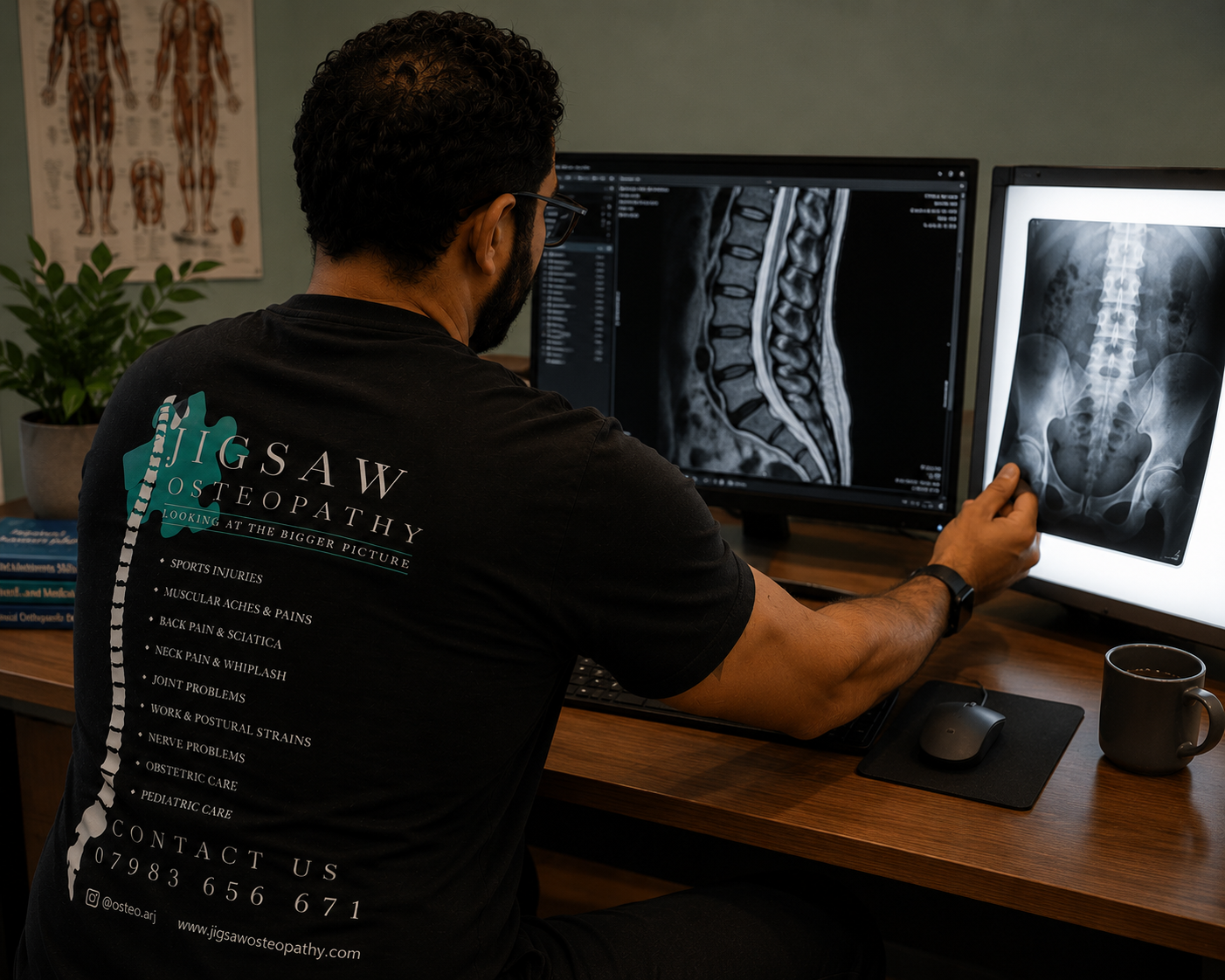
Whether your hip feels stiff, painful, weak or unstable, I'll help identify what's causing your symptoms and find the right treatment to get you back to doing what matters most.
Hip Pain Treatment in Hayes, West London
Hip pain can make everyday activities surprisingly difficult, from climbing stairs and getting out of the car to putting on your shoes, exercising or simply getting comfortable in bed. Sometimes what feels like hip pain is actually coming from the lower back or surrounding structures. A thorough assessment helps determine where your symptoms are coming from before deciding on the most appropriate treatment.
Types of Hip pain
Not all hip pain feels the same. Some hips become stiff and difficult to move, while others are painful only with certain movements. Some people notice weakness when walking or climbing stairs, while others feel their hip is unstable or about to give way. Understanding which pattern best matches your symptoms is an important first step towards finding the right treatment.
Hip Navigation
The Stiff Shoulder
If your shoulder feels stiff rather than simply painful, you're not alone. Many people describe it as feeling like their shoulder has "locked up" or won't move the way it used to, making everyday activities such as reaching into a cupboard, fastening a seatbelt or putting on a coat much more difficult.
There are several reasons why this can happen. Frozen shoulder is one of the most common causes, but stiffness can also develop as a result of shoulder osteoarthritis, previous injuries or following surgery. Although these conditions can feel similar, the underlying cause and the most appropriate treatment can be quite different.
Part of a thorough assessment is working out exactly what's causing the stiffness. Once we understand what's driving your symptoms, we can discuss the treatment options that are most appropriate for you.

Common signs of a stiff shoulder include:
Difficulty reaching overhead or behind your back
Struggling to get dressed or fasten a bra
Pain or stiffness that's worse at night
A shoulder that feels progressively more restricted over time
Frozen Shoulder (Adhesive Capsulitis)
Frozen shoulder is one of the most common causes of a stiff shoulder. It develops when the capsule surrounding the shoulder joint becomes inflamed and tightens, gradually restricting movement. As the condition progresses, everyday tasks such as reaching into a cupboard, putting on a coat or fastening a bra can become increasingly difficult.
Frozen shoulder often develops in three stages. During the freezing stage, pain gradually increases while movement becomes more restricted. The frozen stage is usually less painful but significantly stiffer, before gradually improving during the thawing stage as movement slowly returns.
Although frozen shoulder usually improves with time, full recovery often takes between 12 and 24 months, and occasionally longer. Understanding which stage you're in is an important part of deciding the most appropriate way to manage your symptoms.
Shoulder Osteoarthritis
Shoulder osteoarthritis is a condition where the smooth cartilage within the shoulder joint gradually changes over time. Although it's less common than arthritis in the hips or knees, it can cause pain, stiffness and make everyday movements more difficult.
Symptoms often develop gradually and may include a deep ache in the shoulder, reduced movement, stiffness first thing in the morning or after periods of rest, and difficulty reaching overhead or behind your back. Some people also notice clicking, grinding or catching sensations when they move their shoulder.
Shoulder osteoarthritis becomes more common with age and may also develop following previous shoulder injuries or surgery. It's worth remembering that not everyone with arthritis seen on an X-ray or scan will have pain, which is why it's important to assess the whole shoulder rather than relying on imaging alone.
The Painful Shoulder
Not all shoulder problems cause stiffness. In fact, many people have a shoulder that moves fairly well but becomes painful with certain movements, such as reaching overhead, lifting, pushing, pulling or lying on their side at night.
There are several possible causes of a painful shoulder. One of the most common is rotator cuff-related shoulder pain, where the tendons around the shoulder become irritated or overloaded.
Other conditions, such as calcific tendinitis, subacromial bursitis or AC joint pain, can cause similar symptoms, which is why a thorough assessment is important.

Common signs of a painful shoulder include:
Pain when reaching overhead or out to the side
Pain lying on the affected shoulder at night
Pain lifting, pushing or pulling
Pain during sport, the gym or repetitive activities
A sharp pain with certain movements, despite having good movement overall
Rotator Cuff-Related Shoulder Pain
Rotator cuff-related shoulder pain is one of the most common shoulder problems I see in clinic. The rotator cuff is a group of muscles and tendons that help lift and stabilise your shoulder. When these tissues become irritated or overloaded, everyday movements such as reaching overhead, lifting shopping, throwing, or getting dressed can become painful. Depending on the underlying cause, nearby structures such as the bursa (often called bursitis) or the biceps tendon can also become irritated and contribute to your symptoms.
You may also have heard this described as shoulder impingement or shoulder tendonitis. These terms are still commonly used, but they often describe problems affecting the same area of the shoulder.
Symptoms often develop gradually without a single injury, although they can also occur after increasing your training, repetitive work, decorating, gardening or following an awkward movement. Pain is commonly felt over the outside of the shoulder and may spread down the upper arm. Many people also find it uncomfortable to lie on the affected side at night.
Calcific Tendinitis
Calcific tendinitis occurs when calcium deposits form within one of the rotator cuff tendons. Although the exact reason this happens isn't fully understood, it can cause sudden, severe shoulder pain, sometimes without any obvious injury.
The pain can be intense, making even simple movements such as getting dressed or lifting your arm extremely difficult. Because the symptoms often come on quite suddenly, it's one of the conditions I'd consider during your assessment if your shoulder pain has developed out of the blue.
AC Joint Pain
The acromioclavicular (AC) joint sits at the very top of the shoulder, where your collarbone meets your shoulder blade. Pain from this joint is usually felt over the point of the shoulder and is often aggravated by reaching across your body, bench pressing, overhead lifting or after a fall directly onto the shoulder.
Some people notice tenderness when pressing on the joint itself, while others find sleeping on that side particularly uncomfortable.
Biceps Tendinopathy
Biceps tendinopathy affects the long head of the biceps tendon, which runs through the front of the shoulder. Pain is usually felt at the front of the shoulder and may become worse with lifting, carrying, pulling or overhead movements. Some people also notice discomfort when reaching behind their back or lifting with their palm facing upwards.
Symptoms often develop gradually through repetitive use, although they can also occur alongside other shoulder conditions, particularly rotator cuff-related shoulder pain. During your assessment, I'll determine whether the biceps tendon is the main source of your symptoms or part of a wider shoulder problem.
The Unstable Shoulder
If your shoulder feels like it's going to slip out of place, give way or dislocate, it may be a sign of shoulder instability. Some people experience this after a traumatic injury, while others notice their shoulder feels loose or unreliable during certain movements, particularly overhead activities or sport.
Shoulder instability can range from occasional feelings of looseness to repeated dislocations or partial dislocations (known as subluxations). It often affects younger, more active people but can occur at any age.
Common signs of an unstable shoulder include:
A feeling that your shoulder might slip out of place
Recurrent shoulder dislocations or subluxations
Pain or apprehension when reaching overhead or behind you
A loss of confidence using your shoulder during sport
or certain activitiesClicking, catching or a feeling of instability with movement

Shoulder Instability
Shoulder instability occurs when the structures that normally keep the shoulder securely in place become stretched or injured. This often follows a traumatic dislocation but can also develop in people with naturally more flexible joints or those who regularly perform repetitive overhead movements.
Sometimes the cartilage around the shoulder joint (known as the labrum) can also be injured during a dislocation. This is known as a labral tear and may contribute to ongoing feelings of instability, pain, clicking or catching within the shoulder.
Not everyone with shoulder instability experiences repeated dislocations. For some people, the main problem is a feeling that the shoulder is unreliable or difficult to trust during certain movements.
The Weak Shoulder
If your shoulder feels genuinely weak rather than simply painful, it may suggest that one of the muscles or tendons responsible for lifting and stabilising your shoulder isn't working as it should.
Some people notice they can no longer lift their arm as high, struggle to carry shopping, or find their shoulder gives up during activities that were previously easy.
Weakness can develop gradually alongside pain or occur suddenly following a fall or injury. One of the most common causes is a rotator cuff tear, although weakness can also occur as a result of pain limiting how well the muscles work.
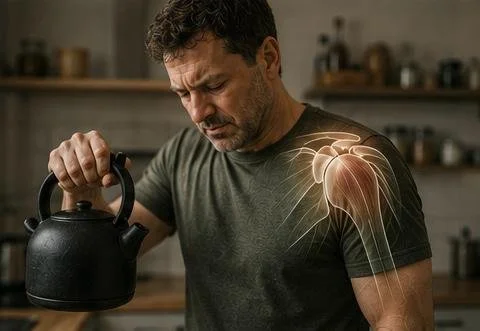
Common signs of a weak shoulder include:
Difficulty lifting your arm overhead
Weakness lifting or carrying objects
A shoulder that tires more quickly than usual
Pain accompanied by noticeable weakness
Sudden weakness following an injury
Rotator Cuff Tear
A rotator cuff tear occurs when one or more of the rotator cuff tendons become partially or completely torn. Some tears develop gradually over time, while others occur following a fall, heavy lift or another significant injury.
Symptoms often include pain, weakness and difficulty lifting the arm away from the body or above your head. Some people also notice they're no longer able to perform activities that were previously straightforward, such as lifting shopping, reaching into a cupboard or playing sport.
Not every rotator cuff tear requires surgery. Many people improve with the right rehabilitation, while others may benefit from further investigations or referral to a shoulder specialist. Part of the assessment is understanding the size of the tear, how it's affecting your shoulder and discussing the most appropriate management options.
Shoulder Pain at the Gym
Shoulder pain is one of the most common reasons people stop going to the gym, but it doesn't always mean you have to.
Whether you're struggling with bench press, overhead press, pull-ups, swimming or CrossFit, shoulder pain is often the result of training load, technique, reduced shoulder mobility or simply asking more of the tissues than they're currently prepared for.
Completely avoiding the gym is rarely the answer. In many cases, the goal is to understand what's irritating the shoulder, make temporary modifications where needed, and gradually rebuild strength and confidence so you can return to training safely.
During your assessment, we'll look at what's causing your symptoms, which exercises are provoking them, and discuss practical ways to keep you training where possible while your shoulder recovers.
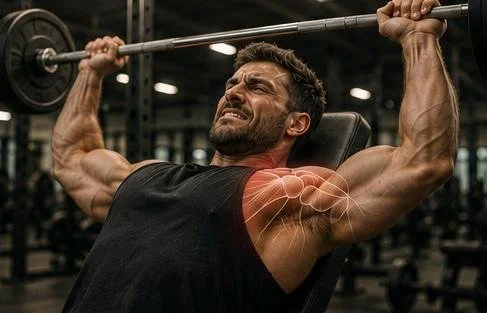
You might notice shoulder pain when:
Bench pressing
Overhead pressing
Performing pull-ups or lat pulldowns
Swimming
Throwing
CrossFit or functional training
Returning to the gym after time off
Shoulder Pain at Work
Shoulder pain can make everyday work more difficult, whether you're sitting at a desk, working overhead, lifting heavy objects, driving for long periods or carrying children.
Repetitive movements, prolonged positions and physically demanding jobs can all place extra stress on the shoulder.
Rather than focusing on achieving the "perfect posture", I look at how your shoulder is coping with the demands being placed upon it. Often, it's a combination of treatment, rehabilitation and simple modifications to your daily activities that helps you recover without needing to stop working altogether.
During your assessment, we'll discuss your job, identify what's aggravating your symptoms and develop a treatment plan that's realistic for your work and lifestyle.

You might notice shoulder pain when:
Working at a computer
Lifting or carrying at work
Reaching overhead
Driving for long periods
Repetitive manual tasks
Caring for children or family members
After Shoulder Surgery
Recovering from shoulder surgery can sometimes feel just as challenging as the injury itself. Whether you've had a rotator cuff repair, shoulder stabilisation, subacromial decompression or a shoulder replacement, the right rehabilitation plays an important role in helping you regain movement, strength and confidence.
You may benefit from rehabilitation if you're:
Recovering from rotator cuff surgery
Recovering after shoulder stabilisation or a labral repair
Recovering from a shoulder replacement
Struggling with stiffness after surgery
Looking to return to work, sport or everyday activities

Recovery takes time, and every operation is different. I'll work closely with your surgeon's rehabilitation guidelines to help you progress safely, regain function and get back to the activities that matter most.
What Patient Say
Shoulder FAQs
-
Not always. Many shoulder problems can be diagnosed through a thorough assessment without the need for an MRI or X-ray. If I feel imaging would help confirm a diagnosis or change your treatment, I'll discuss this with you and advise on the most appropriate next steps.
-
Not usually. While it may be sensible to avoid movements that significantly increase your pain for a short period, completely resting the shoulder can sometimes slow recovery. In many cases, keeping the shoulder moving within comfortable limits and gradually returning to activity leads to better long-term outcomes.
-
Yes. Pain felt in the shoulder isn't always caused by the shoulder itself. Problems affecting the neck can sometimes refer pain into the shoulder or arm, which is why part of your assessment involves making sure we're treating the correct area.
-
Often, yes. In many cases, it's possible to continue exercising with temporary modifications rather than stopping completely. During your assessment, we'll discuss which exercises are safe to continue, which may need adjusting and how to return to full training as your shoulder improves.
-
It depends on what's causing your shoulder pain, how long you've had it and your goals. Some people improve within a few sessions, while others with more persistent or complex problems may require longer. After your assessment, I'll give you an honest idea of what I expect and review your progress as treatment continues.
-
Most shoulder pain isn't an emergency. However, you should seek urgent medical advice if your shoulder pain follows a significant injury causing obvious deformity, if you develop sudden weakness after trauma, or if your shoulder pain is accompanied by chest pain, shortness of breath, dizziness or feeling generally unwell, as this may indicate a more serious medical condition.
Not Sure What's Causing Your Shoulder Pain?
Every shoulder problem is different, so treatment starts with understanding what's causing your symptoms. Once we've identified the source of your symptoms, I'll explain what's most likely causing them and recommend the treatment that's most appropriate for you.
You don't need to know exactly what's wrong before booking an appointment , that's what the assessment is for.
👉 Learn more about what to expect from treatment
GET IN TOUCH
Ready to Get Started?
Whether you’re dealing with pain, stiffness, injury, or simply want to move better, we’re here to help. Get in touch and we’ll guide you in the right direction.
☎︎︎ Phone: 0203 773 5310
/ 07983 656 671
✉︎︎ Email: info@jigsawosteopathy.com
⌖︎ Clinic location: 70 Seaton Rd, Hayes, UB3 1NU
➜︎ Directions: View on Google Maps →
◷︎ Opening Hours: By Appointment Only | Monday – Thursday | 9am - 7pm
◎︎ Instagram: @osteo.arj
◉︎ Facebook: Jigsaw Osteopathy Clinic