
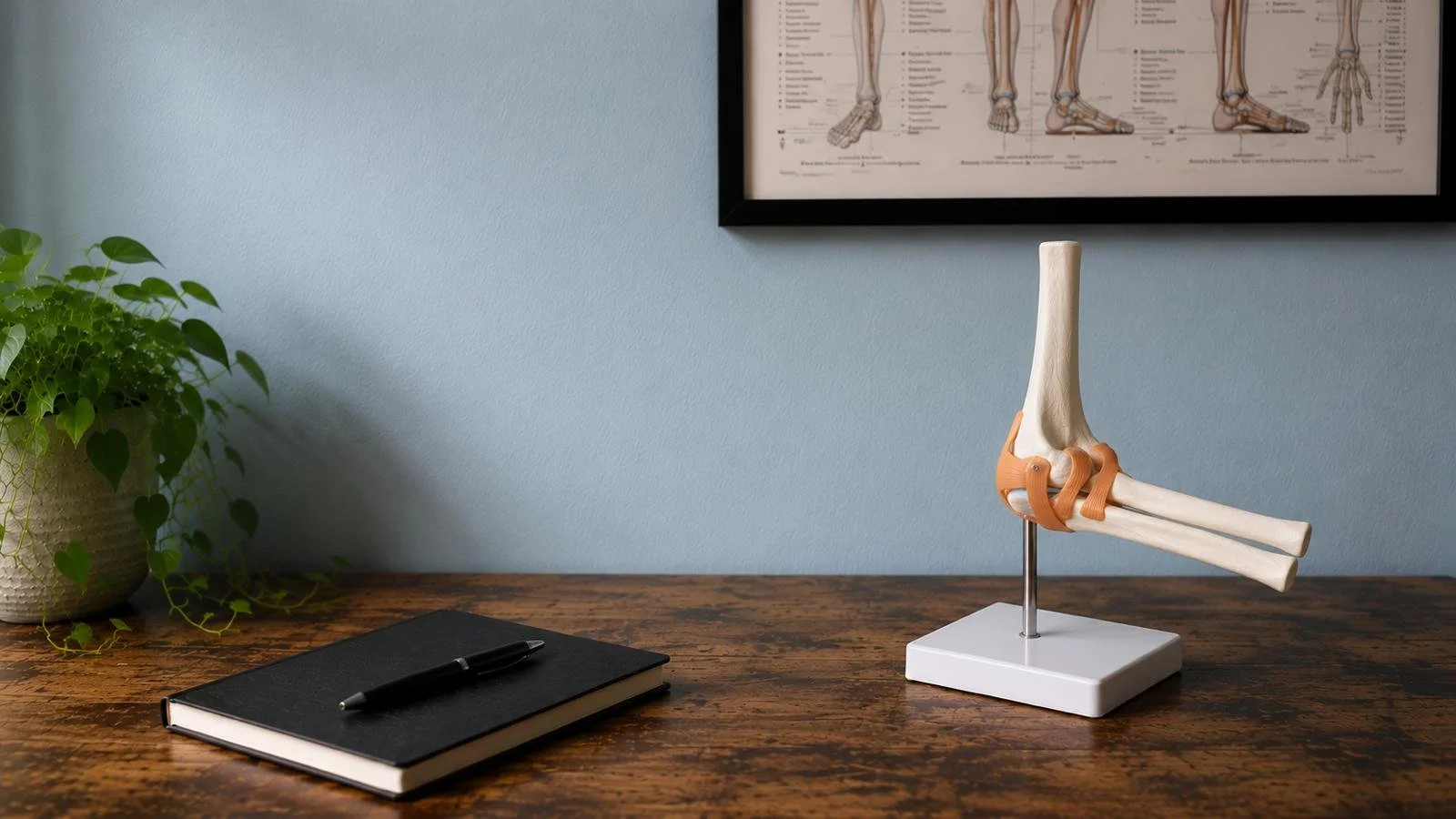
Elbow Pain Treatment in Hayes, West London
Whether your elbow pain started gradually, through work or after an injury, treatment is tailored to help you get out of pain, restore comfortable movement and get back to the activities that matter to you.
Elbow pain can make simple tasks surprisingly difficult - lifting a kettle, gripping a tool, opening a jar or training at the gym. The aim is to understand what's causing your symptoms, reduce your pain and help you regain strength and movement. Sometimes elbow symptoms, particularly numbness, tingling or weakness, can come from the neck or nerves further up the arm, so a thorough assessment looks beyond the painful area before deciding on the most appropriate treatment.
Who you'll see
You'll be seen by Arjun Mehra, dual-qualified osteopath and chartered physiotherapist. Your treatment and rehabilitation come from the same person, start to finish, with over a decade of experience helping people reduce pain and stay active.
Appointments usually available within 48 hours, Monday - Thursday.
The Painful Elbow
Elbow pain can make everyday activities such as carrying shopping, opening jars, using tools or training at the gym increasingly uncomfortable. Symptoms may be felt around the outside, inside or back of the elbow, depending on what is irritated.
Pain often develops gradually with repeated gripping, lifting or changes in activity, although it can also appear more suddenly following an injury.
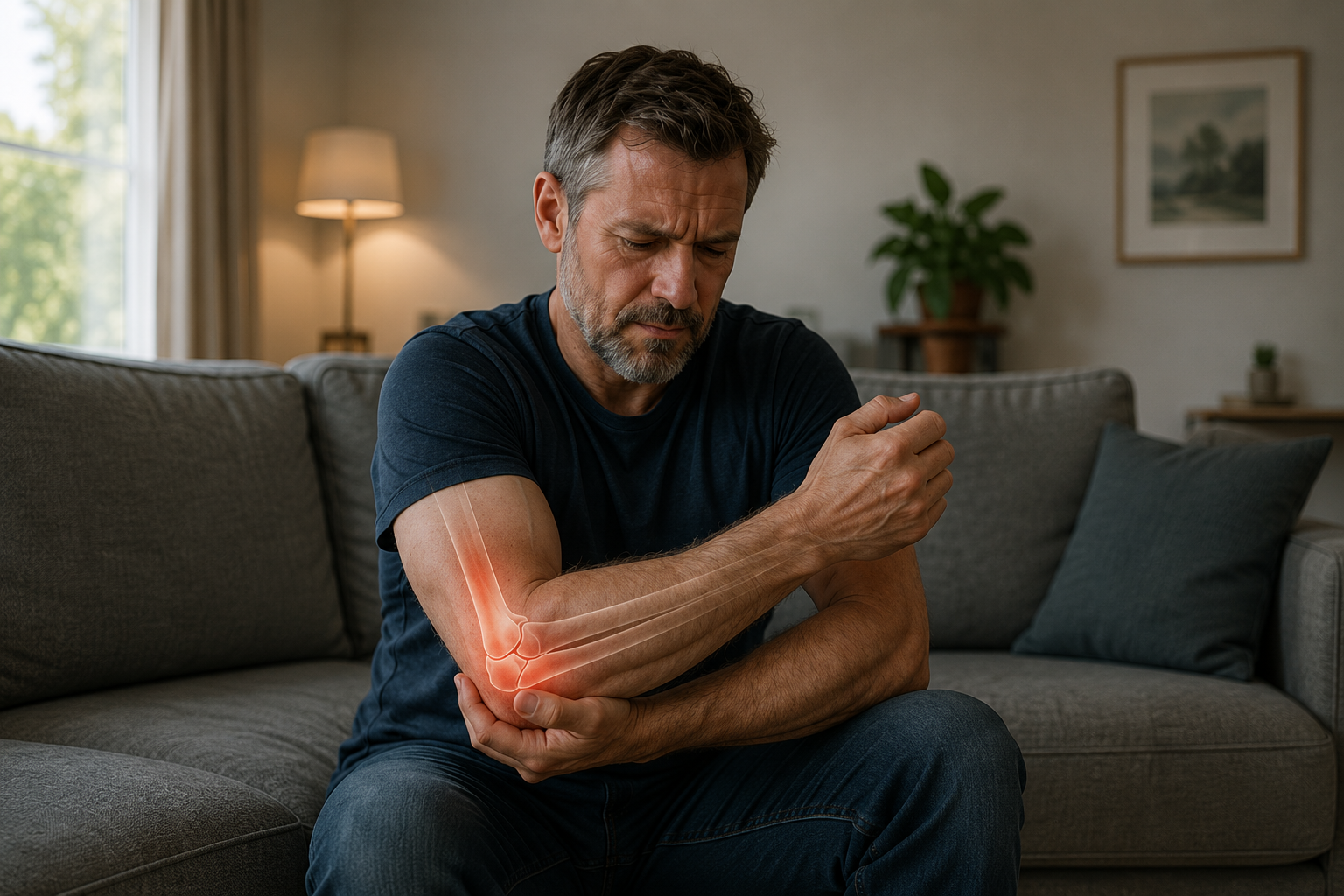
You may notice:
Pain when gripping or lifting
Tenderness on the inside, outside or back of the elbow
Pain when twisting the forearm or opening jars
Symptoms that gradually worsen with repeated use
Tennis Elbow (Lateral Epicondylalgia)
Tennis elbow is one of the most common causes of pain on the outside of the elbow. It develops when the tendons that help extend the wrist and fingers become irritated or overloaded, often following repeated gripping, lifting, manual work or an increase in activity. Despite the name, you don't need to play tennis to develop it.
For persistent tennis elbow, Shockwave Therapy may also be considered as part of treatment.
Golfer’s Elbow (Medial Epicondylalgia)
Golfer's elbow affects the tendons on the inside of the elbow and commonly causes pain during gripping, lifting, carrying or repeated wrist and forearm movements. Like tennis elbow, symptoms often develop gradually with repeated loading rather than following one specific injury.
Shockwave Therapy may also be considered for persistent golfer's elbow that hasn't settled with initial treatment and rehabilitation.
Triceps Tendinopathy
Triceps tendinopathy affects the tendon at the back of the elbow and is less common than tennis or golfer's elbow. Symptoms are often aggravated by pushing movements, including bench press, dips, overhead pressing or manual work involving forceful pushing.
For persistent triceps tendinopathy, Shockwave Therapy may also be considered alongside rehabilitation.
Olecranon Bursitis (Student's Elbow)
Olecranon bursitis occurs when the small fluid-filled sac over the back of the elbow becomes irritated and swollen. It may develop following prolonged pressure, repeated leaning on the elbow or a knock to the area, and can cause noticeable swelling with or without pain.
If swelling around the elbow becomes particularly red, hot or painful, or you feel generally unwell, it's important to seek medical advice as this can sometimes indicate an infection.
The Stiff Elbow
Elbow stiffness can make it difficult to fully bend or straighten your arm or turn your palm up and down. It may develop gradually over time or become noticeable following an injury, surgery or period of reduced activity.
Everyday activities such as eating, washing your hair, turning a key or lifting objects can become increasingly difficult when elbow movement is restricted.
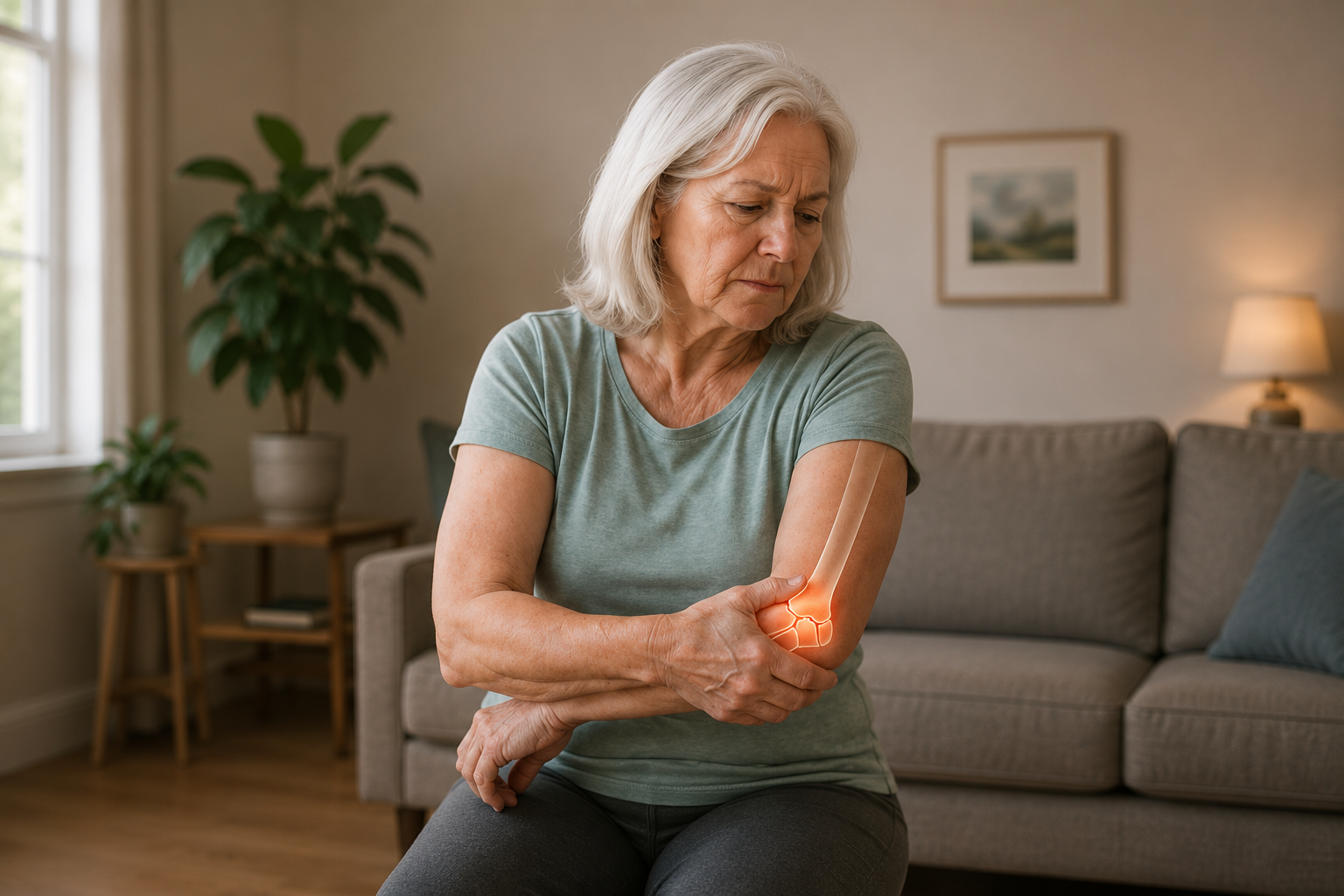
You may notice:
Difficulty fully bending or straightening the elbow
Pain or stiffness after periods of rest
Difficulty turning your palm up or down
Clicking or catching alongside restricted movement
Reduced movement affecting everyday activities
Elbow Osteoarthritis
Elbow osteoarthritis can cause pain, stiffness and a gradual reduction in movement as the joint changes over time. Pain may be felt around the elbow during lifting, gripping or repetitive use, while stiffness can make it increasingly difficult to fully bend or straighten the arm.
Some people also notice clicking, catching or stiffness after periods of rest, with everyday activities becoming more difficult as movement becomes restricted.
Post-Traumatic Elbow Stiffness
Following a fracture, dislocation or other significant elbow injury, the joint can remain stiff even after the original injury has healed. This may make it difficult to fully bend or straighten the elbow and can affect activities such as washing your hair, eating, lifting or reaching.
Reduced Forearm Rotation
Sometimes bending and straightening the elbow feels relatively normal, but turning your palm up or down becomes restricted. This movement comes from the joints between the radius and ulna in the forearm and can become limited following injury, arthritis or a period of reduced movement.
You may notice difficulty turning a key, using a screwdriver, carrying something palm-up or rotating your hand to receive change.
The Elbow Pain with Numbness or Weakness
Elbow problems don't always cause pain alone. Numbness, tingling or weakness in the forearm or hand can occur when a nerve around the elbow becomes irritated or compressed, while sudden weakness may also occur following a tendon injury.
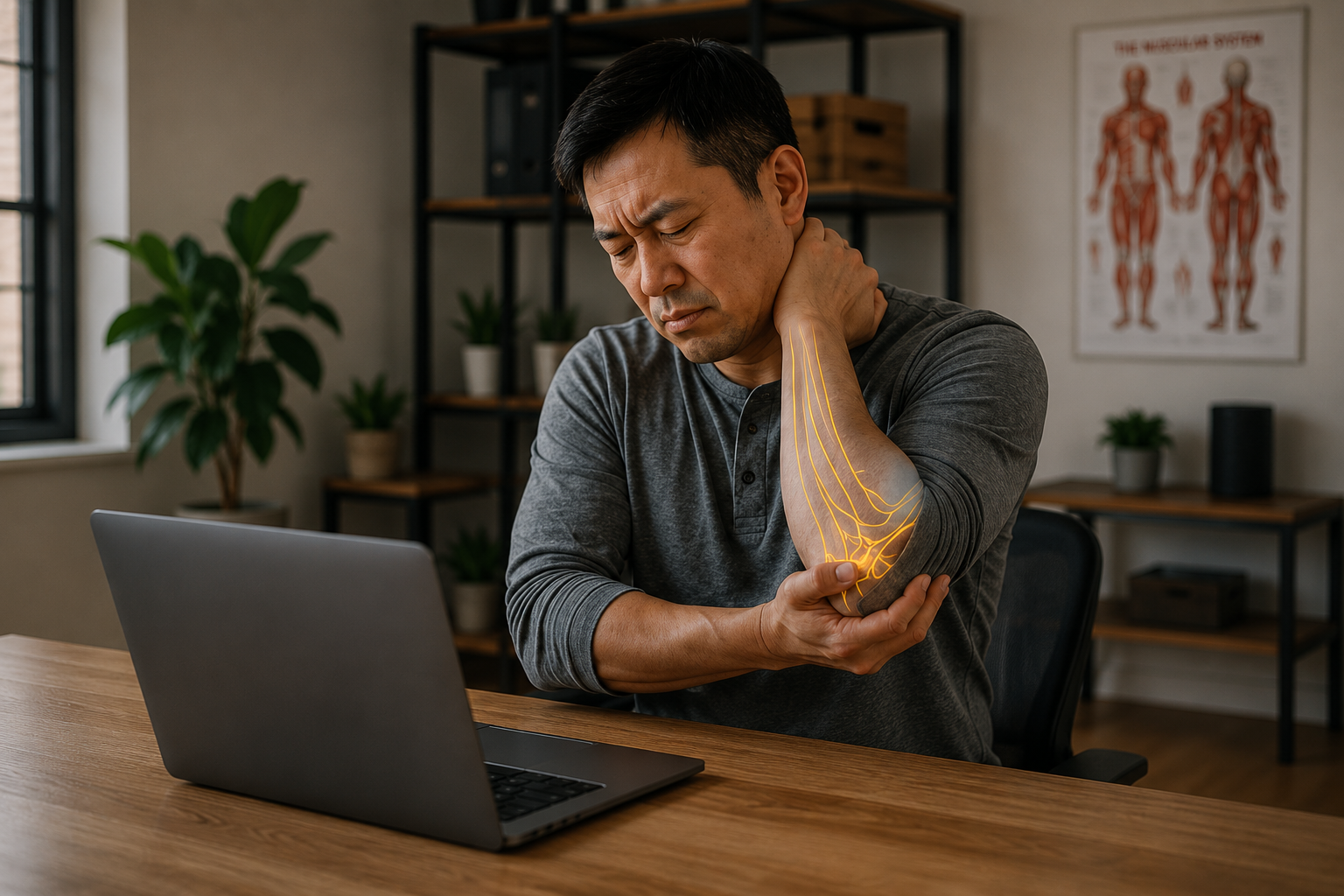
You may notice:
Tingling or numbness in the ring and little fingers
Weakness when gripping or lifting objects
Symptoms that are worse when the elbow is bent for long periods
Pain, tingling or weakness travelling into the forearm or hand
A sudden loss of strength after feeling a pop in the front of the elbow
Cubital Tunnel Syndrome
Cubital tunnel syndrome occurs when the ulnar nerve becomes irritated or compressed as it passes around the inside of the elbow. This can cause tingling or numbness in the little and ring fingers, sometimes alongside weakness or reduced grip strength.
Symptoms are often more noticeable when the elbow is bent for longer periods, such as when sleeping, driving or using a phone.
Distal Biceps Tendon Rupture
A distal biceps tendon rupture occurs when the tendon attaching the biceps muscle to the forearm partially or completely tears, usually following a sudden heavy lift or forceful movement.
Some people feel or hear a pop at the front of the elbow, followed by pain, bruising and weakness. Bending the elbow and particularly turning the palm upwards may feel noticeably weaker, and the shape of the biceps muscle may also change.
The Injured or Unstable Elbow
Elbow injuries can occur following a fall, sporting accident, direct impact or sudden twisting movement. Depending on the injury, symptoms may include pain, swelling, bruising, reduced movement or a feeling that the elbow is unstable.
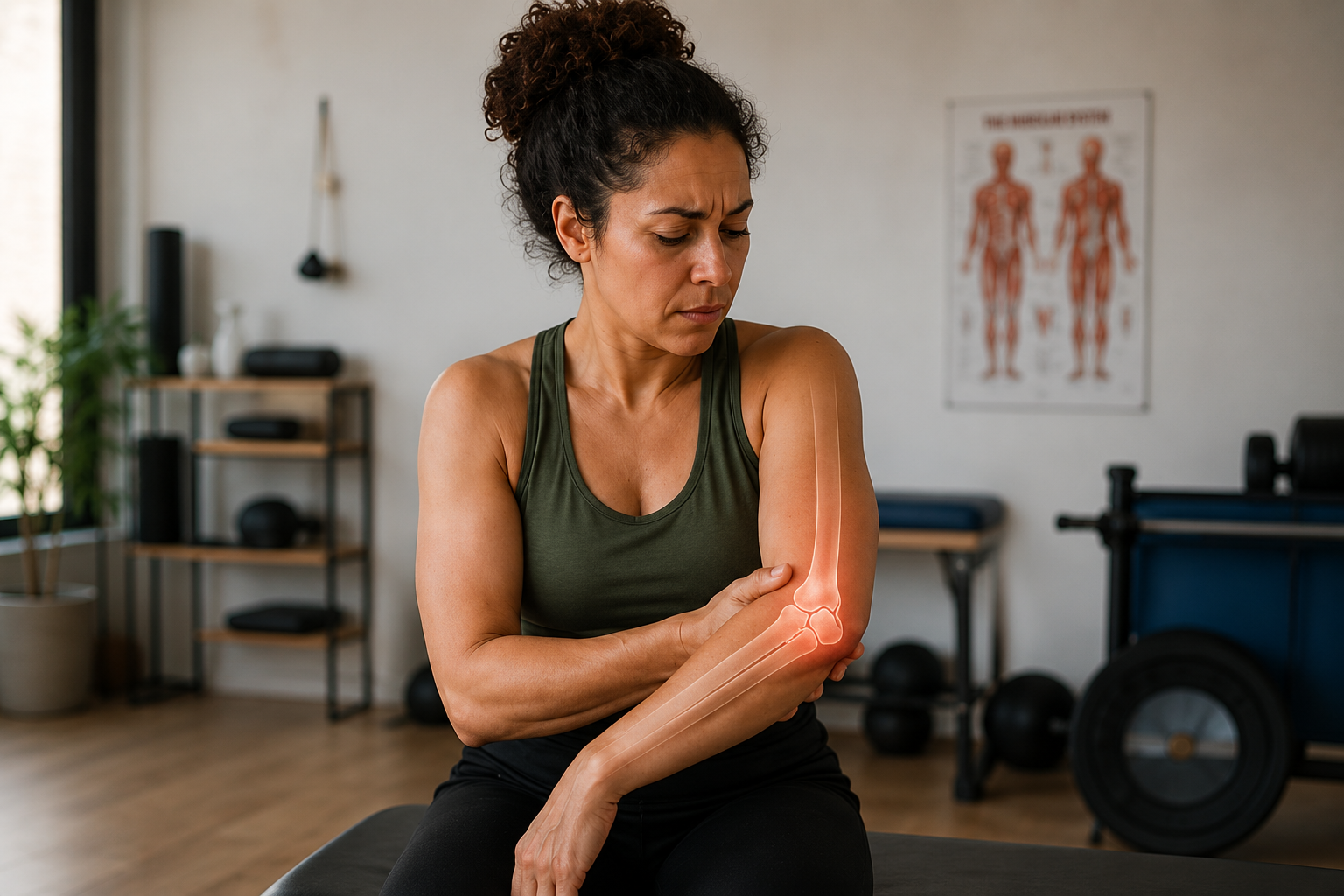
You may notice:
Pain following a fall or direct impact
Swelling or bruising around the elbow
A feeling that the elbow is unstable or may give way
Difficulty moving or putting weight through the arm
A visible deformity following a more significant injury
Elbow Ligament Injuries
The ligaments around the elbow help provide stability during everyday activities and sport. They can become sprained or torn following a fall, repetitive throwing or a sudden twisting injury, causing pain, swelling or a feeling of instability.
Elbow Dislocations
An elbow dislocation occurs when the bones of the joint are forced out of their normal position, usually following a fall onto an outstretched hand. This can cause severe pain, swelling, deformity and an inability to move the elbow normally and requires urgent medical assessment.
Elbow Fractures
Fractures around the elbow can affect the upper arm, forearm or the bony tip of the elbow itself. They commonly occur following a fall or direct blow and usually cause immediate pain, swelling and difficulty using the arm. Fractures require urgent medical assessment and imaging to determine the most appropriate management.
Elbow pain can become particularly noticeable during lifting, pulling, pressing and gripping, especially when training volume or intensity has recently increased.
Grip is often a common thread in elbow pain at the gym. Heavy holds, high pulling volume, gripping dumbbells or barbells and repeated loading through curls or pull-ups can all increase demand on the tendons around the elbow. Symptoms often reflect how much loading you're doing and how quickly it has increased, rather than one particular exercise being the problem.
Modifying usually beats stopping. Changing grip, adjusting the volume of movements that provoke symptoms or temporarily using straps can sometimes allow you to keep training while gradually rebuilding what the elbow can tolerate.
Elbow Pain During Gym & Sport
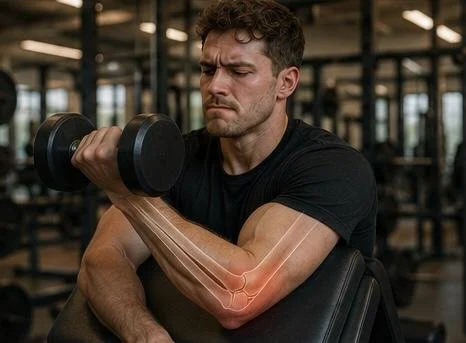
You might notice elbow pain when:
Pain on the outside of the elbow during bicep curls or pull-ups
Pain on the inside of the elbow when gripping heavy weights
Pain at the back of the elbow during bench press, dips or tricep extensions
Pain when gripping barbells, dumbbells or kettlebells
Symptoms that linger after training or flare up the following day
Elbow Pain at Work
Elbow pain can become increasingly noticeable during the working day, particularly when your job involves repeated gripping, lifting, carrying or using tools. Symptoms may build as the day goes on or become more noticeable during particular tasks.
Jobs involving tools, machinery or repeated hand and forearm movements can place sustained demands on the muscles and tendons around the elbow. Gripping, twisting, pushing and pulling may become uncomfortable when these tissues aren't currently coping well with the workload.
Desk-based work can cause different problems. Prolonged keyboard or mouse use, limited movement or keeping the elbow bent for longer periods may aggravate symptoms, particularly when nerve irritation is contributing.
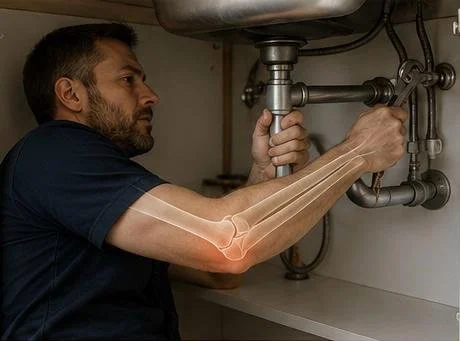
You may notice:
Pain when gripping tools or carrying equipment
Discomfort when lifting, pushing or pulling
Pain after repetitive keyboard or mouse use
Symptoms that build throughout the working day
Tingling or numbness after keeping the elbow bent for longer periods
Difficulty performing your usual job because of elbow pain
After Elbow Surgery
Recovery after elbow surgery varies depending on the type of surgery, stage of recovery and activities you want to return to. Rehabilitation plays an important role in rebuilding movement, strength and confidence as you progress.
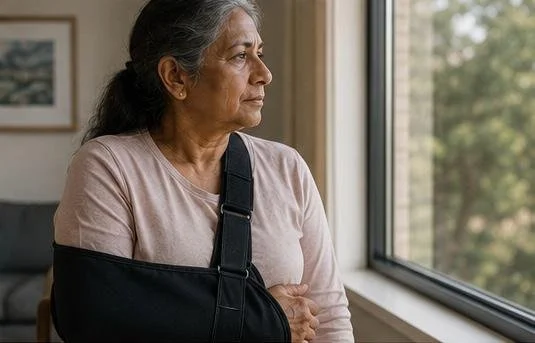
You may benefit from rehabilitation if you're:
Recovering from a distal biceps tendon repair
Recovering after cubital tunnel release surgery
Recovering from an elbow fracture or ligament reconstruction
Recovering following other elbow surgery
Struggling with pain, stiffness or weakness after surgery
Looking to return to work, the gym, sport or everyday activities
Hands-on treatment can help with pain, stiffness and surrounding muscular tightness, alongside rehabilitation to progressively rebuild movement, strength and function. Treatment will be adapted to your procedure and stage of recovery, while working within your surgeon's post-operative guidelines and any restrictions they've provided.
How We Treat Elbow Pain
Treatment may combine hands-on techniques to help with pain and restricted movement, with exercises to gradually build the strength and capacity of the muscles and tendons around your elbow.
Your assessment helps guide what you need. We have a broad range of treatment techniques and tools available, allowing treatment to be adapted to you rather than following a set approach. For tendon-related elbow pain, progressive loading is often an important part of rehabilitation, and for some longer-standing tendon problems, shockwave therapy may also be considered.
What Patients Say
Elbow FAQs
-
They're both tendon-related conditions, but they affect different sides of the elbow. Tennis elbow causes pain on the outside of the elbow, while golfer's elbow affects the inside. Despite their names, you don't need to play either sport to develop them.
-
Not usually. Most elbow problems can be diagnosed through a thorough clinical assessment, looking at your symptoms, movement and medical history. Scans are generally recommended if there's been significant trauma, a suspected tendon rupture or fracture, or if your symptoms aren't improving as expected.
-
Shockwave therapy can be an effective treatment option for some long-standing tendon conditions, including tennis elbow and golfer's elbow. However, it isn't suitable for every type of elbow pain, which is why the first step is always identifying what's causing your symptoms. If it's appropriate for your condition, we'll discuss whether it could form part of your treatment plan.
-
In many cases, yes. Completely avoiding the gym isn't usually necessary, and staying active is often an important part of recovery. The aim is to identify which movements are irritating your elbow, make temporary modifications where needed, and help you return to training safely.
-
Yes. Although the pain may be felt around the elbow, the source of the problem isn't always the elbow itself. Irritation of the neck or the nerves travelling into the arm can sometimes cause pain, tingling, numbness or weakness around the elbow. That's why your assessment looks at the whole arm, not just the elbow.
-
Most elbow conditions improve without surgery. However, certain injuries, such as some tendon ruptures, fractures or ligament injuries, may require a surgical opinion. If I feel further investigations or a referral are needed, I'll explain your options and help guide you through the next steps.
Not Sure What's Causing Your Elbow Pain?
Elbow pain can have a number of different causes, and you don't need to know exactly what's wrong before booking. That's what the assessment is for.
GET IN TOUCH
Ready to Get Started?
Whether you’re dealing with pain, stiffness, injury, or simply want to move better, we’re here to help. Get in touch and we’ll guide you in the right direction.
☎︎︎ Phone: 0203 773 5310
/ 07983 656 671
✉︎︎ Email: info@jigsawosteopathy.com
⌖︎ Clinic location: 70 Seaton Rd, Hayes, UB3 1NU
➜︎ Directions: View on Google Maps →
◷︎ Opening Hours: By Appointment Only | Monday – Thursday | 9am - 7pm
◎︎ Instagram: @osteo.arj
◉︎ Facebook: Jigsaw Osteopathy Clinic