
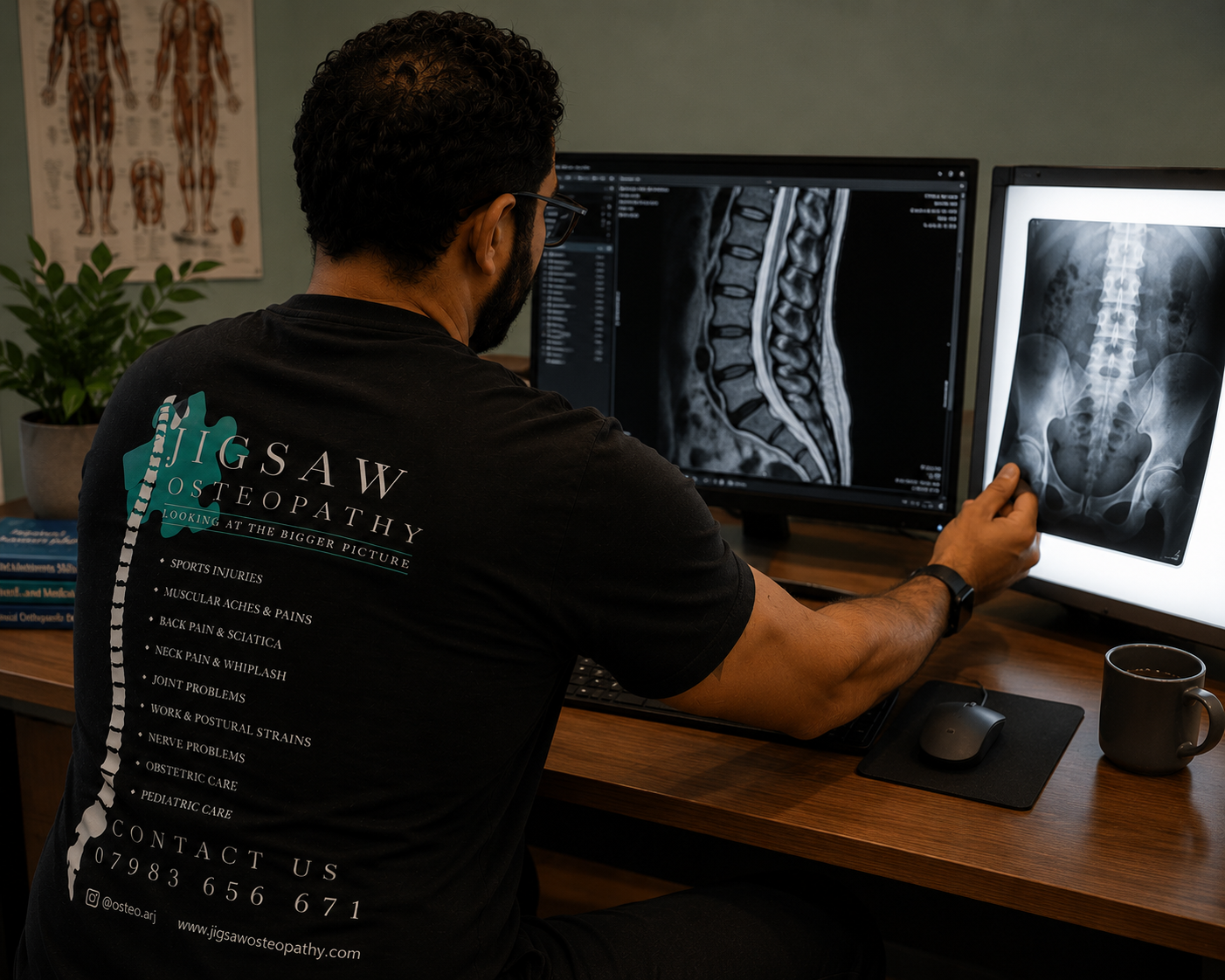
Hip Pain Treatment in Hayes, West London
Whether your hip feels stiff, painful, weak or unstable, I'll help identify what's causing your symptoms and find the right treatment to get you back to doing what matters most.
Hip pain can make everyday activities surprisingly difficult - climbing stairs, getting out of the car, putting on your shoes, exercising or simply getting comfortable in bed. The aim is to reduce your pain, restore your movement and get you back to doing what matters most. Sometimes what feels like hip pain is actually coming from the lower back or surrounding structures, so a thorough assessment helps determine where your symptoms are coming from before deciding on the most appropriate treatment.
Who you'll see
You'll be seen by Arjun Mehra, dual-qualified osteopath and chartered physiotherapist. Your treatment and rehabilitation come from the same person, start to finish. 14 years of experience getting people out of pain and keeping them out of it.
Appointments usually available within 48 hours.
Types of Hip Pain
Not all hip pain feels the same. Choose the option below that sounds most like yours.
Hip Navigation
The Painful Hip
Hip pain can develop gradually over time or occur suddenly following an injury. Depending on the underlying cause, pain may be felt deep in the groin, over the outside of the hip, in the buttock or spread into the thigh.
Everyday activities such as walking, climbing stairs, getting in and out of the car or lying on your side can quickly become uncomfortable.
There are several possible causes of hip pain. One of the most common is Greater Trochanteric Pain Syndrome (GTPS), where the gluteal tendons become irritated or overloaded. Other conditions, including hip osteoarthritis, hip flexor tendinopathy, adductor-related groin pain and femoro-acetabular impingement (FAI), can produce similar symptoms, which is why a thorough assessment is important.
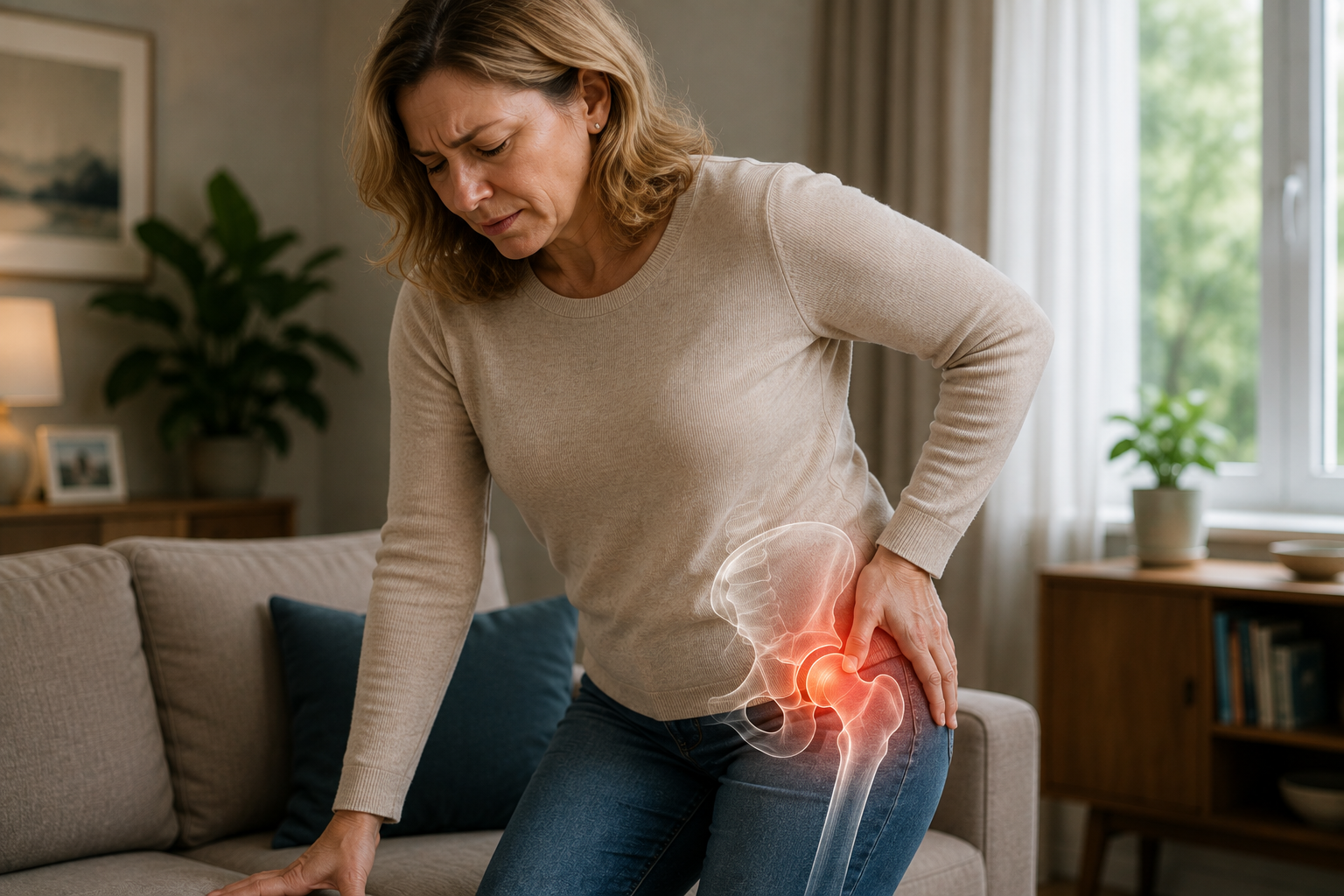
You may notice:
Pain in the groin, outside of the hip or buttock
Pain walking or climbing stairs
Pain lying on one side at night
Pain getting in or out of the car
Difficulty putting on shoes or socks
Pain during running, squatting or sport
Greater Trochanteric Pain Syndrome (Gluteal Tendinopathy)
Pain over the outside of the hip is one of the most common reasons people seek treatment. It often develops gradually, particularly following an increase in activity such as walking, running or exercise, and may become worse when lying on the affected side, walking longer distances, climbing stairs or standing on one leg. Although it's often called hip bursitis, the gluteal tendons are commonly the main source of symptoms, with the bursa sometimes becoming irritated alongside them
Hip Flexor Tendinopathy
The hip flexor muscles and tendons, particularly the iliopsoas and rectus femoris, help lift your knee during walking, climbing stairs and running. When these tissues become irritated or overloaded, pain is often felt at the front of the hip or groin and may be aggravated by lifting the knee, walking uphill, climbing stairs, running or getting out of the car after sitting for prolonged periods.
Hip Osteoarthritis
Hip osteoarthritis occurs when the smooth cartilage within the ball-and-socket hip joint gradually changes over time. As the joint becomes less able to move freely, many people notice stiffness first thing in the morning or after sitting, together with groin pain that makes walking, putting on shoes and socks or getting in and out of the car increasingly difficult.
Adductor-Related Groin Pain
The adductor muscles run along the inside of the thigh and help stabilise the hip during walking, running and changes of direction. When these muscles or their tendons become overloaded, pain commonly develops around the groin. Sprinting, changing direction, kicking, lunging or squeezing the knees together often reproduce symptoms, while everyday movements such as stepping sideways or getting in and out of the car may also become uncomfortable.
Femoro-acetabular Impingement (FAI) & Labral Irritation
The hip is a ball-and-socket joint, designed to move freely while remaining stable. In some people, subtle differences in the shape of the ball or socket can reduce the available space within the joint during deeper movements. This may cause pain deep in the groin during squatting, prolonged sitting, twisting or sporting activities and, in some cases, may irritate the labrum; a ring of cartilage that surrounds the socket and helps improve stability.
The Stiff Hip
If your hip feels stiff rather than simply painful, it may be due to changes within the joint itself or the surrounding muscles and soft tissues. Stiffness often develops gradually over time, although it can also occur following an injury or surgery.
There are several possible causes of hip stiffness. One of the most common is hip osteoarthritis, where changes within the joint gradually reduce movement over time. Other conditions, such as femoroacetabular impingement (FAI) or stiffness following an injury or surgery, can produce similar symptoms.
It's also common for the hip to gradually lose mobility over time, particularly after prolonged periods of sitting, reduced movement or previous injuries, even without a significant injury or diagnosed hip condition, which is why a thorough assessment is important.
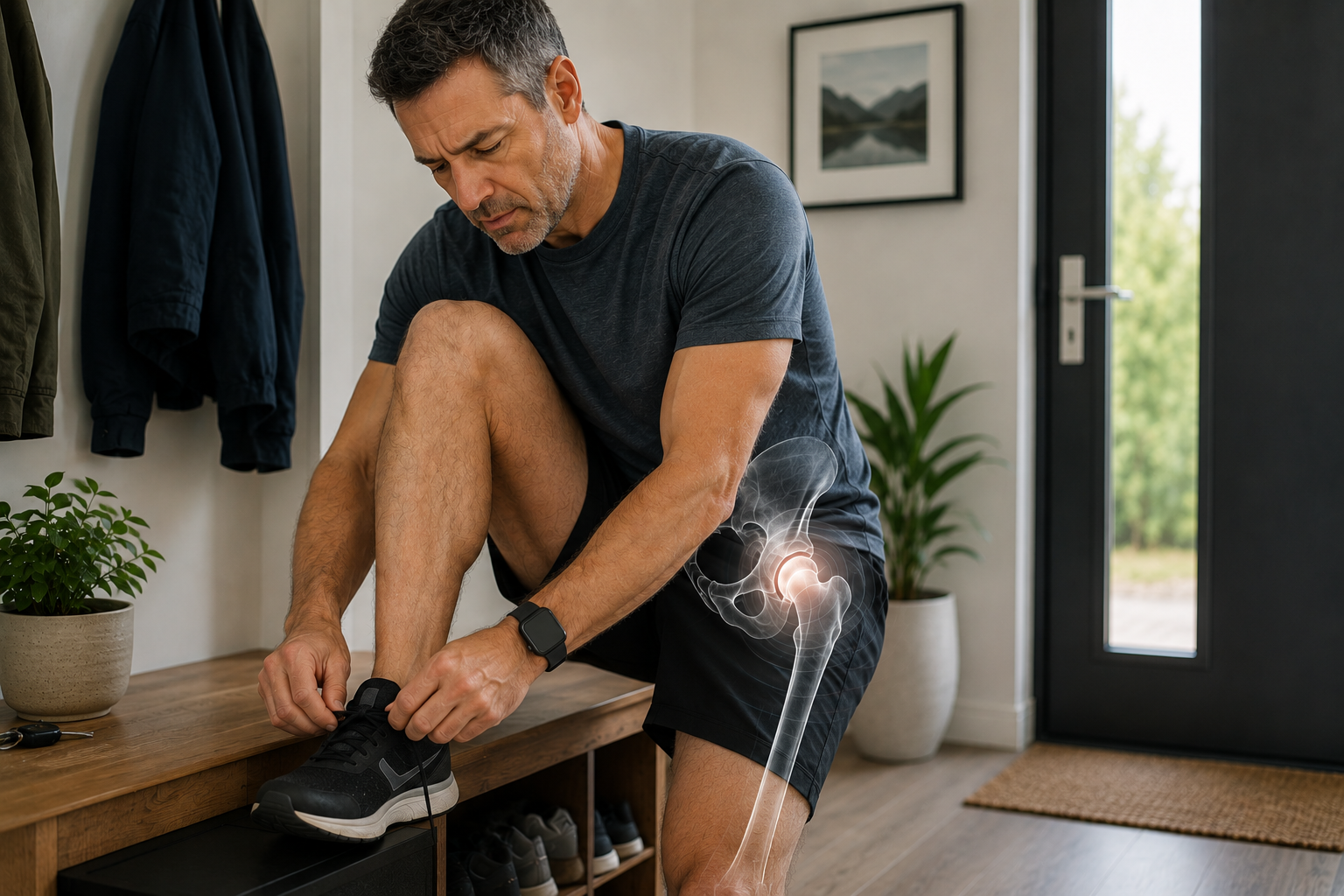
Common signs of a stiff hip include:
Difficulty putting on shoes or socks
Difficulty crossing your legs
Stiffness getting in or out of the car
Reduced movement when bending or squatting
Morning stiffness or stiffness after sitting
Feeling like your hip doesn't move as freely as it used to
Femoroacetabular Impingement (FAI)
Some people naturally have subtle differences in the shape of the hip joint, commonly known as CAM or Pincer morphology. These can reduce the space within the ball-and-socket joint during deeper movements, leading to stiffness and pain deep in the groin. Many people first notice symptoms when squatting deeply, sitting with their knees high, getting out of a low chair or bringing the knee towards the chest.
Reduced Hip Mobility
Not all hip stiffness is caused by arthritis or structural changes within the joint. Spending long periods sitting, reduced activity levels, previous injuries or simply losing flexibility over time can all contribute to a hip that feels stiff and difficult to move. You may notice it's harder to squat, cross your legs, put on your shoes or move comfortably during exercise, even without significant pain.
Post-Injury or Post-Surgical Hip Stiffness
Following a fracture, surgery or a period of reduced activity, it's common for the hip to temporarily lose movement. Scar tissue, swelling and reduced use of the joint can all contribute to stiffness, making everyday activities feel more difficult even after the initial pain has improved. Rebuilding movement gradually is often an important part of returning to normal daily activities.
Hip Osteoarthritis
The hip is a ball-and-socket joint, designed to move freely while supporting your body during everyday activities. As changes gradually develop within the joint over time, movement often becomes more restricted, making bending, rotating the hip and walking increasingly difficult. Many people first notice simple tasks such as putting on shoes and socks, getting in and out of the car or climbing the stairs becoming more challenging.
Numbness, Tingling & Burning
Not all symptoms around the hip are caused by muscles, tendons or the hip joint itself. Burning pain, tingling or numbness can develop when one of the nerves supplying the hip or thigh becomes irritated or compressed. In some cases, symptoms that appear to come from the hip may actually originate from the lower back.
There are several possible causes of nerve-related symptoms around the hip and thigh. Some originate from the hip region itself, while others develop because of irritation of the nerves in the lower back, which is why a thorough assessment is important.
You may notice:
Burning pain over the outside of the thigh
Tingling or numbness around the hip or upper leg
Pain into the buttock or down the leg
Altered sensation around the thigh
Symptoms that worsen with prolonged standing, walking or sitting
Weakness or a feeling that the leg doesn't move normally
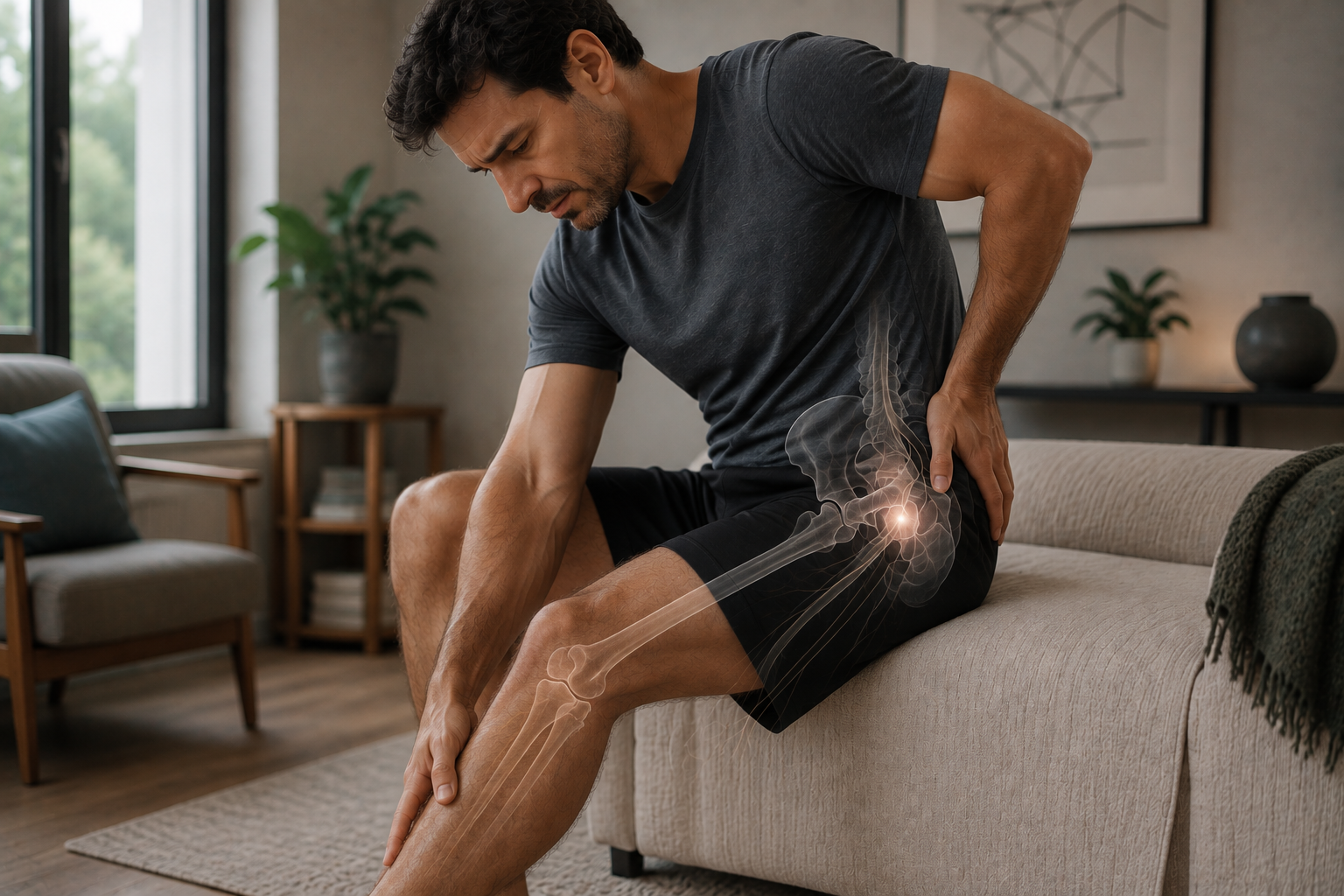
Meralgia Paraesthetica
The lateral femoral cutaneous nerve supplies sensation to the outer part of the thigh. When this nerve becomes compressed as it passes beneath the inguinal ligament, it can cause burning pain, tingling or numbness over the outside of the thigh. Symptoms are often aggravated by prolonged standing or walking, tight clothing, belts or changes in body weight.
Deep Gluteal Syndrome (Piriformis Syndrome)
The sciatic nerve travels through the buttock before continuing down the leg. Irritation of this nerve within the deep gluteal muscles can cause pain deep in the buttock together with tingling, numbness or discomfort travelling into the back of the thigh. Sitting for prolonged periods, walking or certain sporting activities may aggravate symptoms.
Referred Pain from the Lower Back
Pain, tingling or numbness around the hip isn't always caused by the hip itself. Irritation of the nerves in the lower back can sometimes cause symptoms to spread into the buttock, hip or thigh, even when the hip joint is functioning normally. Identifying where your symptoms are originating from is an important part of choosing the most appropriate treatment.
The Weak or Unstable Hip
Not every hip problem causes significant pain. Some people notice weakness, poor balance or a feeling that the hip isn't supporting them properly, particularly when walking, climbing stairs or standing on one leg.
Others describe their hip as feeling unstable, as though it might give way during everyday activities or exercise.
There are several possible causes of hip weakness and instability. Sometimes the muscles around the hip simply aren't working as effectively as they should, while in other cases tendon problems, previous injuries or surgery can reduce strength and movement control.
Identifying the underlying cause is important before deciding on the most appropriate treatment.
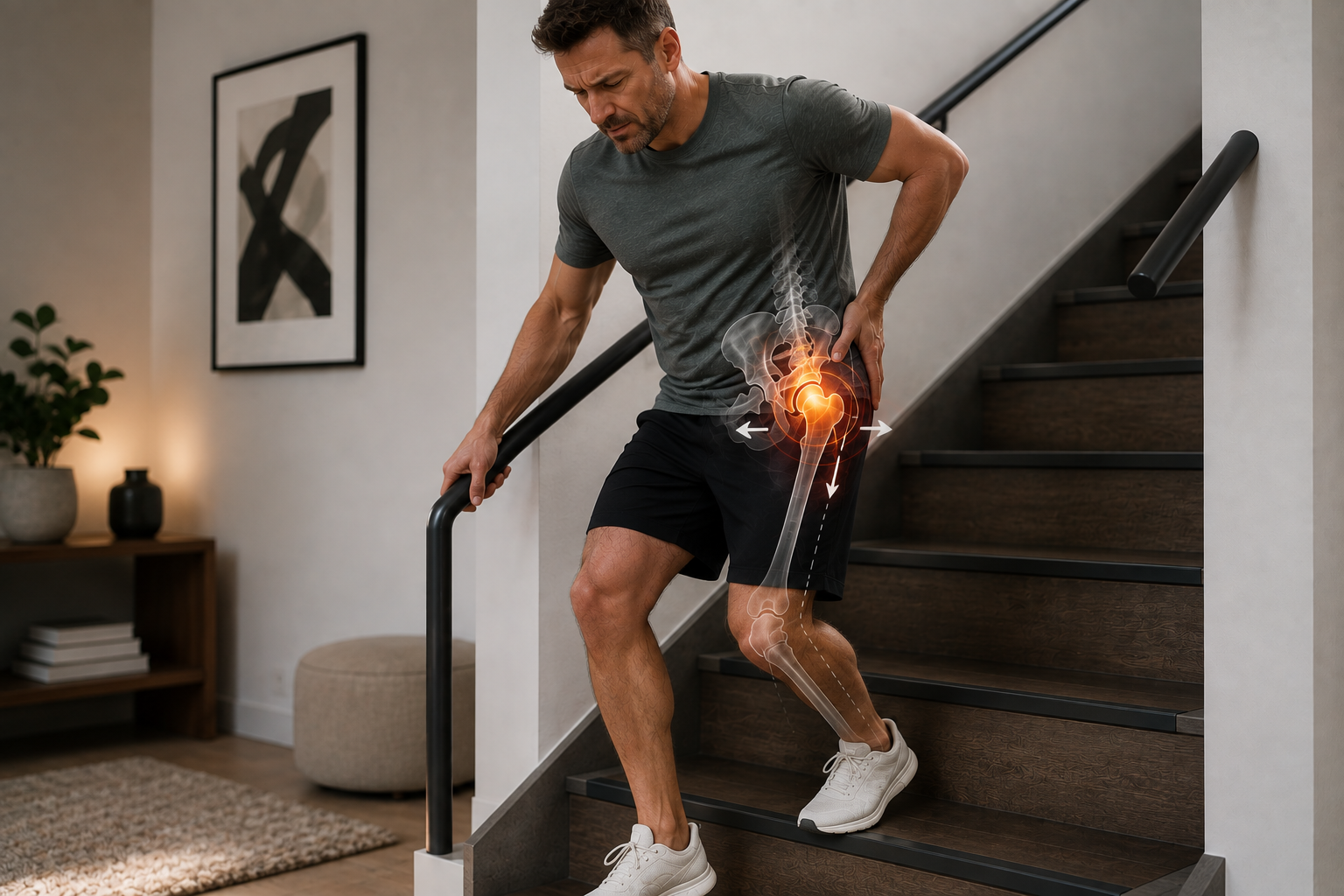
You may notice:
Feeling like your hip gives way
Difficulty standing on one leg
Reduced balance
Weakness climbing stairs
Difficulty walking longer distances
Reduced confidence returning to sport or exercise
Gluteal Weakness
The gluteal muscles play an important role in stabilizing the pelvis during walking, running and climbing stairs. When these muscles become weaker or aren't functioning efficiently, everyday activities may feel more difficult and the hip can feel less stable.
Gluteal Tendon Dysfunction
Persistent problems affecting the gluteal tendons can sometimes reduce the muscles' ability to generate force effectively. This may leave the hip feeling weak or unreliable during walking, exercise or prolonged standing, even if pain isn't the main symptom.
Post-Injury or Post-Surgical Weakness
Following a fracture, tendon injury or hip surgery, it's common to lose strength, balance and confidence around the hip. Even after the pain has settled, rebuilding strength and movement control is often an important part of returning to everyday activities and sport.
Hip Pain at the Gym
Whether you're lifting weights, running, playing football, CrossFit or training for another sport, your hips absorb significant forces during almost every lower-body exercise. Squats, deadlifts, lunges, running, hip thrusts and explosive movements all place high demands on the muscles, tendons and joints around the hip.
Pain doesn't always mean you need to stop training completely. More often, it's a sign that the muscles, tendons or joints around the hip are struggling to cope with the demands being placed on them. By understanding what's driving your symptoms, it's often possible to modify exercises, adjust your training load and keep you moving while your hip settles.
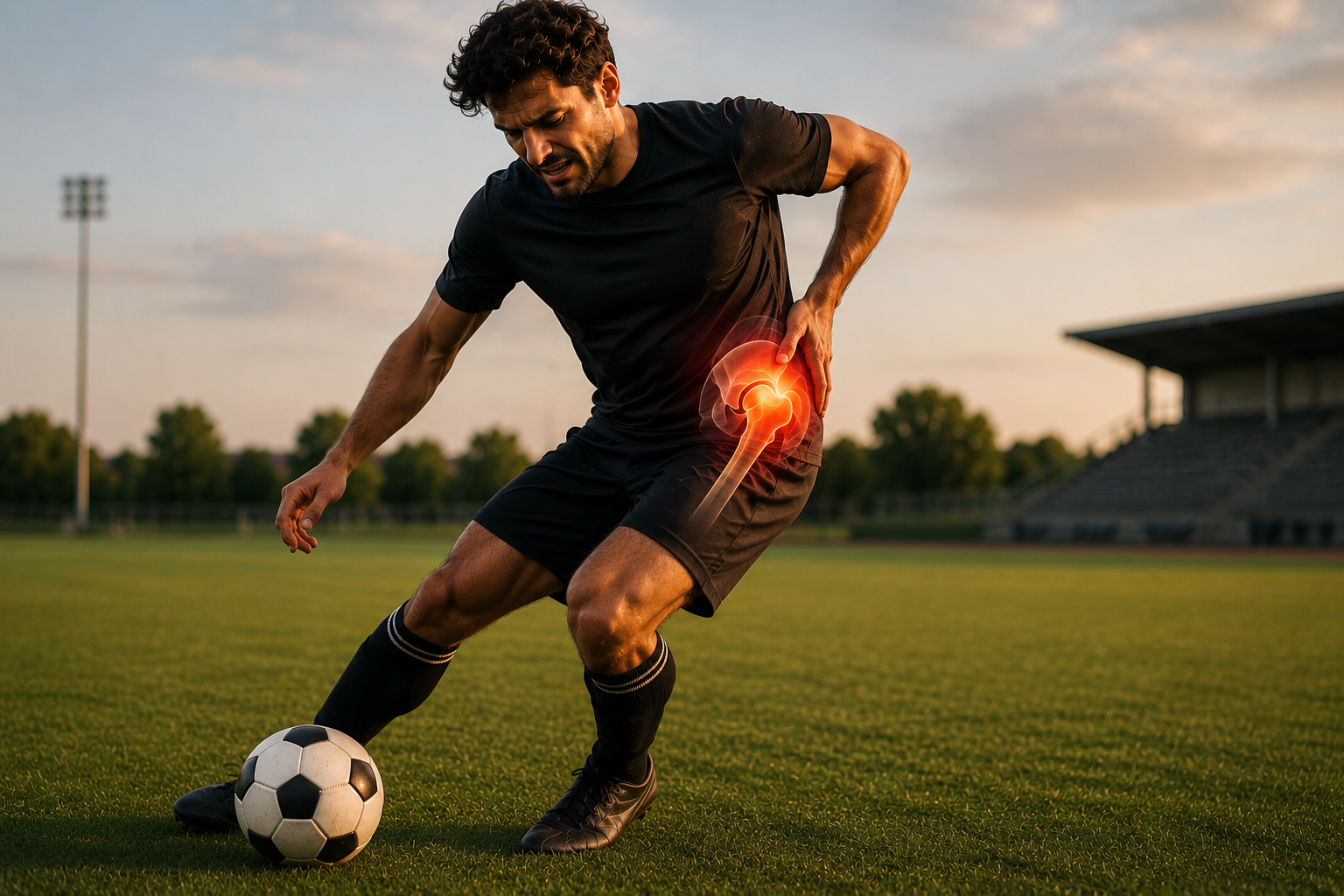
You may notice:
Pain during squats or lunges
Pain during running or sprinting
Discomfort during deadlifts or hip thrusts
Pain with deep squats
Pain after training or the following day
Reduced performance because of hip pain
Hip Pain at Work
Whether you're working at a desk, on a building site, in healthcare, driving for work or spending long hours on your feet, different jobs place different demands on the hips.
Prolonged sitting, repetitive lifting, awkward working positions and physically demanding roles can all contribute to hip pain or make existing symptoms worse.
Hip pain doesn't always mean you need to stop working. By understanding how your job is contributing to your symptoms, it's often possible to make simple adjustments to your working day while addressing the underlying cause of your pain.
Alongside treating your hip, we'll also consider whether factors such as your workstation setup, lifting technique, driving position or daily workload may be contributing to your symptoms. Small changes to the way you work can often make a significant difference while helping you stay comfortable at work.
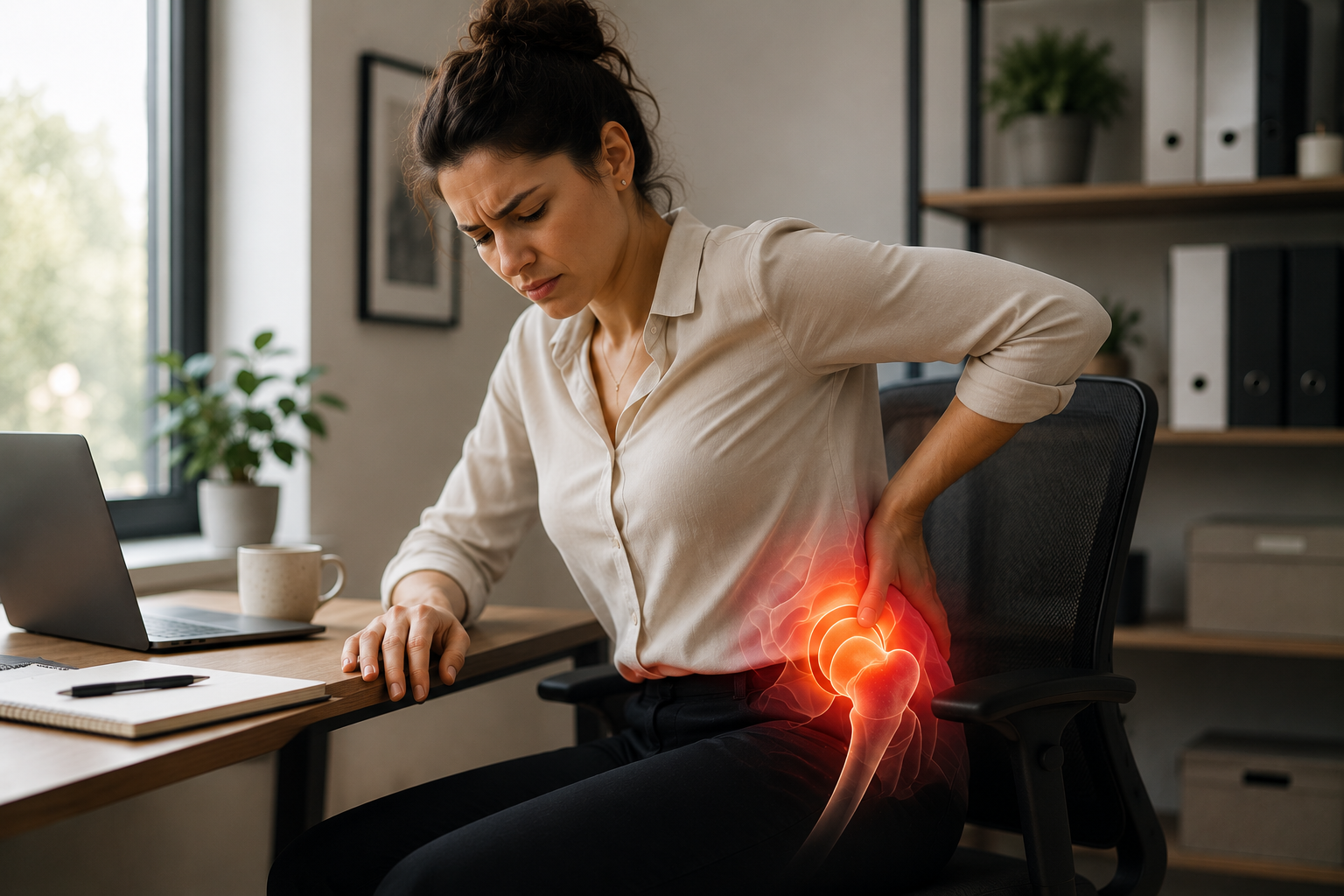
You may notice:
Pain after prolonged sitting
Pain getting in and out of vehicles
Pain lifting, bending or carrying at work
Pain after long periods of standing or walking
Symptoms that gradually worsen throughout the day
Difficulty performing your normal duties comfortably
Recovering After Hip Surgery
Recovering from hip surgery can sometimes feel just as challenging as the injury itself. Whether you've had a hip replacement, hip arthroscopy, gluteal tendon repair or surgery following a fracture, the right rehabilitation plays an important role in helping you regain movement, strength and confidence.
You may benefit from rehabilitation if you're:
Recovering from a hip replacement
Recovering after hip arthroscopy
Recovering following gluteal tendon repair
Recovering after surgery for a hip fracture
Struggling with stiffness or weakness after surgery
Looking to return to work, sport or everyday activities
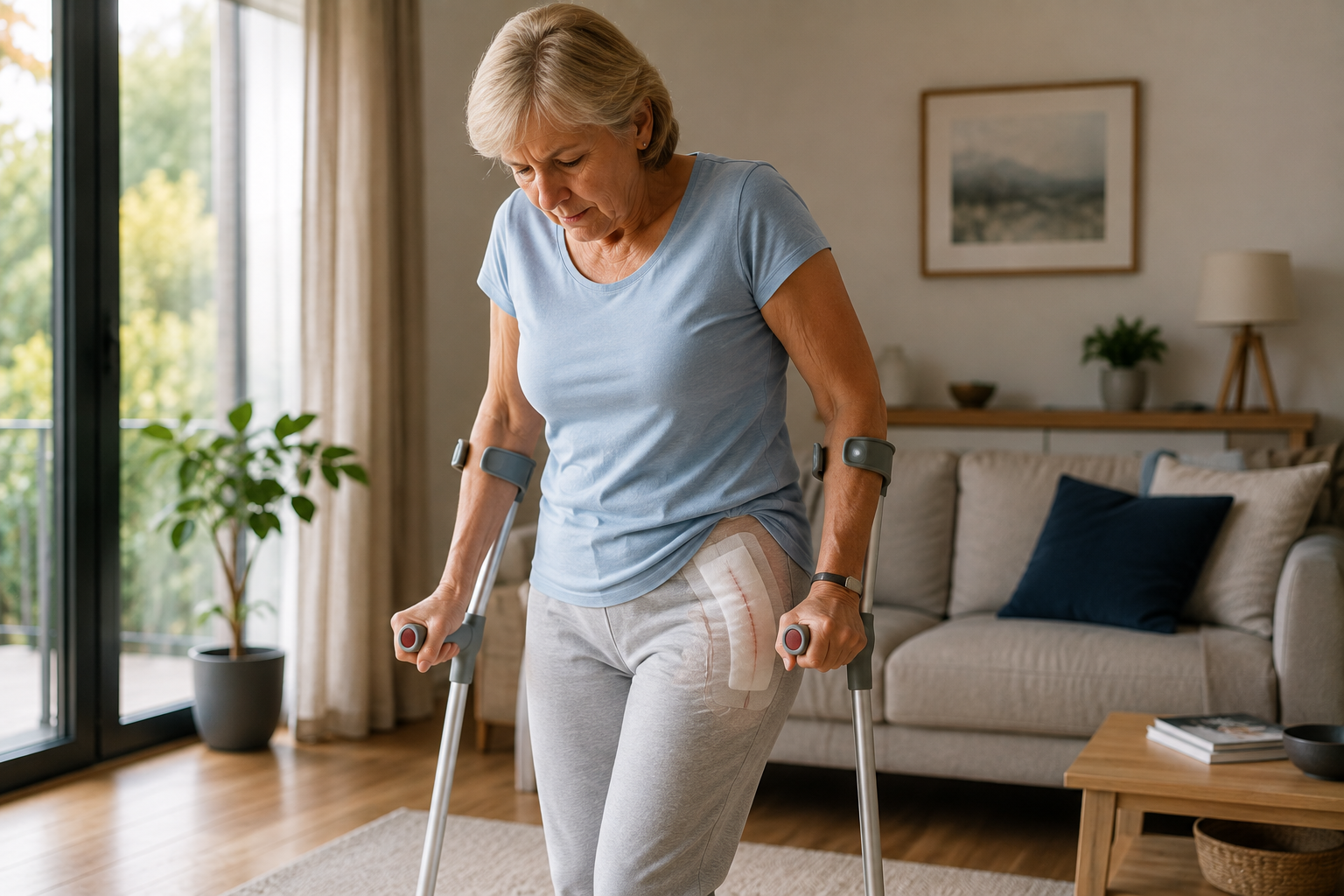
Recovery takes time, and every operation is different. I'll work closely with your surgeon's rehabilitation guidelines to help you progress safely, regain function and get back to the activities that matter most.
What Patient Say
Hip FAQs
-
Hip pain can originate from the joint itself, the surrounding muscles and tendons, nearby bursae or even the lower back. The location of your pain, how it started and which movements aggravate your symptoms all help identify the underlying cause.
-
Pain when lying on your side is commonly associated with Greater Trochanteric Pain Syndrome (GTPS), where the gluteal tendons become irritated around the outside of the hip. It's often mistaken for hip bursitis, although the gluteal tendons are commonly the main source of symptoms.
-
Not always. Groin pain can originate from the hip joint, the adductor muscles, hip flexor tendons or the lower back, but in some cases it may be caused by an inguinal or femoral hernia. Hernias are more likely if you notice a lump in the groin or pain that worsens with coughing, sneezing, straining or heavy lifting. A thorough assessment can help determine the underlying cause and whether further medical assessment is needed.
-
Yes. Pain, tingling or numbness around the hip or thigh doesn't always originate from the hip itself. Irritation of the nerves in the lower back can sometimes cause symptoms to spread into the buttock, hip or leg, which is why a thorough assessment looks beyond the hip joint alone.
-
Not always. Many hip conditions can be diagnosed through a detailed history and physical examination. Imaging is usually recommended when it's likely to change the diagnosis or influence the most appropriate treatment plan.
-
Item descriptioIn many cases, yes. Hip pain doesn't automatically mean you need to stop exercising. By identifying which movements are aggravating your symptoms, it's often possible to modify your training, manage your exercise load and continue exercising safely while your hip settles.n
-
Not necessarily. Although surgery can be the right option for some people, many hip conditions, including tendon problems, hip impingement and even some cases of osteoarthritis,can often be managed successfully without an operation. If surgery is recommended, rehabilitation before and after the procedure plays an important role in helping you achieve the best possible outcome.
Not Sure What's Causing Your Hip Pain?
Every hip problem is different, so treatment starts with understanding what's causing your symptoms. Once we've identified the source of your symptoms, I'll explain what's most likely causing them and recommend the treatment that's most appropriate for you.
You don't need to know exactly what's wrong before booking an appointment , that's what the assessment is for.
👉 Learn more about what to expect from treatment
GET IN TOUCH
Ready to Get Started?
Whether you’re dealing with pain, stiffness, injury, or simply want to move better, we’re here to help. Get in touch and we’ll guide you in the right direction.
☎︎︎ Phone: 0203 773 5310
/ 07983 656 671
✉︎︎ Email: info@jigsawosteopathy.com
⌖︎ Clinic location: 70 Seaton Rd, Hayes, UB3 1NU
➜︎ Directions: View on Google Maps →
◷︎ Opening Hours: By Appointment Only | Monday – Thursday | 9am - 7pm
◎︎ Instagram: @osteo.arj
◉︎ Facebook: Jigsaw Osteopathy Clinic