
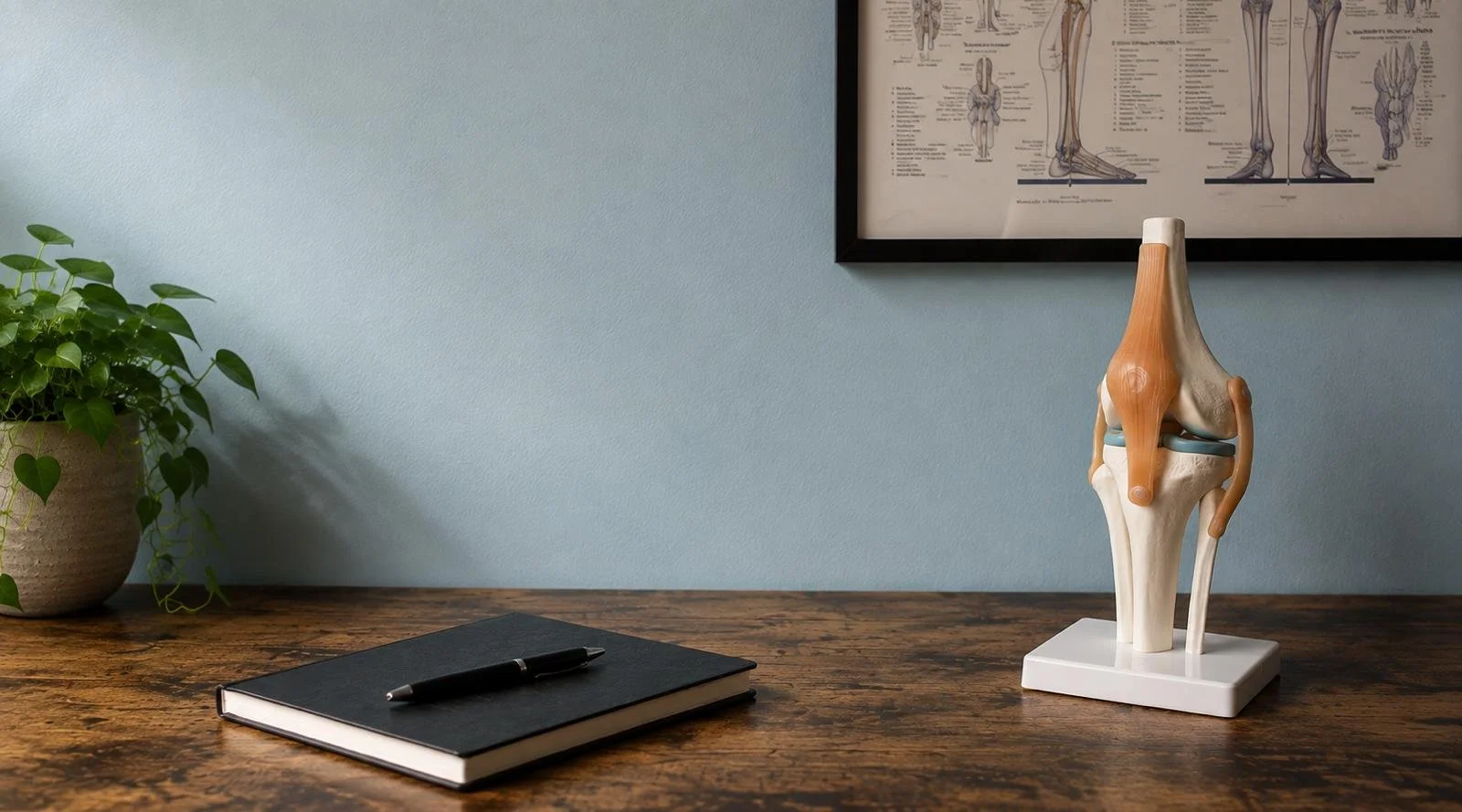
Whether your knee feels painful, stiff or unstable, or symptoms are affecting walking, exercise or everyday life, treatment is tailored to help you get out of pain, restore comfortable movement and get back to doing what matters most.
Knee Pain Treatment in Hayes, West London
Knee pain can affect almost every part of daily life - walking, climbing stairs, exercising, kneeling or simply getting up from a chair. Symptoms may develop gradually over time or begin more suddenly following a sporting injury, fall or twist.
Pain may be felt at the front, back, inside or outside of the knee, sometimes alongside swelling, stiffness, clicking, locking or a feeling that the knee may give way.
Who you'll see
You'll be seen by Arjun Mehra, dual-qualified osteopath and chartered physiotherapist. Your treatment and rehabilitation come from the same person, start to finish, with over a decade of experience helping people reduce pain and stay active.
Appointments usually available within 48 hours, Monday - Thursday.
The Painful Knee
Knee pain may be felt at the front, back, inside or outside of the knee, depending on what is contributing to your symptoms. Pain can develop gradually over time or become noticeable following an injury, change in activity or increase in exercise.
There are several possible causes of knee pain, involving the joint itself, tendons, muscles and other structures around the knee. Different activities and movements can aggravate symptoms depending on the area involved.
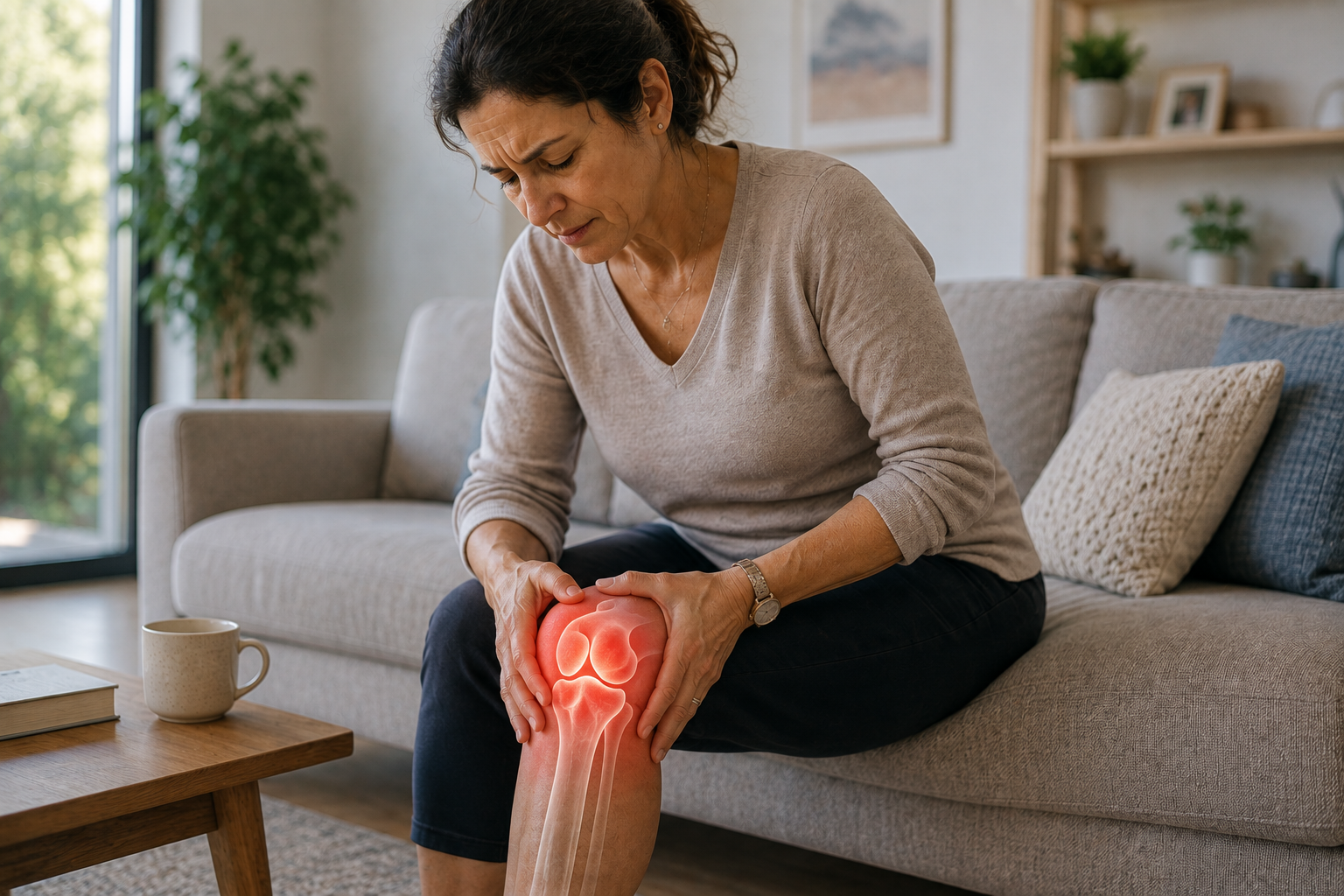
You may notice:
Pain going up or down the stairs
Pain during squatting or kneeling
Pain walking or running
Pain after sitting for long periods
Pain at the front, inside or outside of the knee
Pain during or after sport
Patellofemoral Pain Syndrome
The kneecap (patella) sits within a groove at the front of the knee and helps the quadriceps muscles straighten the leg. When the joint becomes irritated, pain commonly develops around or behind the kneecap, particularly during squatting, climbing stairs, running or sitting with the knee bent for prolonged periods.
Knee Osteoarthritis
Knee osteoarthritis can contribute to aching or pain around the knee, often becoming more noticeable during weight-bearing activities. Symptoms may be felt around the front or inside of the knee, or more generally throughout the joint.
Pain can become more noticeable with walking, climbing stairs, squatting, kneeling or spending longer periods on your feet, and some people notice symptoms increase after doing more than usual.
Patellar Tendinopathy (Jumper's Knee)
The patellar tendon connects the kneecap to the shin bone and plays an important role in jumping, sprinting and changing direction. Repetitive loading can irritate the tendon, causing just below the kneecap that is often worse during jumping, running, squatting or explosive movements.
For persistent patellar tendinopathy, you can also read more about our Shockwave Therapy service.
Quadriceps Tendinopathy
The quadriceps tendon connects the thigh muscles to the top of the kneecap. When this tendon becomes overloaded, pain is typically felt just above the kneecap and may become worse during stairs, squatting, running or sporting activities.
Pes Anserine Pain Syndrome
The pes anserine is where three muscles attach to the inside of the shin, just below the knee. Irritation of these tendons or the nearby bursa can cause pain on the inside of the knee, particularly when climbing stairs, walking longer distances or getting up from a chair.
Iliotibial Band (ITB) Pain Syndrome
The iliotibial band (ITB) is a thick band of connective tissue that runs down the outside of the thigh, helping to stabilise the hip and knee during walking and running. When the tissues around the outside of the knee become irritated, pain commonly develops during repetitive activities such as running, cycling or hiking. Many people notice symptoms begin after increasing their training, particularly when running downhill or over longer distances.
The Stiff Knee
Knee stiffness can develop gradually over time or become noticeable following an injury, surgery or period of reduced activity. You may find the knee doesn't bend or straighten as comfortably as it used to, making everyday movements more difficult.
Stiffness can be particularly noticeable first thing in the morning, after sitting for longer periods or when you first start moving, and may affect activities such as squatting, kneeling, climbing stairs or getting up from a chair.
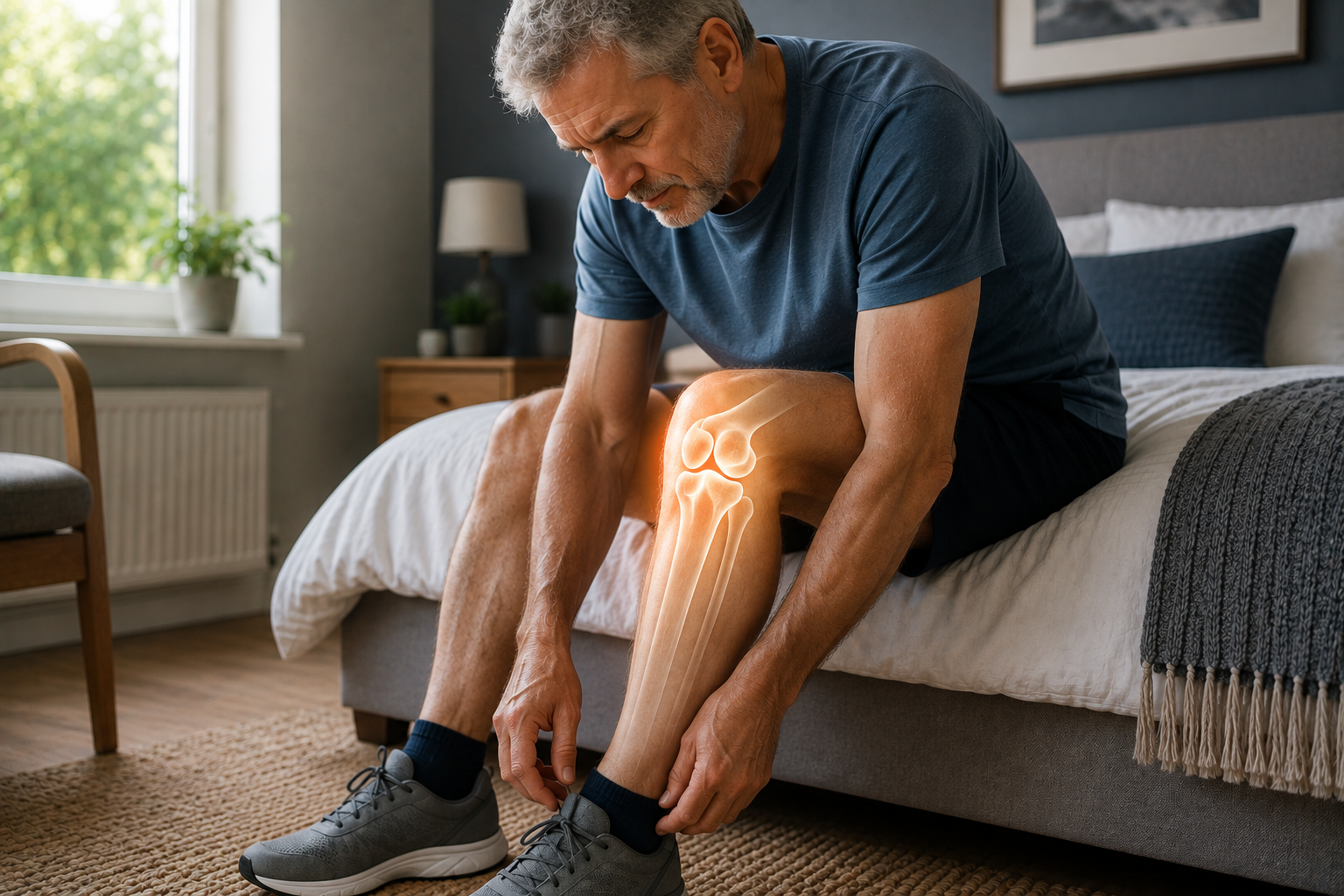
You may notice:
Difficulty fully bending or straightening the knee
Morning stiffness or stiffness after sitting
Difficulty squatting or kneeling
Feeling like the knee doesn't move as freely as it used to
Reduced confidence walking longer distances
Stiffness after previous injury or surgery
Knee Osteoarthritis
Knee osteoarthritis can cause the knee to feel stiff or restricted, particularly first thing in the morning, after sitting for a while or following periods of reduced activity.
You may notice difficulty fully bending or straightening the knee, getting up from a chair, using stairs or moving comfortably after being in one position for longer periods.
Reduced Knee Mobility
Not all knee stiffness is caused by arthritis or structural changes within the joint. Previous injuries, prolonged periods of inactivity or reduced movement can contribute to a knee that feels stiff or doesn't move as freely as it once did.
This may become noticeable during kneeling, squatting, using stairs or getting up from the floor, sometimes with relatively little pain.
Clicking, Locking & Giving Way
Clicking and other noises from the knee are very common and aren't always a sign of a problem, particularly when they aren't painful. However, painful clicking or catching, episodes of locking or a knee that repeatedly gives way can be more significant.
These symptoms can develop following an injury, twisting movement or sporting activity, or sometimes more gradually over time. Depending on the presentation, the menisci, cartilage, ligaments or kneecap may be involved.
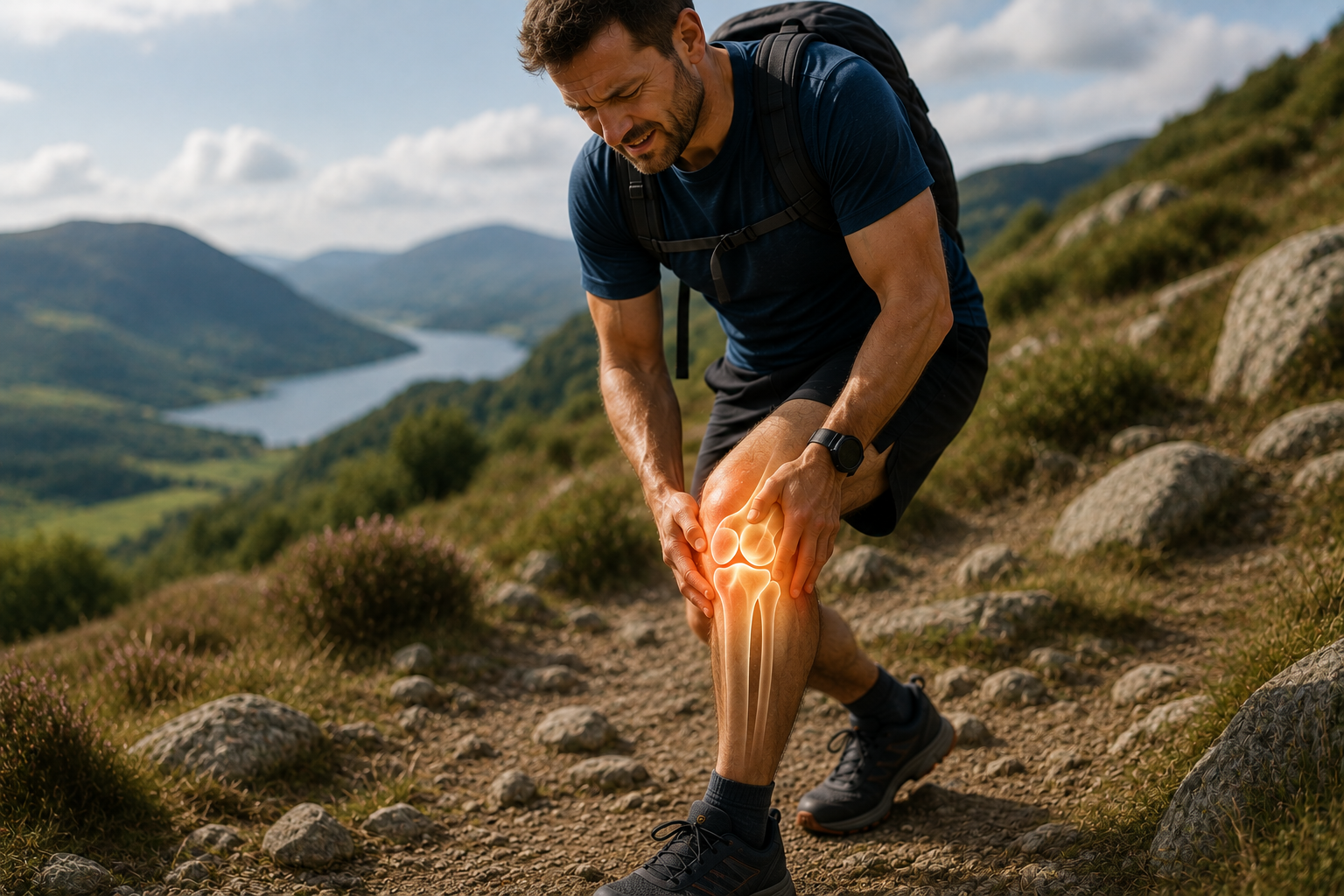
You may notice:
Clicking or catching within the knee
Locking or difficulty fully straightening the knee
A feeling that the knee gives way or buckles
Pain during twisting or pivoting movements
Swelling after activity or sport
Reduced confidence walking or changing direction
Meniscal Tears
The menisci are two crescent-shaped pieces of cartilage that help distribute load within the knee. Meniscal tears can occur following a twisting injury or develop gradually over time.
Symptoms may include pain along the joint line, clicking, catching or, in some cases, episodes where the knee feels locked or difficult to fully straighten.
Anterior Cruciate Ligament (ACL) Injury
The anterior cruciate ligament (ACL) helps control movement and stability within the knee. ACL injuries commonly occur during sudden changes of direction, landing from a jump or twisting movements in sport.
Some people describe hearing or feeling a “pop”, followed by swelling and a feeling that the knee is unstable or likely to give way.
Medial & Lateral Collateral Ligament (MCL & LCL) Injuries
The medial collateral ligament (MCL) and lateral collateral ligament (LCL) help stabilise the knee from side to side. These ligaments are commonly injured following a twisting injury or a direct blow to the knee and may cause pain along the inside or outside of the joint, swelling and a feeling of instability, particularly during walking or changing direction.
Patellar Instability
The patella (kneecap) normally glides within a groove at the front of the knee as it bends and straightens. If the kneecap moves excessively or partially dislocates, it can cause pain, instability or a feeling that the knee may give way, particularly during twisting movements, squatting or sporting activities.
The Swollen Knee
Knee swelling can develop suddenly following an injury or more gradually over time. The knee may feel full, tight or stiff, making it more difficult to bend or straighten comfortably.
Swelling can occur following an injury to the joint, menisci or ligaments, after an increase in activity, or alongside conditions such as osteoarthritis. The pattern and timing of the swelling can help indicate what may be contributing to it.
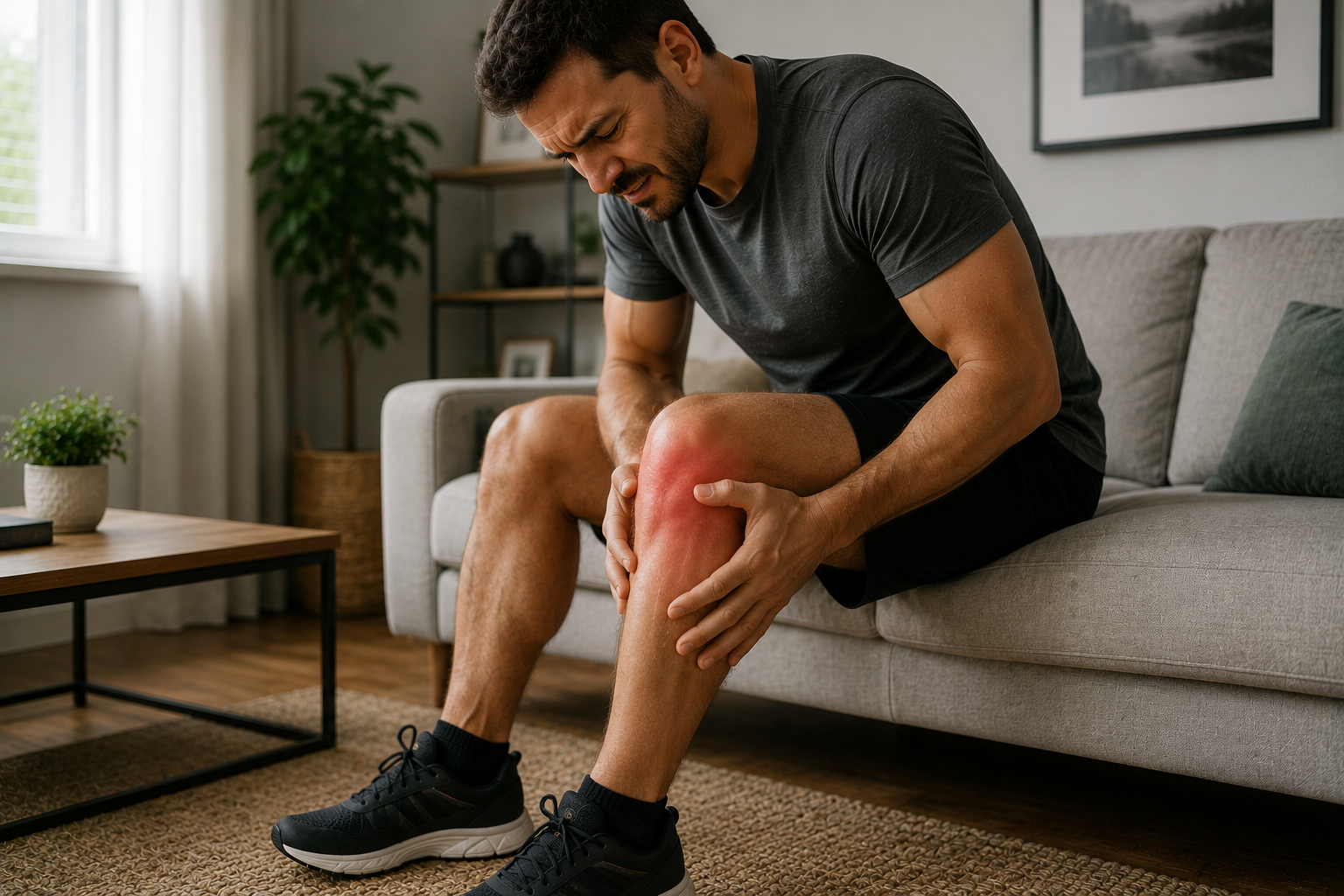
You may notice:
A visibly swollen knee
Tightness when bending or straightening the knee
Pain during walking or weight-bearing
Swelling after sport or exercise
Stiffness, particularly after sitting
A feeling of fullness or pressure around the knee
*If knee swelling is accompanied by significant redness or warmth, fever, or feeling generally unwell, medical assessment is recommended.
Knee Joint Effusion ("Fluid on the Knee")
A knee joint effusion is a build-up of excess fluid within the knee joint, often described as “fluid on the knee.” It can develop following an injury, irritation within the joint or conditions such as arthritis.
The knee may feel swollen, tight or difficult to fully bend or straighten.
Baker's Cyst
A Baker’s cyst is a pocket of fluid that develops at the back of the knee, often alongside irritation or increased fluid within the joint. It can cause swelling, tightness or a feeling of fullness behind the knee, particularly when fully bending or straightening the leg.
Bursitis
Several bursa sit around the knee to reduce friction between the skin, tendons and bone. The most commonly affected include the prepatellar bursa (at the front of the kneecap), the infrapatellar bursa (just below the kneecap) and the pes anserine bursa (on the inside of the knee). When one of these bursae becomes irritated, it can lead to a localised area of swelling, warmth and tenderness. This often develops after prolonged kneeling, repetitive pressure or following a minor injury.
Knee Osteoarthritis
Knee osteoarthritis can sometimes be associated with increased fluid and swelling within the joint, particularly during a flare-up or after an increase in activity.
The knee may feel puffy, full or tight, and the swelling can make bending or straightening the knee more difficult.
Knee Pain During Gym & Sport
Knees tolerate significant force during almost every lower-body movement, and how much training you're doing and how quickly you've increased it can be just as important as the exercise itself. Squats, lunges, running, jumping and changes of direction all add to that load, and symptoms often reflect the overall demands of training rather than one movement being "bad" for your knee.
That doesn't usually mean stopping. Adjusting training volume, temporarily changing which movements you load or gradually rebuilding tolerance can often allow you to keep training while symptoms settle. How your hips, ankles and feet move can also influence the demands placed on the knee.
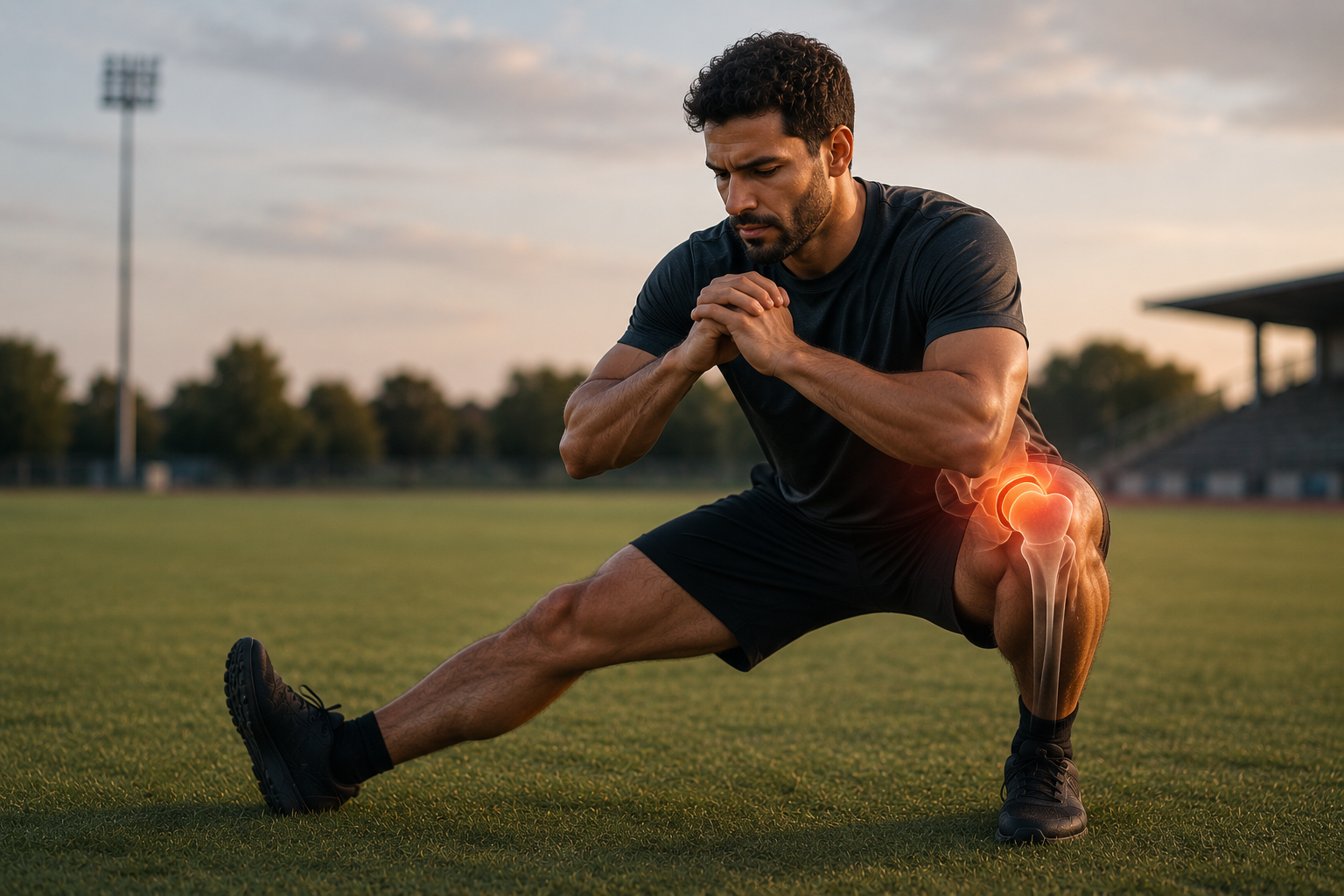
You may notice:
Pain during squats or lunges
Pain during running or jumping
Discomfort during leg press or step-ups
Pain during or after changes of direction
Pain after training or the following day
Swelling after exercise
Knee Pain at Work
Different jobs place different demands on the knees, whether you're sitting at a desk, driving, working on your feet or doing a physically demanding job. Symptoms may build gradually throughout the working day or become more noticeable during particular tasks.
For desk-based work, prolonged sitting with the knee bent for longer periods can aggravate some types of knee pain. Workstation setup and ergonomics can be relevant, alongside regularly changing position and moving throughout the day.
Physical work may involve repeated kneeling, squatting, lifting, carrying or climbing stairs, all of which place different demands on the knee and may aggravate symptoms when workloads increase.
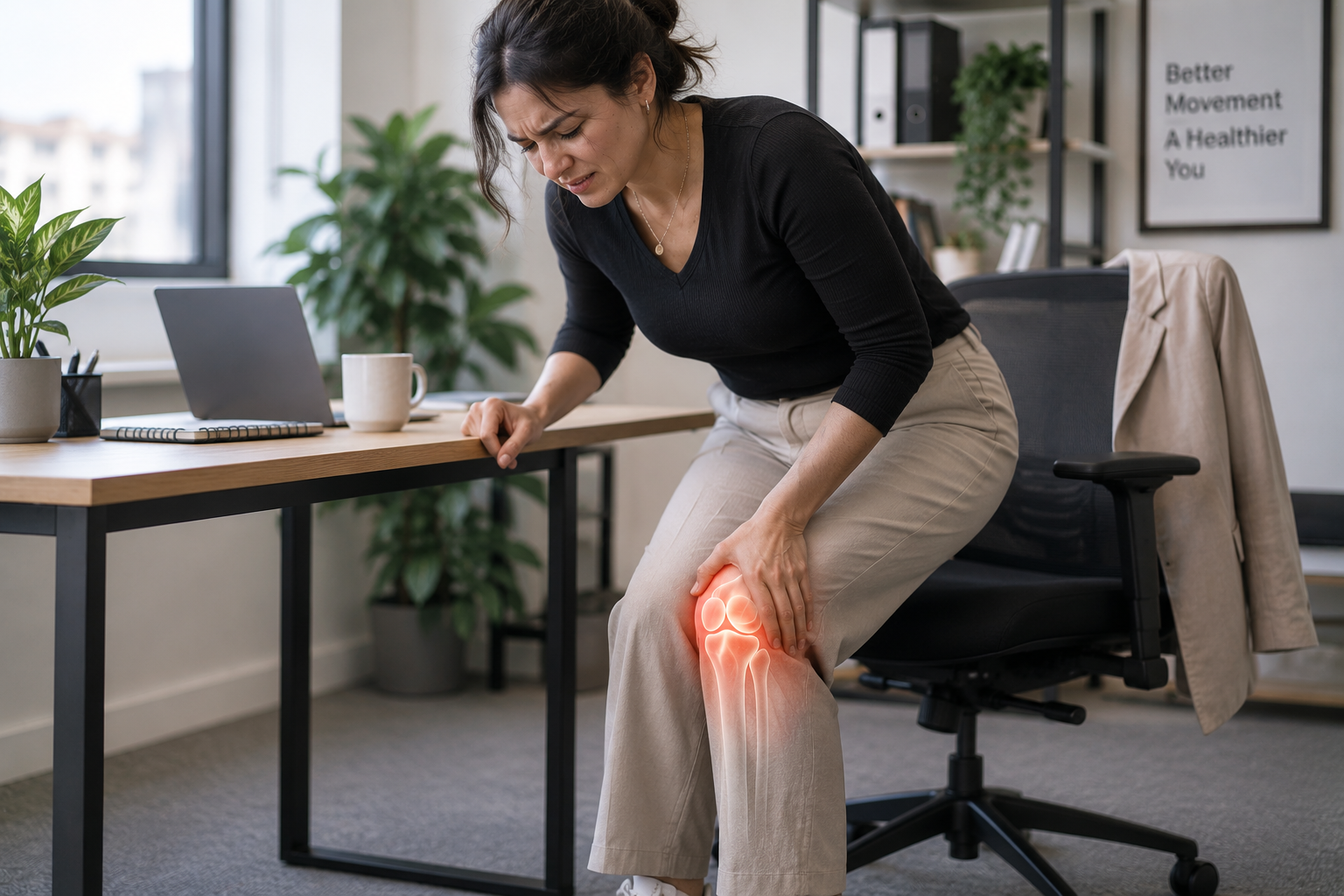
You may notice:
Pain after prolonged sitting, standing or walking
Pain when kneeling or squatting
Difficulty climbing stairs at work
Pain with lifting or carrying
Symptoms that build throughout the working day
Difficulty performing your normal duties comfortably
After Knee Surgery
Recovery after knee surgery varies depending on the type of surgery, stage of recovery and activities you want to return to. Rehabilitation plays an important role in rebuilding movement, strength and confidence as you progress.
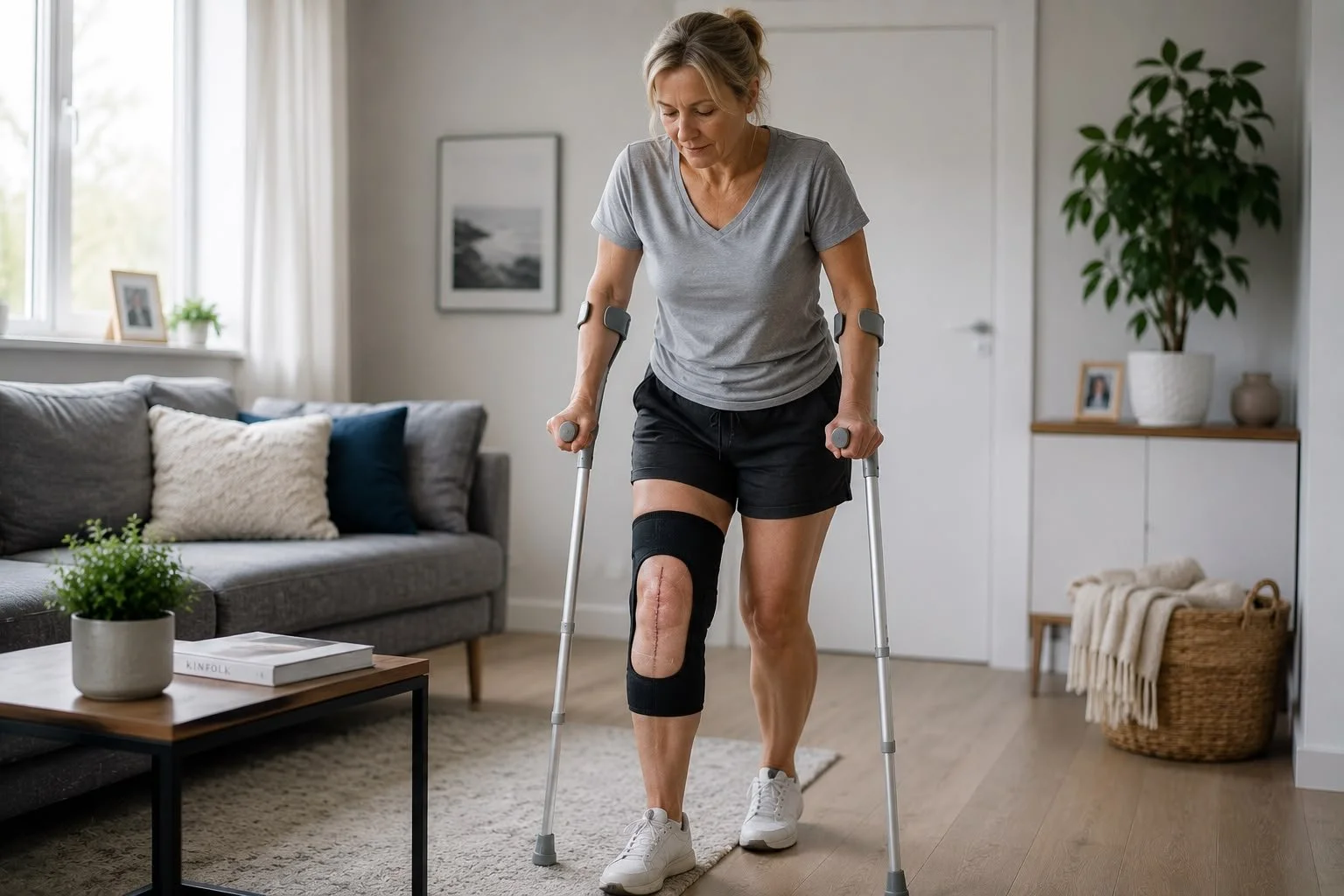
You may benefit from rehabilitation if you're:
Recovering from a knee replacement
Recovering after ACL reconstruction
Recovering following meniscal surgery
Recovering after cartilage or ligament surgery
Recovering following surgery for a fracture
Looking to return to work, the gym, sport or everyday activities
Hands-on treatment can help with pain, stiffness and surrounding muscular tightness, alongside rehabilitation to progressively rebuild movement, strength and function. Treatment will be adapted to your procedure and stage of recovery, while working within your surgeon's post-operative guidelines and any restrictions they've provided.
How We Treat Knee Pain
Treatment may combine hands-on techniques to help with pain, stiffness and restricted movement, with exercises to improve strength and capacity through the knee, hip and lower limb.
Your assessment helps guide what you need. We have a broad range of treatment techniques and tools available, allowing treatment to be adapted to you rather than following a set approach. For many knee problems, gradually building strength and tolerance to load is an important part of treatment. For some longer-standing tendon problems, such as patellar tendinopathy, shockwave therapy may also be considered alongside rehabilitation.
What Patients Say
Knee FAQs
-
Clicking or cracking in the knee is often completely normal, particularly if it isn't painful or associated with swelling or locking. However, painful clicking, catching or repeated episodes of locking may indicate irritation of the meniscus, cartilage or other structures within the knee and should be assessed.
-
Not necessarily. Many meniscal tears can be managed successfully without surgery, particularly if symptoms are improving with the right treatment and rehabilitation. However, larger tears causing persistent locking, significant instability or ongoing mechanical symptoms may require further investigation, imaging or referral to an orthopaedic specialist. Treatment recommendations are always based on your symptoms, examination findings and goals rather than the scan alone.
-
Not always, but sometimes imaging plays an important role. Many knee conditions can be diagnosed through a detailed history and physical examination alone, meaning an MRI or X-ray isn't always needed straight away.
However, imaging may be recommended if there's concern about a fracture, significant ligament or cartilage injury, persistent swelling, symptoms that aren't improving as expected, or when the results are likely to influence the most appropriate treatment plan. If imaging is appropriate, we'll explain which scan is most suitable and why.
-
In many cases, yes. Knee pain doesn't automatically mean you need to stop exercising. By identifying which movements are aggravating your symptoms, it's often possible to modify your training, manage your exercise load and continue exercising safely while your knee settles.
-
It depends on the cause of your symptoms. Many runners don't need to stop completely and can continue training by adjusting their running volume, intensity or technique. Identifying what's driving your pain helps determine the safest approach and whether any temporary modifications are needed.
-
Yes. The knee doesn't work in isolation. Problems affecting the hips, ankles or lower back can sometimes alter the way forces are distributed through the knee or even refer pain into the area. During your assessment, we'll look beyond the knee itself to identify any contributing factors that may be affecting your symptoms.
-
Most knee pain isn't caused by anything serious, but certain symptoms should be assessed promptly. If your knee becomes significantly swollen after an injury, repeatedly locks, gives way, you're unable to bear weight, or you notice significant redness, warmth, fever or feel generally unwell, it's important to seek medical assessment as soon as possible.
-
Pain or stiffness after prolonged sitting, sometimes called the "movie theatre sign" is commonly associated with patellofemoral pain syndrome, although arthritis and other knee conditions can produce similar symptoms. If your knee repeatedly becomes painful after sitting, driving or travelling, it's worth having it assessed to identify the underlying cause.
Not Sure What's Causing Your Knee Pain?
Knee pain can have a number of different causes, and you don’t need to know exactly what’s wrong before booking. That’s what the assessment is for.
GET IN TOUCH
Ready to Get Started?
Whether you’re dealing with pain, stiffness, injury, or simply want to move better, we’re here to help. Get in touch and we’ll guide you in the right direction.
☎︎︎ Phone: 0203 773 5310
/ 07983 656 671
✉︎︎ Email: info@jigsawosteopathy.com
⌖︎ Clinic location: 70 Seaton Rd, Hayes, UB3 1NU
➜︎ Directions: View on Google Maps →
◷︎ Opening Hours: By Appointment Only | Monday – Thursday | 9am - 7pm
◎︎ Instagram: @osteo.arj
◉︎ Facebook: Jigsaw Osteopathy Clinic