
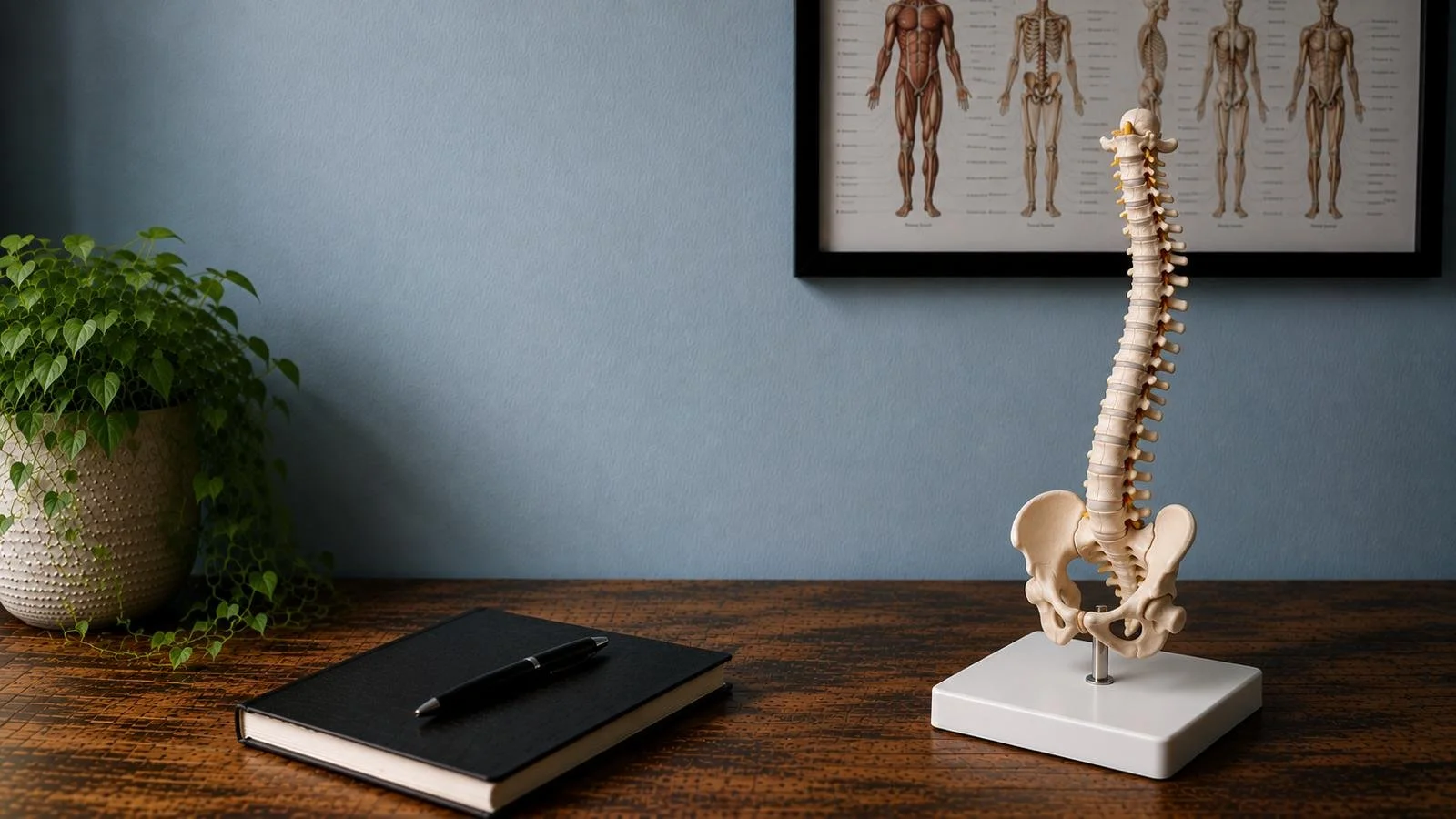
Posture Related Pain Treatment in Hayes, West London
If pain, stiffness or discomfort is making you more aware of your posture, assessment and treatment can help identify what may be contributing and help you move more comfortably and confidently in everyday life.
Neck tension, an aching upper back or a lower back that hurts after sitting can make the working day genuinely uncomfortable. Long periods sitting, standing or working in the same position can leave you feeling stiff or tired, with symptoms that build as the day goes on, ease when you move and return when you settle back into the same position.
There isn't one “perfect” posture you need to hold all day. What matters more is understanding which positions and activities appear to aggravate your symptoms, how often you're moving and how comfortably your body can tolerate the demands placed on it.
Who you'll see
You'll be seen by Arjun Mehra, dual-qualified osteopath and chartered physiotherapist. Your treatment and rehabilitation come from the same person, start to finish, with over a decade of experience helping people reduce pain and stay active.
Appointments usually available within 48 hours, Monday - Thursday.
Neck, Shoulder & Upper Back Pain
Long periods at a desk, driving or looking down at a phone can leave the neck, shoulders and upper back feeling stiff, tired or uncomfortable.
You may notice your shoulders becoming more rounded, your head sitting further forwards, or simply find it harder to maintain a comfortable position as the day goes on.
Over time, these positions can place different demands on the muscles and joints around the neck, shoulders and upper back. Where posture appears to be contributing to your symptoms, we can work on improving movement, strength and your ability to maintain more comfortable positions.

You may notice:
Tension across the neck and tops of the shoulders
Aching between or around the shoulder blades
Neck or upper back stiffness
Headaches that start around the base of the skull
Symptoms that build during desk or screen work
Feeling better after moving, stretching or changing position
Lower Back, Hip & Pelvic Pain
Posture can also influence how your lower back, pelvis and hips feel, particularly if you spend long periods sitting, driving or standing.
You may notice changes in the position of your pelvis or the curve of your lower back, or simply find that certain positions become uncomfortable the longer you stay in them.
Different positions place different demands on the muscles and joints around the lower back, pelvis and hips. Where this appears relevant to your symptoms, we can look at your spinal and hip mobility, strength and movement, as well as the positions you regularly use throughout the day.
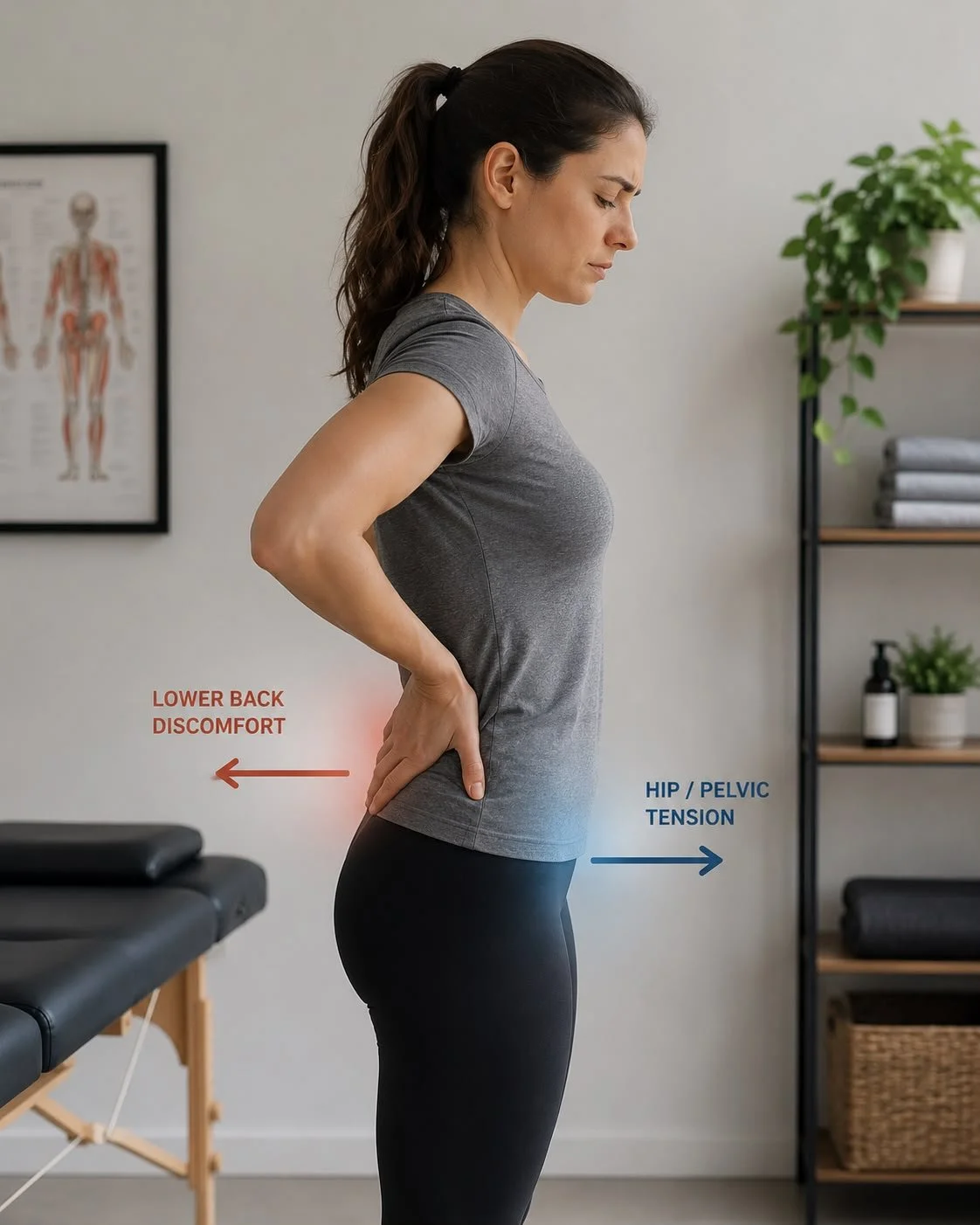
You may notice:
Lower back ache after sitting or driving
Stiffness when getting up after sitting
Tightness or aching around the hips and pelvis
Lower back stiffness towards the end of the day
Difficulty finding a comfortable sitting or standing position
Symptoms that improve when you walk, stretch or change position
Pelvic Position & Lower Back Posture
You may have heard terms such as anterior or posterior pelvic tilt used to describe the position of the pelvis and lower back.
There is natural variation between people, but if certain positions appear to be contributing to your symptoms, we can assess how your pelvis, hips and lower back move together and whether improving mobility, strength or control helps you feel more comfortable.
Symptoms That Build Through the Day
You might feel relatively comfortable when you first wake up, but notice pain, stiffness or tension gradually building as the day goes on.
This can happen when your body spends long periods in similar positions, whether you're sitting at a desk, driving, standing at work or repeatedly performing the same tasks.
Often, it's not about finding one “perfect” position. Changing position and moving regularly can be just as important as how you're sitting or standing.
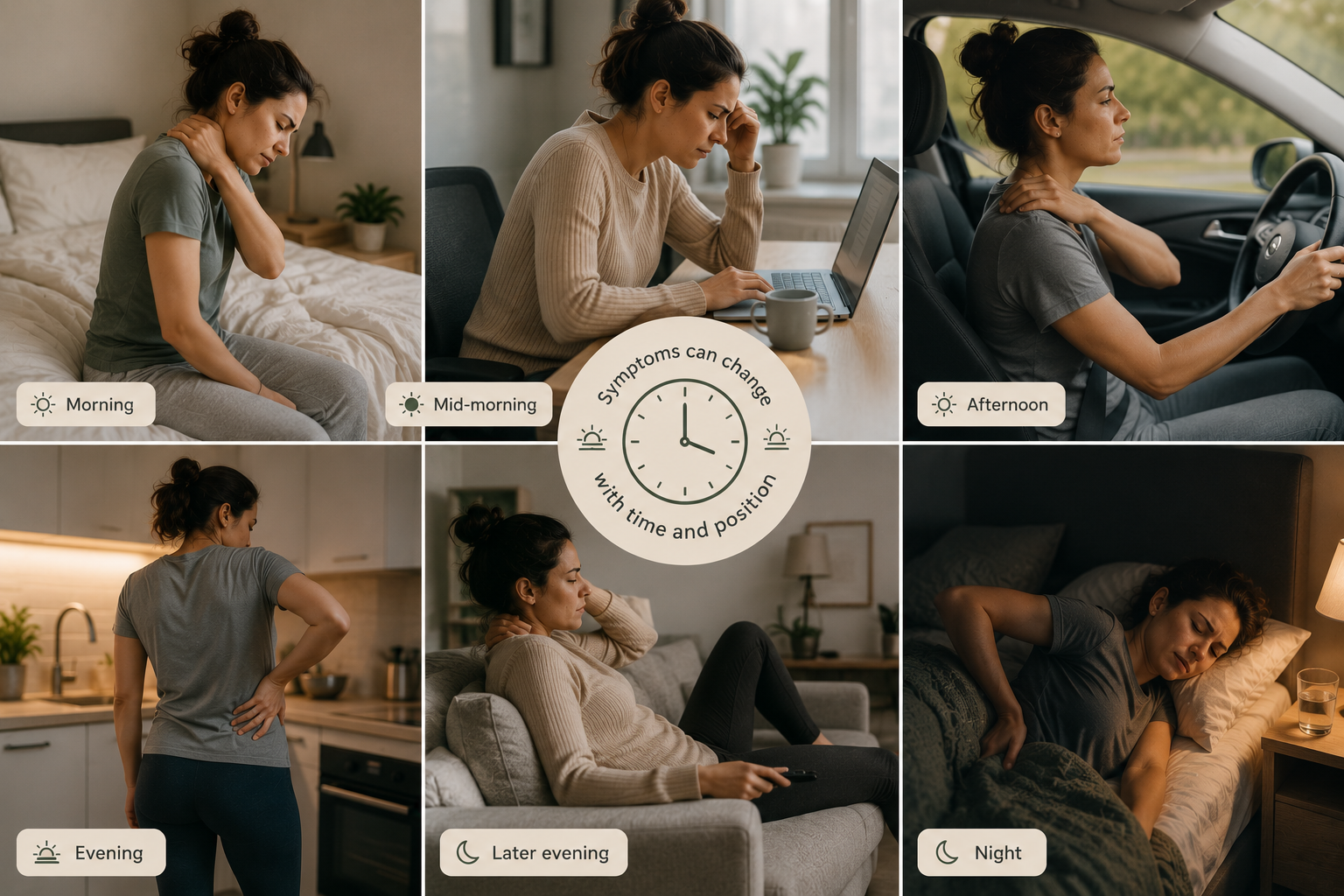
You may notice:
Feeling comfortable in the morning but increasingly stiff or sore later in the day
Neck, shoulder or back tension building during work
Symptoms after long periods of sitting, standing or driving
Feeling the need to regularly stretch or change position
Relief when you get up, walk or move around
Symptoms returning when you settle back into the same position
What Can Help?
Small changes can sometimes make a significant difference. This might include changing position more regularly, introducing movement breaks, adjusting how you work or building more strength and mobility so your body is better able to tolerate the demands of your day.
If symptoms keep returning, we can assess what's becoming uncomfortable, when it happens and what changes it, then combine treatment, exercise and practical advice around your day-to-day routine.
Posture at Work
If your pain or stiffness regularly develops while you're working, it can be useful to look at how your working environment, the positions you spend time in and the demands of your job may be influencing your symptoms.
For desk-based work, things like screen height, chair and desk position, laptop use and how long you stay in one position can all make a difference. For more physical jobs, we may also consider repetitive movements, lifting, prolonged standing or the positions your work requires.
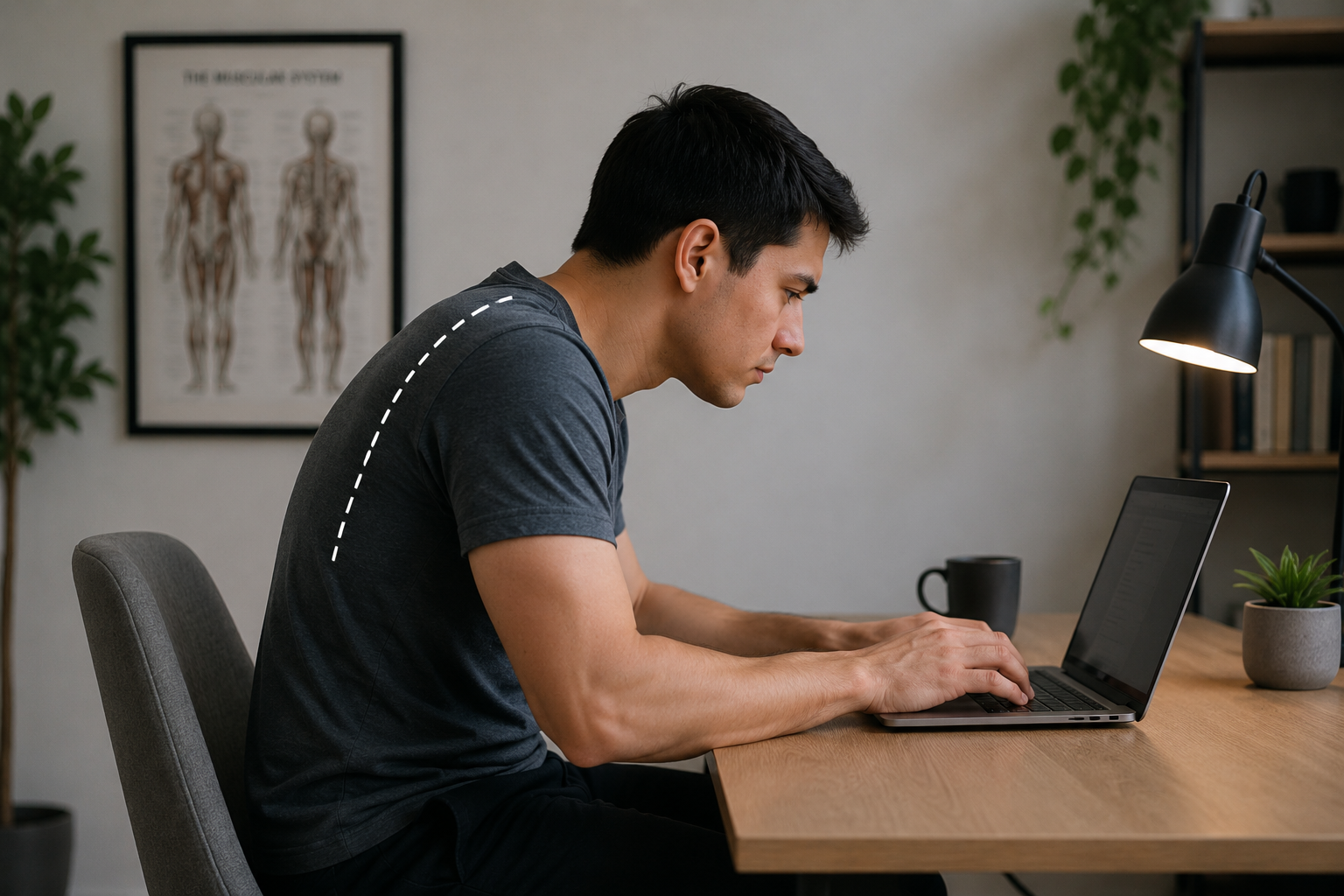
We may look at:
Your desk, chair and screen setup
Sitting and standing positions
Laptop and phone use
How long you spend in one position
Repetitive movements or work tasks
Driving and commuting
Opportunities to move during the working day
Which parts of your job aggravate or ease your symptoms
Making Work More Comfortable
You don't necessarily need an expensive ergonomic chair or a completely redesigned workstation (although if it is needed we can happily support you with a letter for your employer).
However, often small practical changes, combined with treatment and exercises to improve movement, strength and your ability to tolerate the demands of your job, can help make the working day more comfortable.
The aim is to find changes that actually fit around your work, rather than giving you a rigid list of rules about how you're supposed to sit or stand.
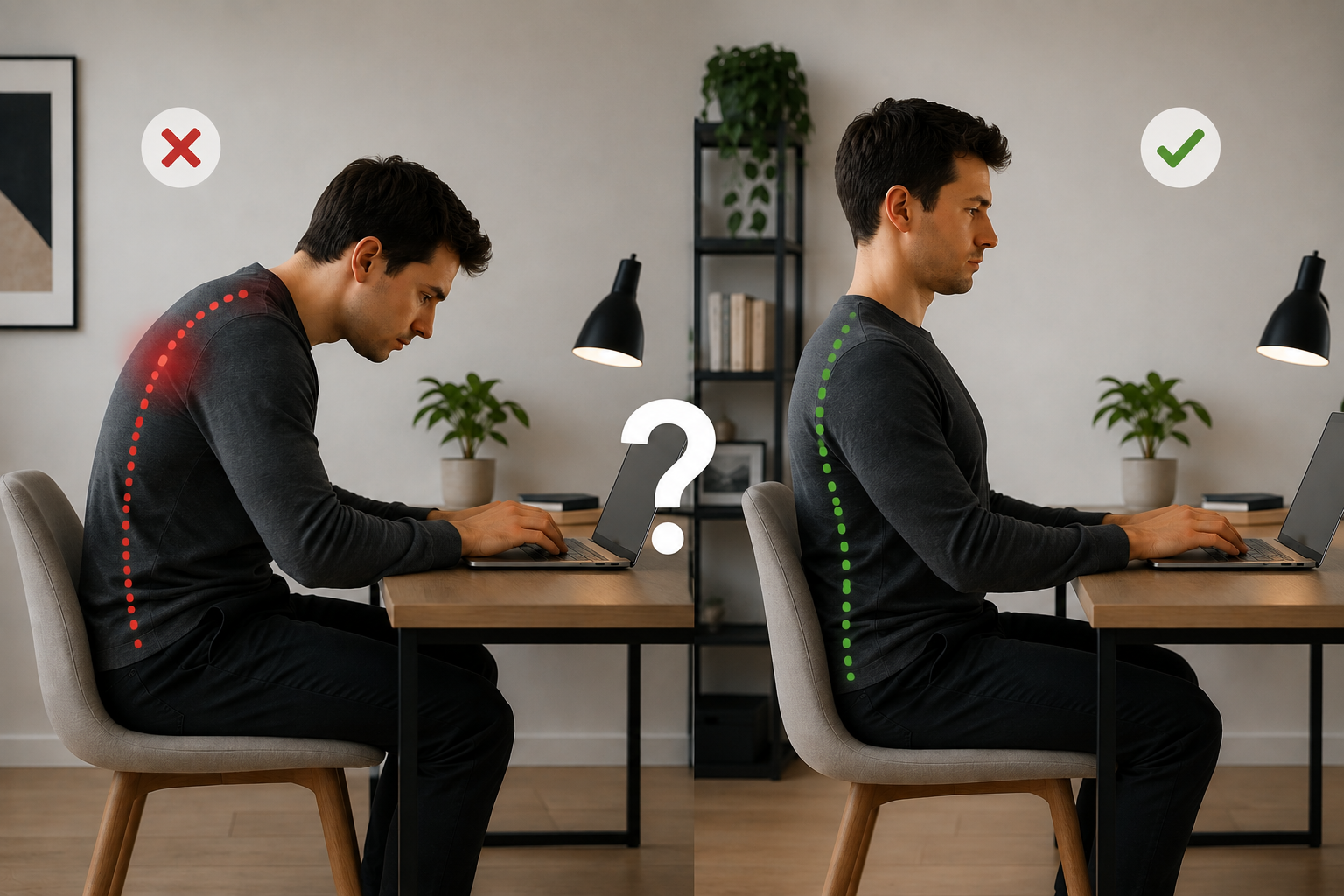
Does Posture Actually Cause Pain?
Posture can influence how your body feels, particularly when you spend long periods sitting, standing or working in similar positions. But it is rarely the only factor involved.
Things like your movement, strength, mobility, workload, activity levels and how long you spend in certain positions can all affect how comfortably your body copes with the demands placed on it.
This is why two people can have very similar-looking postures but experience completely different symptoms.
What Matters for You?
Rather than judging your posture simply by how it looks, we'll assess how you sit, stand and move, which positions bring on your symptoms and what happens when we change them.
If changing your posture or the way you move makes you feel better, that's useful information, and it may form part of your treatment and rehabilitation.
For some people, this means working on mobility or strength, while for others it may involve changing certain habits or positions and building their ability to comfortably tolerate the demands of work and everyday life.
The goal is to help you find positions that feel comfortable, move more freely and spend less of your day thinking about your posture.
How We Help With Posture-Related Pain
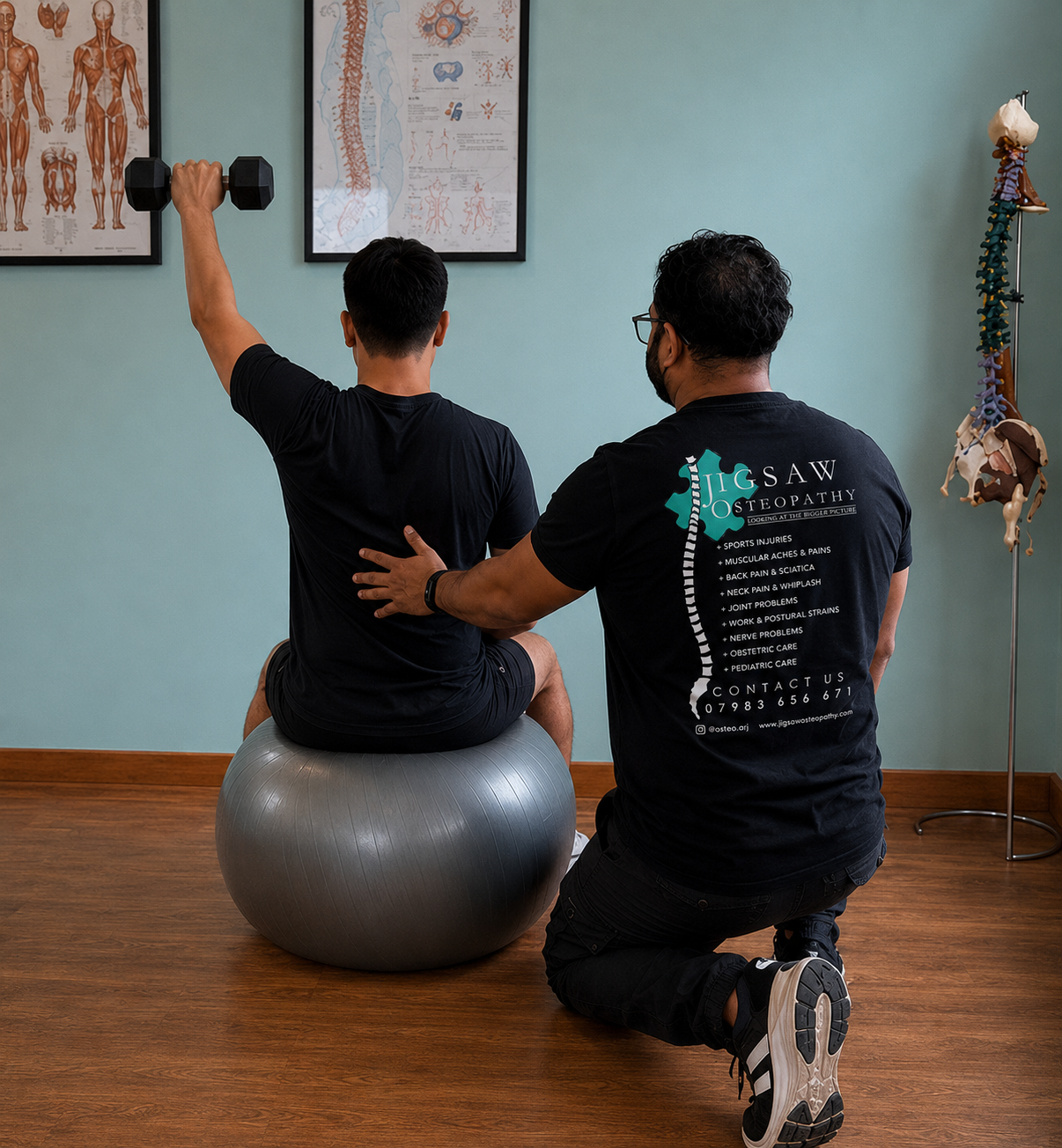
Treatment starts with understanding where you're experiencing pain or stiffness, what brings it on and how your body is moving and coping with the demands of your day.
Rather than using the same approach for everyone, we'll tailor treatment to what we find during your assessment.
Treatment May Include
Hands-on treatment to help reduce pain and improve movement in areas that feel stiff or restricted
Mobility exercises for areas that may benefit from moving more freely
Strengthening and rehabilitation to help your body better tolerate the positions and activities you regularly use
Posture and movement advice based around your individual symptoms
Workstation or ergonomic advice where your working environment appears relevant
Dry needling or acupuncture where appropriate and with your consent
As both osteopathy and physiotherapy are provided by the same clinician, we can combine hands-on treatment with exercise and rehabilitation as part of the same plan, rather than treating them as separate parts of your care.
We can also consider factors such as workload, activity, sleep, stress and recovery where they appear relevant to how you're feeling.
The aim isn't simply to change how your posture looks. It's to help you feel more comfortable, move better and build the strength and capacity to manage the demands of everyday life.
What Patients Say
Posture FAQs
-
Posture can influence pain, particularly if you spend long periods in positions that your body finds uncomfortable. However, it is rarely the only factor, which is why we look at your posture, movement, strength, mobility and everyday demands as part of your assessment.
-
Not necessarily. Sometimes relatively small changes to your desk, chair, screen position or how often you move can make a big difference. We can help you work out what changes are actually worthwhile for you.
-
There isn't one perfect rule. Generally, changing position and moving regularly throughout the day is more useful than trying to maintain one position for hours at a time. Even short movement breaks can help if you tend to feel stiff after prolonged sitting
-
For some people, prolonged positions and tension around the neck and upper back may be associated with headaches. If headaches are part of your symptoms, we'll assess your neck, upper back, movement and other relevant factors to understand whether they may be related.
-
No. Your body can continue to adapt throughout life. Depending on what we find, improving mobility, strength, movement habits and how you use different positions throughout the day may all help you feel more comfortable.
-
Not necessarily. The amount of treatment you need depends on your symptoms, how long you've had them and what we find during your assessment.
Our aim is to help you feel better, understand what's contributing to the problem and give you the tools to manage it independently, rather than making you reliant on ongoing treatment.
Not Sure If Your Posture Is Contributing to How You Feel?
Posture is only one part of the picture. An assessment can look at how you move, your mobility and strength, the positions you spend time in and the demands you place on your body.
You don't need to have “perfect posture” the aim is to help you move and function more comfortably.
GET IN TOUCH
Ready to Get Started?
Whether you’re dealing with pain, stiffness, injury, or simply want to move better, we’re here to help. Get in touch and we’ll guide you in the right direction.
☎︎︎ Phone: 0203 773 5310
/ 07983 656 671
✉︎︎ Email: info@jigsawosteopathy.com
⌖︎ Clinic location: 70 Seaton Rd, Hayes, UB3 1NU
➜︎ Directions: View on Google Maps →
◷︎ Opening Hours: By Appointment Only | Monday – Thursday | 9am - 7pm
◎︎ Instagram: @osteo.arj
◉︎ Facebook: Jigsaw Osteopathy Clinic