

Shoulder Pain Treatment
in Hayes, West London
Whether your shoulder feels stiff, painful, weak or unstable, treatment is tailored to help you get out of pain, restore movement and get back to doing what matters most.
Shoulder pain can make everyday tasks surprisingly difficult - reaching into a cupboard, fastening your seatbelt, sleeping comfortably, getting dressed or exercising. Symptoms may develop gradually over time or appear more suddenly following an injury or change in activity.
Pain may be felt around the shoulder or into the upper arm, and sometimes what feels like shoulder pain can originate from the neck.
Who you'll see
You'll be seen by Arjun Mehra, dual-qualified osteopath and chartered physiotherapist. our treatment and rehabilitation come from the same person, start to finish, with over a decade of experience helping people reduce pain and stay active.
Appointments usually available within 48 hours, Monday - Thursday.
The Stiff Shoulder
Shoulder stiffness can develop gradually over time or become noticeable following an injury, surgery or period of reduced activity. Everyday movements such as reaching overhead, getting dressed, fastening a seatbelt or reaching behind your back can become increasingly difficult.
Some conditions cause the shoulder to become progressively more restricted, while others leave movement reduced following an injury or surgery.

You may notice:
Difficulty reaching overhead or behind your back
Struggling to get dressed or fasten a bra
Pain or stiffness that's worse at night
A shoulder that feels progressively more restricted over time
Frozen Shoulder (Adhesive Capsulitis)
Frozen shoulder develops when the capsule surrounding the shoulder joint becomes painful and progressively stiff, gradually restricting movement. Everyday activities such as reaching overhead, putting on a coat, fastening a bra or reaching behind your back can become increasingly difficult.
It commonly progresses through freezing, frozen and thawing stages. Pain is often more prominent during the freezing stage, followed by greater stiffness and restriction, before movement gradually begins to improve. Recovery can take 12–24 months and sometimes longer.
Shoulder Osteoarthritis
Shoulder osteoarthritis develops as the joint gradually changes over time and can cause pain, stiffness and reduced movement. Symptoms may include a deep ache within the shoulder, difficulty reaching overhead or behind your back, and stiffness after periods of rest.
Some people also notice clicking, grinding or catching, and symptoms can gradually make everyday activities such as dressing, reaching or lifting more difficult.
The Painful Shoulder
Shoulder pain can occur even when movement remains relatively good. Symptoms may become noticeable during reaching overhead, lifting, pushing, pulling or lying on the affected side, and can sometimes make particular movements feel sharp or uncomfortable.
Pain may develop gradually following repeated activity or an increase in training or workload, or more suddenly following an injury.

You may notice:
Pain when reaching overhead or out to the side
Pain lying on the affected shoulder at night
Pain when lifting, pushing or pulling
Pain during sport, the gym or repetitive activities
A sharp pain with certain movements despite having good movement overall
Rotator Cuff-Related Shoulder Pain
Rotator cuff-related shoulder pain is one of the most common causes of shoulder pain. Symptoms are often felt around the outside or upper part of the shoulder and may spread into the upper arm.
Pain commonly becomes noticeable during reaching overhead, lifting, pushing, pulling or lying on the affected side, and may develop gradually following repeated activity or an increase in training or workload.
Calcific Tendinitis
Calcific tendinitis occurs when calcium deposits form within one of the rotator cuff tendons. Some people have deposits without symptoms, while in others it can cause significant shoulder pain and restricted movement.
Symptoms can sometimes develop quite suddenly and may be particularly uncomfortable at night or when lifting the arm.
For persistent calcific tendinitis, you can also read more about our Shockwave Therapy service.
AC Joint Pain
The acromioclavicular (AC) joint sits at the top of the shoulder where the collarbone meets the shoulder blade. Pain is usually felt directly over the top of the shoulder and may become more noticeable when lifting the arm or reaching across the body.
Symptoms can also be aggravated by pressing exercises or lying on the affected side.
Biceps Tendinopathy
Biceps tendinopathy affects the long head of the biceps tendon and commonly causes pain around the front of the shoulder. Symptoms may become more noticeable during lifting, carrying, pulling or overhead movements.
Biceps-related pain can sometimes occur alongside other shoulder problems, including rotator cuff-related shoulder pain.
The Unstable Shoulder
Shoulder instability can cause the joint to feel loose, unreliable or as though it might slip out of place, particularly during overhead movements, throwing or certain sporting activities.
It can develop following a shoulder dislocation or subluxation, while some people naturally have greater joint laxity and experience instability without one obvious injury.

You may notice:
A feeling that your shoulder might slip out of place
Recurrent shoulder dislocations or subluxations
Pain or apprehension when reaching overhead or behind you
Loss of confidence using your shoulder during sport or certain activities
Clicking, catching or a feeling of instability with movement
Shoulder Instability
Shoulder instability can develop when the structures that help keep the shoulder securely in place become stretched or injured, often following a dislocation or subluxation. It can also occur in people who naturally have more flexible or lax joints.
During a dislocation, the labrum - the ring of cartilage around the shoulder socket can also be injured. This may contribute to ongoing instability, pain, clicking or catching.
The Weak Shoulder
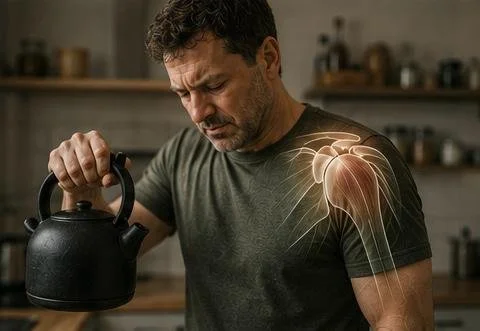
Shoulder weakness can make it difficult to lift your arm overhead, carry objects or perform activities that previously felt straightforward. Some people notice the shoulder tires more quickly or that they can no longer generate the same strength as before.
Weakness can develop gradually alongside pain or occur more suddenly following an injury. Sometimes pain itself can limit how well the shoulder muscles work, while more noticeable or persistent weakness may occur with a rotator cuff tear or biceps tendon injury.
Rotator cuff and biceps tendon tears can develop gradually over time or occur more suddenly following an injury such as a fall, heavy lift or forceful movement. Depending on the type of injury, rehabilitation can play an important role in restoring strength and function, although some tears may require further investigation or specialist assessment.
You may notice:
Difficulty lifting your arm overhead
Weakness lifting or carrying objects
A shoulder that tires more quickly than usual
Pain accompanied by noticeable weakness
Sudden weakness following an injury
Shoulder Pain During Gym & Sport
Shoulder pain is one of the most common reasons people stop going to the gym, but it doesn't always mean you have to.
Whether you're struggling with bench press, overhead press, pull-ups, swimming or CrossFit, shoulder pain can be influenced by training load, technique, shoulder mobility or simply asking more of the tissues than they're currently prepared for.
Modifying is usually more useful than stopping. That might mean changing range, grip or angle on the movements that provoke symptoms while keeping the ones that don't, then gradually rebuilding load as the shoulder tolerates more.

You may notice:
Pain during bench press or other pressing exercises
Pain during overhead pressing
Pain during pull-ups, rows or lat pulldowns
Pain during swimming or throwing
Symptoms after increasing training volume or intensity
Pain lying on the shoulder after training
Reduced confidence with heavier or overhead movements
Shoulder Pain at Work
Shoulder pain can become increasingly noticeable during the working day, particularly when your day involves long periods at a desk, driving, lifting and carrying or regularly reaching overhead. Symptoms may build as the day goes on or become more noticeable during particular tasks.
For desk-based work, prolonged periods in one position, limited movement and the demands of computer work can contribute to symptoms. Regularly changing position and moving throughout the day can often be more useful than trying to maintain one “perfect” posture.
For more physically demanding work, repeated lifting, carrying, reaching, pushing, pulling or working overhead may aggravate symptoms when the shoulder isn't currently coping well with the workload. Similar demands can occur outside work when caring for children or helping family members.

You may notice:
Shoulder pain that builds throughout the working day
Pain during prolonged desk or computer work
Pain lifting or carrying at work
Pain reaching or working overhead
Discomfort after longer periods of driving
Pain when carrying children or caring for family members
After Shoulder Surgery
Recovery after shoulder surgery varies depending on the type of surgery, stage of recovery and activities you want to return to. Rehabilitation plays an important role in rebuilding movement, strength and confidence as you progress.

You may benefit from rehabilitation if you're:
Recovering from rotator cuff surgery
Recovering after shoulder stabilisation or labral repair
Recovering from a shoulder replacement
Recovering following other tendon or ligament surgery
Struggling with stiffness or weakness after surgery
Looking to return to work, the gym, sport or everyday activities
Hands-on treatment can help with pain, stiffness and surrounding muscular tightness, alongside rehabilitation to progressively rebuild movement, strength and function. Treatment will be adapted to your procedure and stage of recovery, while working within your surgeon's post-operative guidelines and any restrictions they've provided.
How We Treat Shoulder Pain
Treatment may combine hands-on techniques to help with pain and restricted movement, with exercises to improve shoulder mobility, strength and confidence.
Your assessment helps guide what you need. We have a broad range of treatment techniques and tools available, allowing treatment to be adapted to you rather than following a set approach. Shoulder problems can vary considerably, so what helps a painful but well-moving shoulder may be very different from what's appropriate for a stiff or frozen shoulder.
What Patients Say
Shoulder FAQs
-
Not always. Many shoulder problems can be diagnosed through a thorough assessment without the need for an MRI or X-ray. If I feel imaging would help confirm a diagnosis or change your treatment, I'll discuss this with you and advise on the most appropriate next steps.
-
Not usually. While it may be sensible to avoid movements that significantly increase your pain for a short period, completely resting the shoulder can sometimes slow recovery. In many cases, keeping the shoulder moving within comfortable limits and gradually returning to activity leads to better long-term outcomes.
-
Yes. Pain felt in the shoulder isn't always caused by the shoulder itself. Problems affecting the neck can sometimes refer pain into the shoulder or arm, which is why part of your assessment involves making sure we're treating the correct area.
-
Often, yes. In many cases, it's possible to continue exercising with temporary modifications rather than stopping completely. During your assessment, we'll discuss which exercises are safe to continue, which may need adjusting and how to return to full training as your shoulder improves.
-
It depends on what's causing your shoulder pain, how long you've had it and your goals. Some people improve within a few sessions, while others with more persistent or complex problems may require longer. After your assessment, I'll give you an honest idea of what I expect and review your progress as treatment continues.
-
Most shoulder pain isn't an emergency. However, you should seek urgent medical advice if your shoulder pain follows a significant injury causing obvious deformity, if you develop sudden weakness after trauma, or if your shoulder pain is accompanied by chest pain, shortness of breath, dizziness or feeling generally unwell, as this may indicate a more serious medical condition.
Not Sure What's Causing Your Shoulder Pain?
Shoulder pain can have a number of different causes, and you don’t need to know exactly what’s wrong before booking. That’s what the assessment is for.
GET IN TOUCH
Ready to Get Started?
Whether you’re dealing with pain, stiffness, injury, or simply want to move better, we’re here to help. Get in touch and we’ll guide you in the right direction.
☎︎︎ Phone: 0203 773 5310
/ 07983 656 671
✉︎︎ Email: info@jigsawosteopathy.com
⌖︎ Clinic location: 70 Seaton Rd, Hayes, UB3 1NU
➜︎ Directions: View on Google Maps →
◷︎ Opening Hours: By Appointment Only | Monday – Thursday | 9am - 7pm
◎︎ Instagram: @osteo.arj
◉︎ Facebook: Jigsaw Osteopathy Clinic