
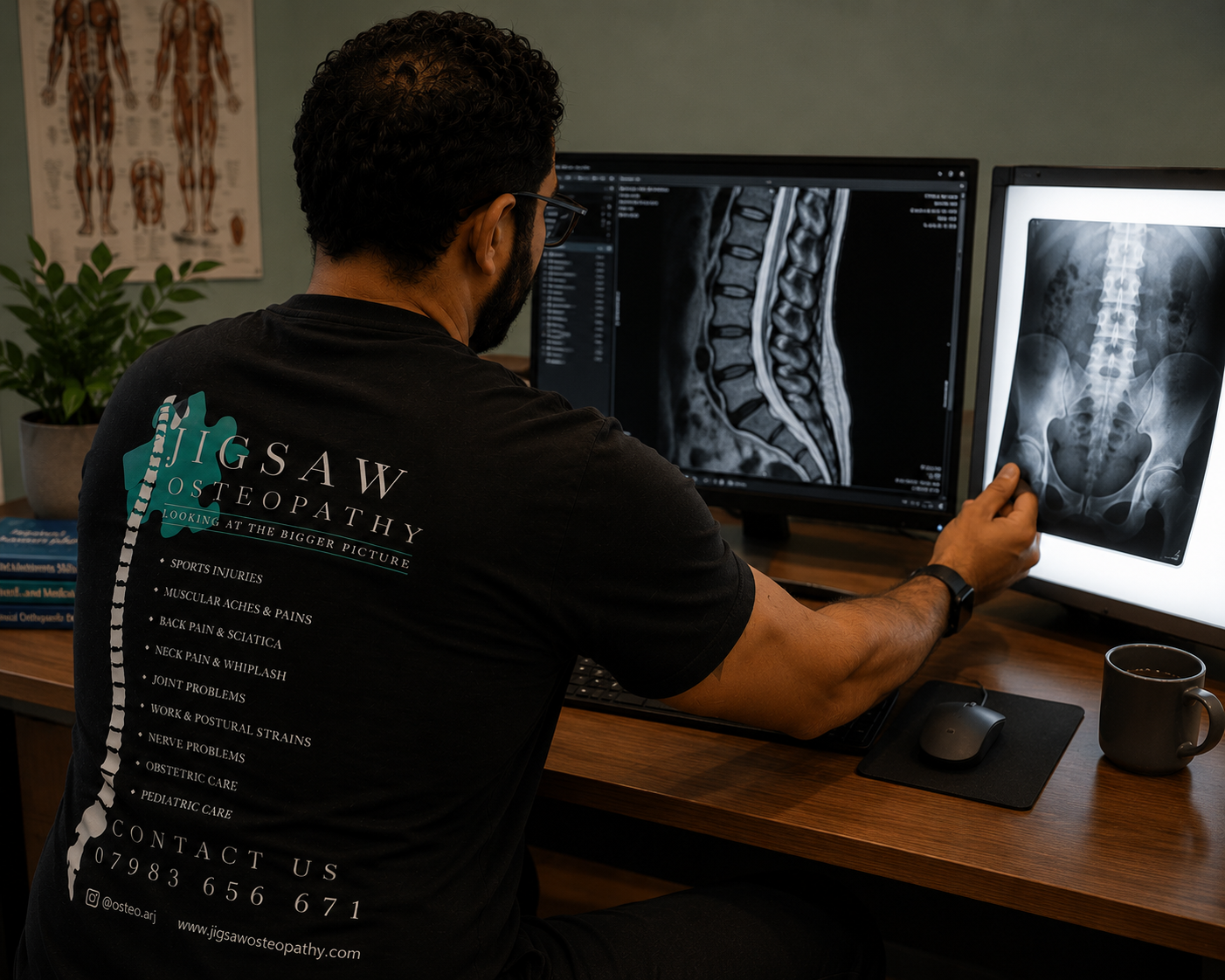
Whether your wrist or hand pain started gradually or after an injury, I'll help identify what's causing your symptoms, find the right treatment and get you back to doing what matters most.
Wrist & Hand Pain Treatment in Hayes, West London
Our wrists and hands are involved in almost everything we do, from typing and driving to lifting weights, carrying shopping and opening jars. When pain develops, even simple everyday tasks can become frustrating.
Types of Wrist and Hand Pain
Some wrist and hand problems develop gradually through repetitive movements or overuse, while others occur suddenly after a fall or injury. Sometimes symptoms such as tingling, numbness or weakness may also be caused by irritation of the nerves or even referred from the neck. A thorough assessment looks beyond the painful area to identify what's driving your symptoms before deciding on the most appropriate treatment.
Wrist & Hand Navigation
The Painful Wrist & Hand
Pain around the wrist or hand can develop for many different reasons. Sometimes it begins gradually after weeks or months of repetitive gripping, lifting or typing, while other times it follows a minor injury that never seems to settle.
Although the pain may be felt in a similar area, the underlying cause can vary considerably, which is why identifying the source of your symptoms is so important.

Whether you're lifting weights, carrying your children, working with tools or simply opening a jar, wrist and hand pain can quickly begin to affect your confidence and ability to carry out everyday activities.
You may notice:
Pain when gripping, lifting or twisting
Pain around the thumb, wrist or fingers
Difficulty opening jars or turning door handles
Pain during sport, gym or manual work
Tenderness or swelling around the wrist or hand
De Quervain's Tenosynovitis
De Quervain's tenosynovitis affects the tendons that move your thumb as they pass along the thumb side of the wrist. It commonly develops through repeated gripping, lifting or twisting movements and is frequently seen in new parents, gym-goers and people whose work involves repetitive hand use.
Simple everyday tasks such as lifting a child, opening jars, wringing out a cloth or carrying shopping bags can become surprisingly painful, with symptoms often worsening the more the thumb is used.
Wrist Tendinopathy
The tendons around the wrist can become irritated when they're repeatedly overloaded faster than they can recover. Rather than developing after one specific injury, symptoms usually build up gradually over time.
Pain is often felt during gripping, lifting, twisting or weight-bearing through the hand and may linger after activity. It's commonly seen in people who lift weights, perform repetitive manual work or spend long periods using tools or equipment.
Thumb Osteoarthritis
Arthritis at the base of the thumb is one of the most common causes of hand pain, particularly as we get older. As the joint gradually changes over time, activities that rely on grip and pinch strength can become increasingly difficult.
Many people notice discomfort when opening jars, turning keys, fastening buttons or holding heavier objects. Stiffness first thing in the morning and reduced grip strength are also common.
Trigger Finger
Trigger finger develops when one of the finger tendons becomes irritated and no longer glides smoothly through its surrounding sheath. As a result, the finger or thumb may catch, click or even lock during movement before suddenly releasing.
Many people notice symptoms are worse first thing in the morning before gradually easing as the hand warms up, although more persistent cases may continue throughout the day.
TFCC Injury
The triangular fibrocartilage complex (TFCC) is a group of ligaments and cartilage that helps stabilise the little finger side of the wrist. Injury commonly occurs after a fall onto an outstretched hand, heavy lifting or repeated twisting movements.
Pain is usually felt on the little finger side of the wrist and may be accompanied by clicking, reduced grip strength or discomfort when rotating the forearm, pushing yourself up from a chair or lifting heavier objects.
Ganglion Cyst
A ganglion cyst is a fluid-filled lump that commonly develops around the wrist or hand. Although many are painless, others can become uncomfortable, particularly if they press on nearby structures or are repeatedly knocked during everyday activities.
Some people notice the lump changing size over time, becoming more noticeable after activity before reducing again during periods of rest.
The Stiff Wrist & Hand
If your wrist or hand feels stiff rather than simply painful, it may be due to changes within the joints themselves or the surrounding tissues. Stiffness can develop gradually over time or occur following an injury, fracture or surgery, making everyday tasks increasingly difficult.
Whether you're reaching into your pocket, fastening clothing, writing or gripping objects, reduced movement can quickly begin to affect your independence and confidence.

You may notice:
Difficulty bending or straightening the wrist
Reduced finger movement
Pain or stiffness after periods of rest
Reduced grip strength
Difficulty carrying out everyday activities
Wrist & Finger Osteoarthritis
Wrist and finger osteoarthritis gradually develops as the cartilage within the joints wears over time. As the joints become stiffer and less mobile, everyday activities such as gripping, writing, opening jars or turning keys can become increasingly difficult.
Many people notice aching, stiffness or swelling around the wrist or finger joints, while others develop enlarged or knobbly finger joints over time. Symptoms often develop gradually over a number of years and may be worse first thing in the morning or after periods of inactivity before easing as the joints begin to move.
Post-Traumatic Wrist Stiffness
Following a fracture, ligament injury or surgery, scar tissue and reduced joint mobility can limit movement within the wrist. This can make returning to work, sport and everyday activities more challenging, particularly when grip strength and confidence have also been affected.
The Numb or Weak Hand
Not every wrist or hand problem causes pain alone. Tingling, numbness or weakness may occur if one of the nerves supplying the hand becomes irritated or compressed. In some cases, symptoms that appear to come from the wrist or hand may actually originate from the neck, which is why a thorough assessment looks at the whole upper limb rather than focusing on one area.
You may notice:
Tingling or numbness in the fingers
Pins and needles, particularly at night
Weak grip strength
Dropping objects unexpectedly
Difficulty with fine motor tasks

Carpal Tunnel Syndrome
Carpal tunnel syndrome occurs when the median nerve becomes compressed as it passes through a narrow tunnel at the wrist. The median nerve provides sensation to the thumb, index finger, middle finger and part of the ring finger, as well as helping control some of the muscles at the base of the thumb.
Symptoms commonly include numbness, tingling, burning or pins and needles affecting these fingers. Many people notice symptoms are worse at night or after prolonged driving, typing, gripping or using tools, often finding themselves shaking their hand to relieve the discomfort. In more persistent cases, grip strength may reduce, making everyday tasks such as fastening buttons, holding a cup or opening jars more difficult.
Guyon's Canal Syndrome (Ulnar Tunnel Syndrome)
Guyon's canal syndrome occurs when the ulnar nerve becomes compressed as it passes through a narrow tunnel at the wrist. The ulnar nerve provides sensation to the ring and little fingers and supplies many of the small muscles responsible for grip strength and fine hand movements.
Symptoms commonly include numbness, tingling or altered sensation affecting the ring and little fingers, alongside weakness when gripping objects or carrying out more precise tasks such as writing, typing or fastening buttons. Depending on the cause, symptoms may develop gradually or follow prolonged pressure through the palm, repetitive activities or cycling.
Cubital Tunnel Syndrome
Cubital tunnel syndrome occurs when the ulnar nerve becomes irritated or compressed as it passes around the inside of the elbow. This nerve supplies sensation to the little finger and half of the ring finger, so irritation can cause numbness, tingling and weakness in the hand.
Symptoms are often worse when the elbow is bent for long periods, such as when talking on the phone, sleeping or driving. Some people also notice a weaker grip or find themselves dropping objects more frequently.
The Injured Wrist or Hand
The wrist and hand are particularly vulnerable to injury because we instinctively use them to protect ourselves during a fall.
Whether you've landed on an outstretched hand, injured your wrist playing sport or twisted it while lifting something heavy.
Injuries can range from relatively minor sprains to fractures and ligament damage.
Although some injuries settle with time, others benefit from early assessment to ensure they heal properly and don't lead to ongoing pain, stiffness, weakness or reduced hand function.
Identifying the type of injury early can also help determine whether further investigations or specialist referral may be needed.

You may notice:
Pain after a fall or impact
Swelling or bruising
Difficulty gripping objects
Reduced movement
Tenderness around the wrist or thumb
Wrist Ligament Sprains
A wrist sprain occurs when the ligaments that support the joint are stretched or torn, most commonly following a fall onto an outstretched hand. Depending on the severity of the injury, symptoms may include pain, swelling, bruising and difficulty putting weight through the wrist.
Scaphoid Fracture
The scaphoid is one of the small bones within the wrist and is particularly vulnerable following a fall onto an outstretched hand. Pain is often felt around the thumb side of the wrist and may be mistaken for a simple sprain, making early assessment important.
Skier's Thumb
Skier's thumb is an injury affecting the ligament on the inside of the thumb, usually caused by a fall or forceful stretching of the thumb away from the hand. Gripping, pinching and everyday hand function can become painful and unstable until the ligament has healed.
Wrist & Hand Pain at the Gym
Whether you're lifting weights, climbing, doing CrossFit or training for a specific sport, your wrists and hands are involved in almost every upper body exercise. Pressing, pulling, gripping and carrying all place significant forces through the joints, tendons and ligaments of the wrist and hand.
Pain doesn't always mean you need to stop exercising, but it can be a sign that the tissues are struggling to cope with the demands being placed on them.
In many cases, continuing to push through pain can make symptoms more persistent, while stopping all activity isn't usually necessary either.
The goal is to identify what's driving your symptoms, temporarily modify the exercises or training load that are aggravating them, and gradually rebuild strength so you can return to training with confidence.

You may notice:
Pain during gripping or lifting
Pain with push-ups, bench press or overhead pressing
Discomfort during pull-ups, rows or deadlifts
Reduced grip strength affecting heavier lifts
Symptoms that linger after training or flare up the following day
Wrist & Hand Pain at Work
Whether you spend your day typing at a computer, using tools on a building site, treating patients, driving or carrying out repetitive manual tasks, your wrists and hands rarely get a break. Repetitive movements, prolonged gripping, awkward working positions and sustained computer use can all place increased stress on the joints, tendons and nerves of the wrist and hand.
Treatment isn't just about reducing pain. We also look at why your symptoms have developed in the first place. This may involve discussing your work routine, workstation or ergonomics, identifying repetitive movements that are overloading the tissues, and advising on practical changes that allow the wrist or hand to recover while helping you remain productive at work.

You may notice:
Pain during typing or mouse use
Pain using tools or lifting equipment
Difficulty gripping objects
Symptoms that worsen throughout the day
Reduced hand strength
The aim is to help you return to working comfortably and confidently, without constantly worrying about aggravating your symptoms or relying on painkillers to get through the day.
After Wrist or Hand Surgery
Recovering from wrist or hand surgery can take time, particularly when movement, grip strength and confidence have been affected. Whether you've had a tendon repair, carpal tunnel release, trigger finger release, fracture fixation or thumb surgery, rehabilitation plays an important role in helping you regain function.
You may benefit from rehabilitation if you're:
Recovering after carpal tunnel release
Recovering following tendon or ligament repair
Recovering after wrist or hand fracture surgery
Experiencing pain or stiffness after surgery
Returning to work, hobbies or sport
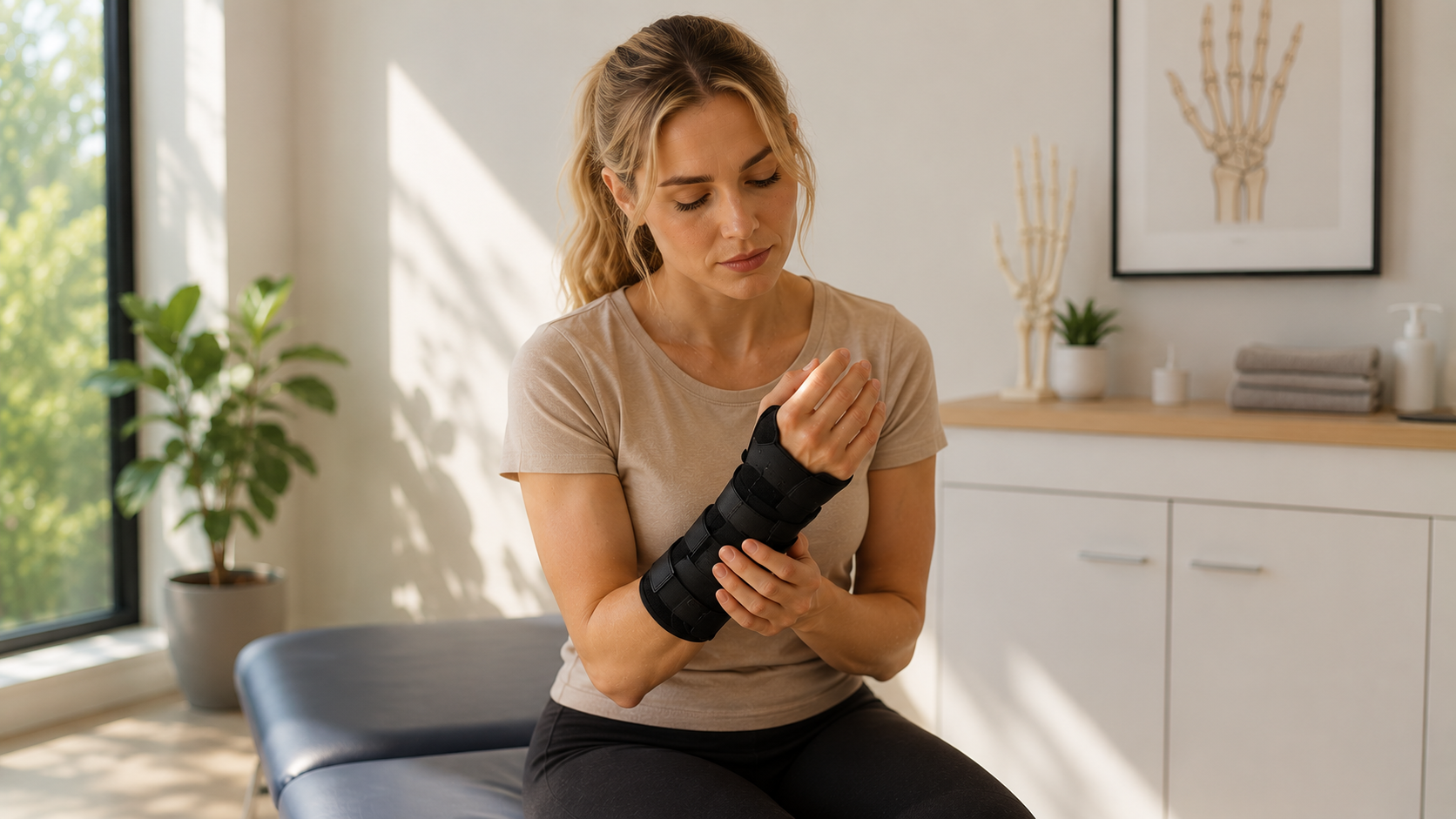
Recovery takes time, and every operation is different. I'll work closely with your surgeon's rehabilitation guidelines to help you progress safely, regain function and get back to the activities that matter most.
What Patients Say
Wrist & Hand FAQs
-
Not always. Many wrist and hand problems can be diagnosed through a detailed history and physical examination. Scans are usually recommended if we suspect a fracture, significant ligament injury, or if your symptoms aren't improving as expected.
-
Not necessarily. Carpal tunnel syndrome typically causes numbness, tingling or burning affecting the thumb, index finger and middle finger, often worsening at night. Wrist pain without these symptoms is more commonly related to a tendon, ligament or joint problem.
-
Yes. Ongoing pain after a fall shouldn't be ignored, particularly if it's around the thumb side of the wrist. Some injuries, such as scaphoid fractures or ligament damage, can be difficult to detect initially but may require further assessment to ensure they heal properly.
-
In many cases, yes. Rather than stopping all activity, it's often possible to temporarily modify your training while the injured tissues recover. We'll help you identify which movements are aggravating your symptoms and develop a plan to get you back to full activity safely.
-
Prolonged computer use, repetitive movements and poor workstation setup can all contribute to wrist and hand pain. During your assessment, we'll discuss your work routine, ergonomics and practical changes that may help reduce strain while keeping you productive.
-
Most wrist and hand conditions improve with conservative treatment and don't require surgery. If we believe your symptoms would benefit from further investigations or specialist input, we'll explain your options and refer you to the appropriate healthcare professional where necessary.
Not Sure What's Causing Your Elbow Pain?
Every Elbow problem is different, so treatment starts with understanding what's causing your symptoms. Once we've identified the source of your symptoms, I'll explain what's most likely causing them and recommend the treatment that's most appropriate for you.
You don't need to know exactly what's wrong before booking an appointment , that's what the assessment is for.
👉 Learn more about what to expect from treatment
GET IN TOUCH
Ready to Get Started?
Whether you’re dealing with pain, stiffness, injury, or simply want to move better, we’re here to help. Get in touch and we’ll guide you in the right direction.
☎︎︎ Phone: 0203 773 5310
/ 07983 656 671
✉︎︎ Email: info@jigsawosteopathy.com
⌖︎ Clinic location: 70 Seaton Rd, Hayes, UB3 1NU
➜︎ Directions: View on Google Maps →
◷︎ Opening Hours: By Appointment Only | Monday – Thursday | 9am - 7pm
◎︎ Instagram: @osteo.arj
◉︎ Facebook: Jigsaw Osteopathy Clinic