
TMJ & Jaw Pain Treatment in Hayes, West London
Jaw pain, clicking, stiffness or difficulty opening your mouth can affect everything from eating and speaking to sleeping comfortably. Treatment is tailored to help settle your symptoms, restore comfortable jaw movement and make everyday activities easier.
TMJ & Jaw Pain
Jaw pain can affect things you do constantly without thinking - eating, talking, yawning or simply getting through the day without clenching. Some people primarily notice jaw or facial pain, while others experience clicking or popping, difficulty opening their mouth, clenching or grinding, headaches or symptoms extending into the neck.
Problems affecting the jaw joints and surrounding muscles are commonly grouped under the term temporomandibular disorders (TMD). Symptoms can arise from the joint itself, the surrounding muscles or a combination of both.
Who you'll see
You'll be seen by Arjun Mehra, dual-qualified osteopath and chartered physiotherapist. Your treatment and rehabilitation come from the same person, start to finish, with over a decade of experience helping people reduce pain and stay active.
Appointments usually available within 48 hours, Monday - Thursday.
Understanding Your Jaw & TMD
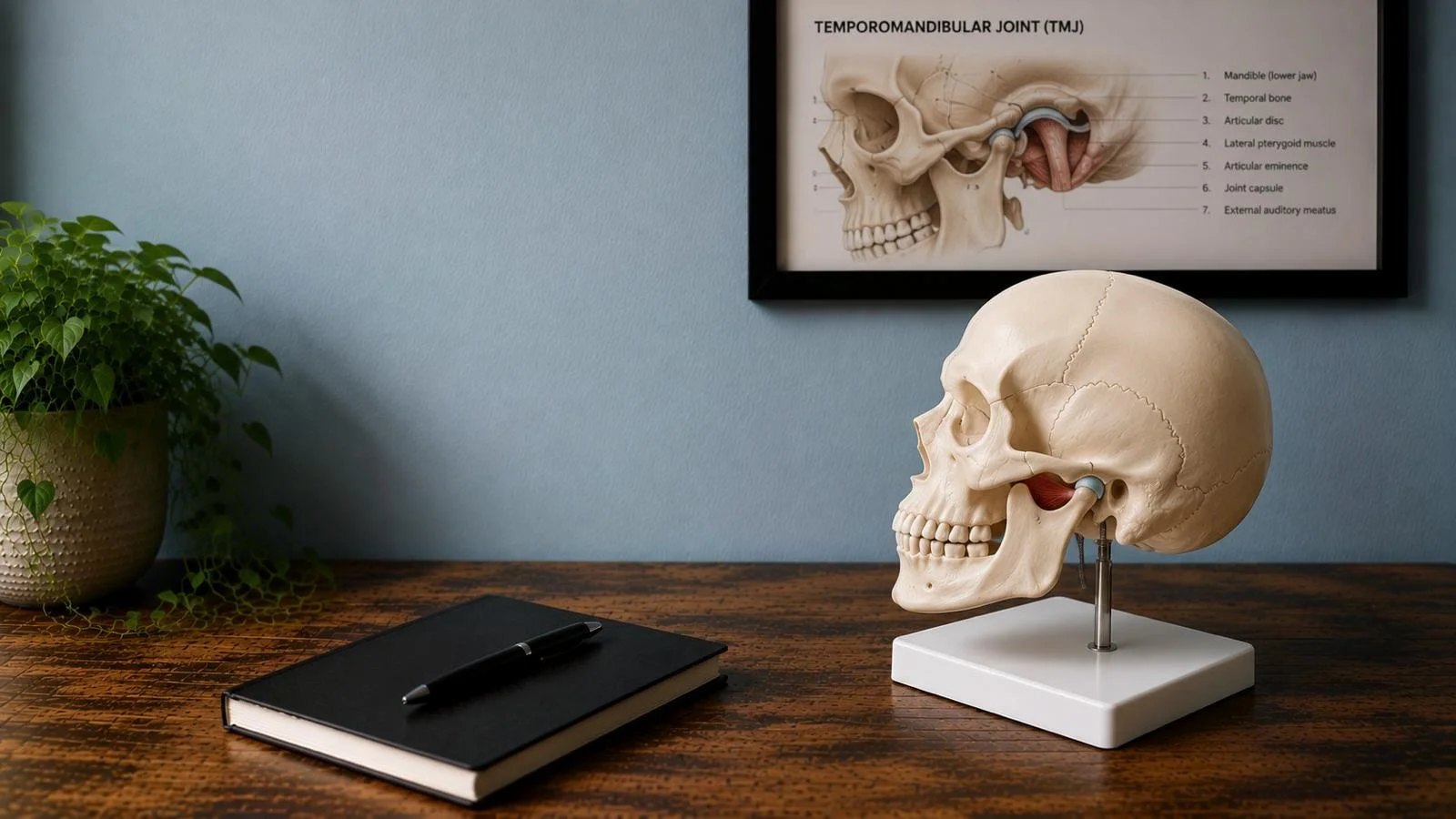
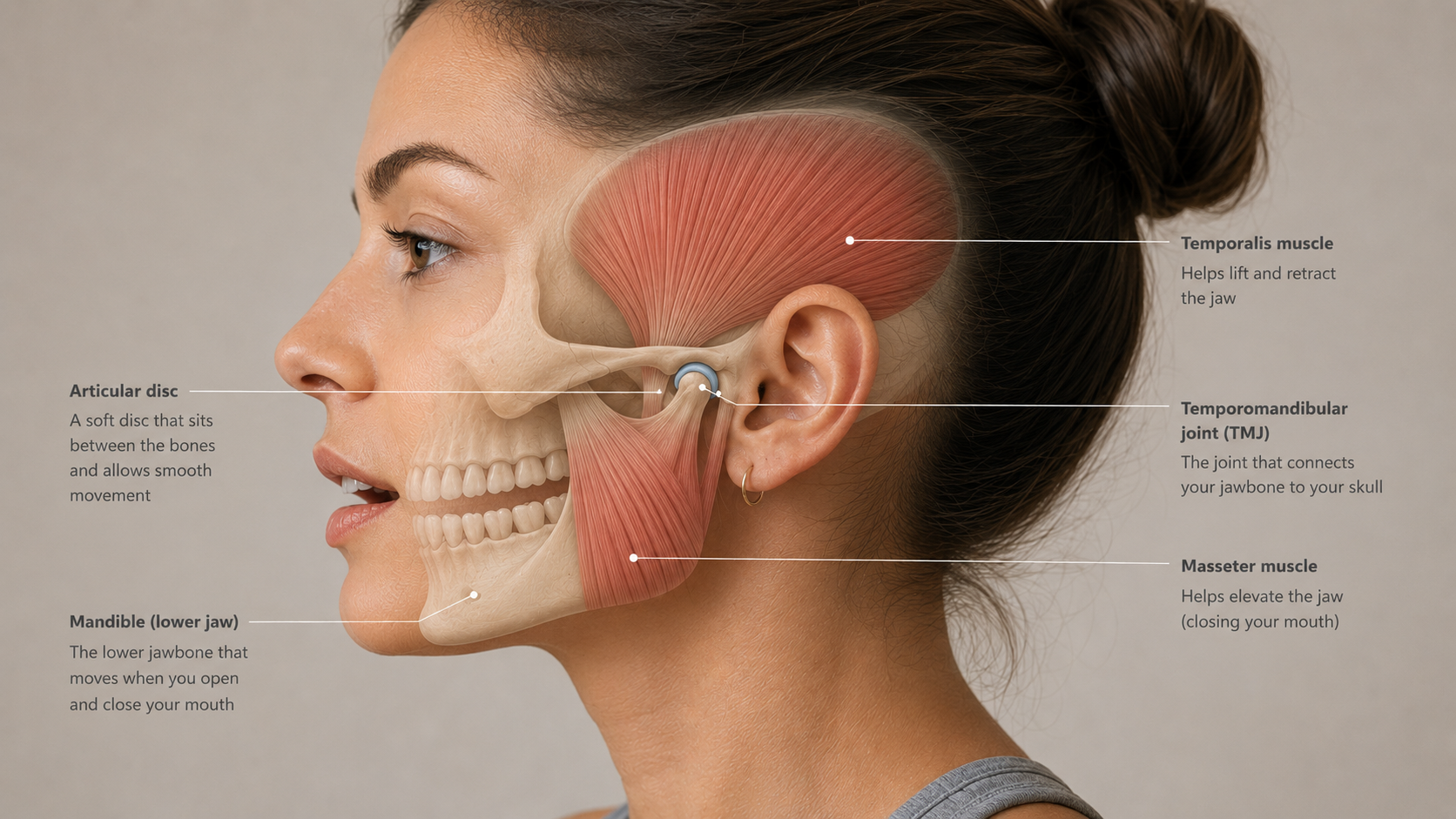
The temporomandibular joints (TMJs) connect your lower jaw - the mandible - to the skull. You have one joint on each side, positioned just in front of your ears.
The TMJ is more than a simple hinge. As you open your mouth, the jaw both rotates and glides forwards, allowing you to talk, chew, yawn and move your jaw from side to side. A small articular disc sits within each joint and helps the surfaces of the jaw move smoothly against each other.
The jaw is also controlled by several muscles, including the masseter and temporalis, alongside deeper muscles responsible for opening, closing and controlling movement of the jaw. These muscles are used repeatedly throughout the day when you talk, chew, swallow, yawn or clench your teeth.
What is TMD?
Temporomandibular disorder (TMD) is an umbrella term used to describe a range of problems affecting the jaw joints, chewing muscles and surrounding structures.
For some people, symptoms are predominantly muscular, with aching, tightness or tenderness around the jaw, face or temples. For others, the joint itself may be more involved, while many people experience a combination of both.
TMD can develop gradually or sometimes follow things such as dental treatment, trauma, prolonged mouth opening or changes in clenching and grinding habits. In some cases, there isn't one obvious event that explains why symptoms started.
Because TMD can involve different structures and present differently from person to person, understanding how your symptoms started, what movements or activities aggravate them and how your jaw is moving can help build a clearer picture of what's going on.
Common Symptoms of TMD & Jaw Pain
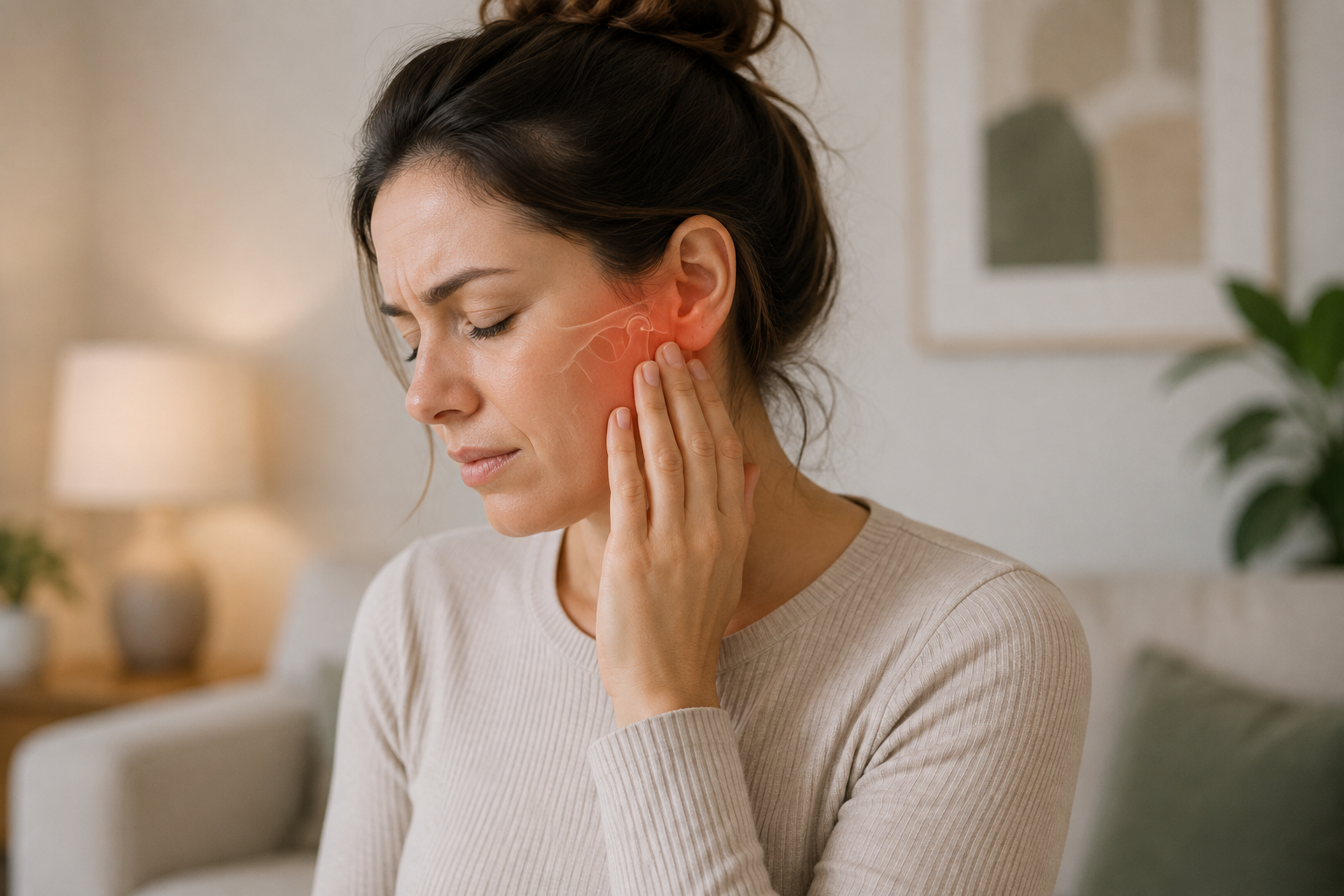
TMD can present in different ways depending on whether symptoms are predominantly related to the jaw joint, surrounding muscles or a combination of both. Pain isn't always felt directly over the joint itself and may be experienced around the jaw, face, temples or just in front of the ear.
Some people mainly notice pain or muscular tightness, while others experience clicking, popping, stiffness or difficulty opening their mouth comfortably. Symptoms may become more noticeable with activities such as chewing, yawning or prolonged talking, and headaches or neck symptoms can sometimes occur alongside jaw pain.
You may notice:
Pain or aching around the jaw
Facial pain or tenderness
Pain around or just in front of the ear
Clicking or popping when opening or closing your mouth
Difficulty opening your mouth comfortably or fully
The jaw feeling stiff or tight
Pain or fatigue when chewing
The jaw catching or occasionally locking
Clenching or grinding your teeth
Headaches around the temples or side of the head
Neck pain or stiffness alongside your jaw symptoms
What About Clicking, Popping & Locking?
Clicking and popping are very common and don't necessarily mean that anything is damaged. Some people have jaw noises for years without pain or any difficulty using their jaw.
In some cases, clicking can relate to the way the small articular disc within the TMJ moves as the mouth opens and closes. If clicking is painless and your jaw otherwise moves comfortably, treatment isn't always necessary.
Where clicking occurs alongside pain, restricted opening, catching or locking, however, it may be useful to assess how the jaw joint and surrounding muscles are functioning.
Some people experience brief episodes where the jaw catches or feels stuck, while others notice a more significant restriction in how far they can open their mouth. If your jaw becomes acutely locked and you cannot open or close it normally, prompt dental or medical assessment may be appropriate.
Clenching, Grinding & Bruxism
Bruxism is the term used to describe clenching or grinding of the teeth. It can happen while you're awake or during sleep, and some people aren't aware they're doing it until they develop symptoms or their dentist notices signs of tooth wear.
Repeated clenching or grinding can increase the workload placed on the jaw muscles and temporomandibular joints. For some people, this can contribute to aching or tightness around the jaw and temples, muscular fatigue, headaches or discomfort when chewing.
Awake bruxism may involve clenching the teeth or holding the jaw muscles tense during activities such as working, concentrating, exercising or periods of stress. Becoming aware of these habits and allowing the jaw to relax more frequently can sometimes form part of management.
Sleep bruxism is different and isn't simply a habit that you can consciously stop while you're asleep. If you're grinding your teeth at night, you may only become aware of it because someone hears you grinding, you wake with jaw symptoms, or your dentist identifies changes to your teeth.

You may notice:
Jaw aching or tightness, particularly on waking
Tenderness around the jaw, cheeks or temples
Tired or fatigued jaw muscles
Headaches, particularly around the temples
Pain or discomfort when chewing
Becoming aware that you're clenching during the day
Grinding noises noticed by a partner while you're sleeping
Tooth wear or sensitivity identified by your dentist
What Can You Do About Clenching & Grinding?
Where daytime clenching appears to be contributing, we can look at when and why you're clenching, as well as practical strategies to reduce unnecessary tension through the jaw during the day.
Treatment may also address associated jaw pain, muscular tension and movement restrictions, while exercises can be used to help improve comfortable jaw movement and control.
If there are signs of tooth wear, dental damage or significant sleep bruxism, it's also important to involve your dentist. They can assess your teeth and advise whether something such as a mouth guard or dental splint may be appropriate.
The Jaw, Neck & Headaches
This doesn't mean that every headache is caused by the jaw or every jaw problem comes from the neck. However, when symptoms overlap, looking at the jaw, neck and surrounding areas together can provide a more complete picture than focusing only on the area that hurts.
Depending on what we find, treatment may involve the jaw, neck and upper back, particularly where pain, stiffness or movement restrictions in these areas appear relevant.
If headaches are a significant part of your symptoms, you can read more about tension-type headaches, cervicogenic headaches and migraine on our Headaches & Migraine page.
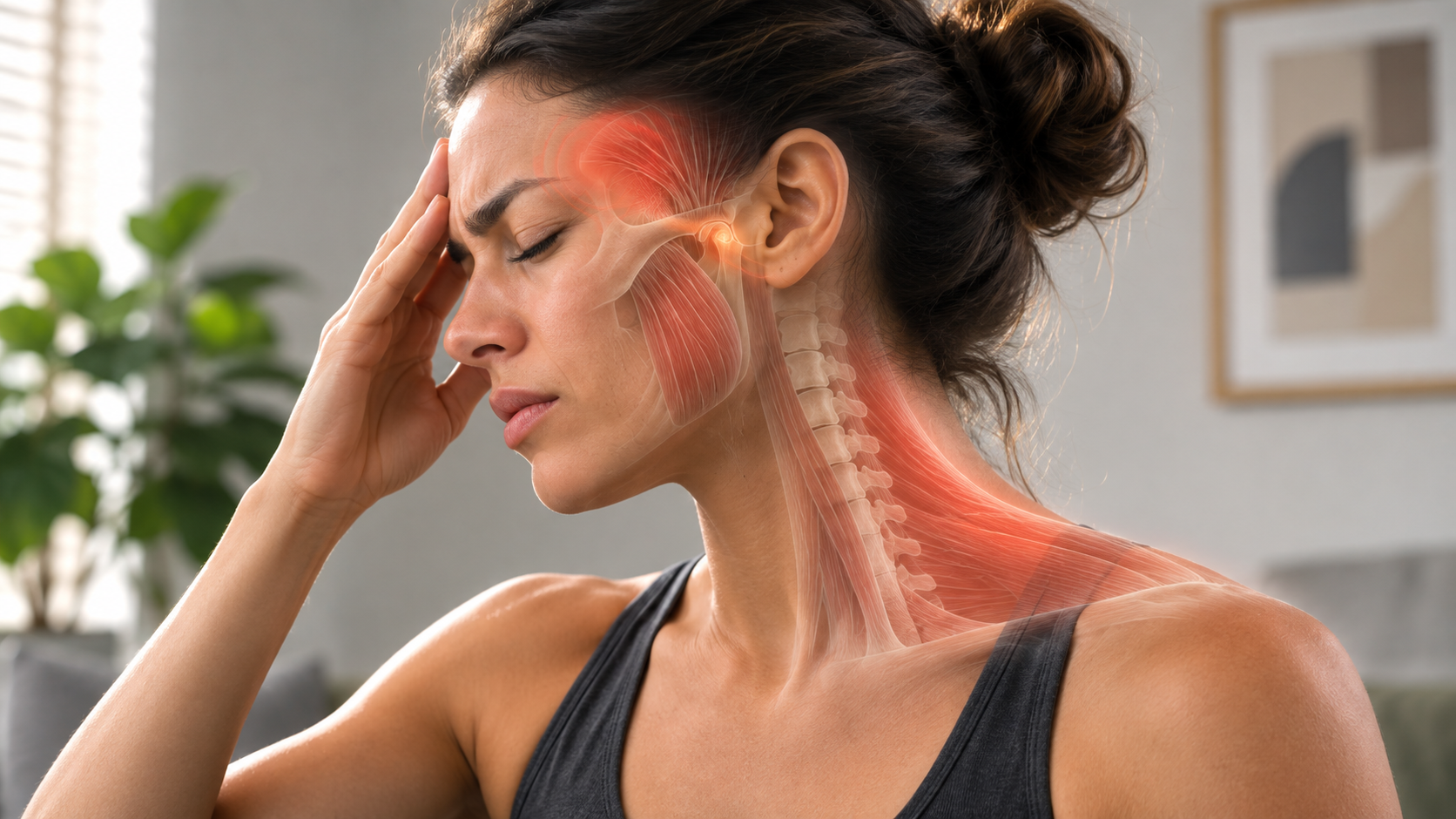
The jaw doesn't work completely in isolation. The jaw, head and neck are closely connected, and it's common for people experiencing TMD to also report headaches, neck pain or stiffness.
The muscles responsible for chewing extend around the jaw, cheeks and temples, which is one reason jaw problems can sometimes be associated with pain around the face or side of the head. Clenching and grinding may also contribute to muscular tenderness around these areas.
The jaw and upper neck also share closely related nerve pathways, which can help explain why symptoms from these regions sometimes overlap. For some people, neck pain, stiffness or reduced movement may occur alongside their jaw symptoms and may be relevant to the overall presentation.
How We Treat TMJ & Jaw Pain
Treatment is tailored to what appears to be contributing to your symptoms. Your assessment may include looking at how your jaw opens and closes, the movement of the TMJs, the surrounding muscles and, where relevant, the neck and upper back.
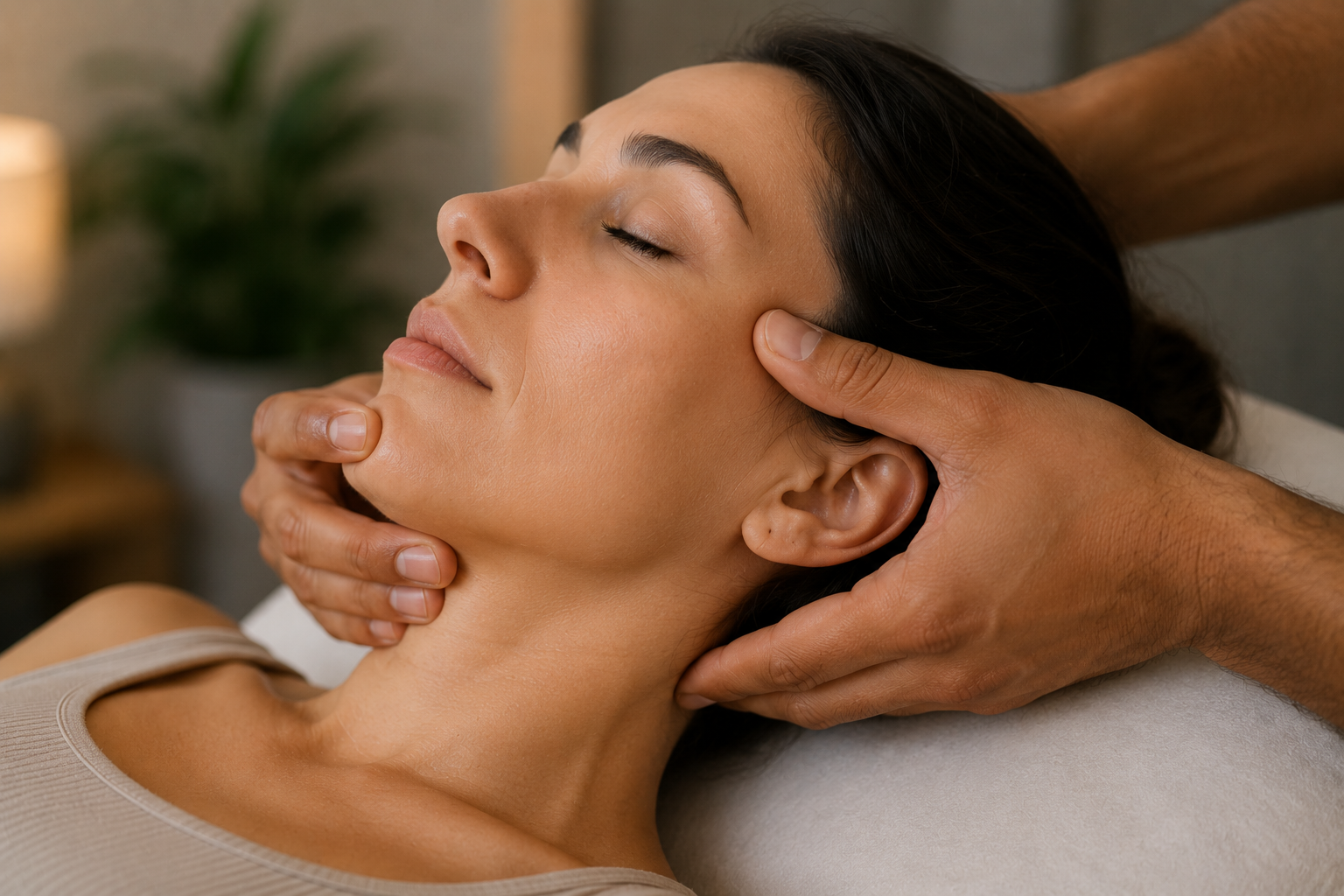
Hands-On Treatment
Hands-on treatment may involve a combination of external and intra-oral techniques.
External treatment can involve working with the TMJs and muscles around the jaw, face and temples, as well as the neck and upper back where these areas appear relevant to your symptoms.
In some cases, intra-oral techniques may also be useful. These involve working carefully on specific muscles and tissues from inside the mouth, allowing access to areas that are difficult to reach externally.
Intra-oral treatment isn't necessary for everyone. I'll explain what the technique involves and why I think it may be useful before doing it, and it will only ever be performed with your consent and if you're comfortable with it.
Exercise & Rehabilitation
Treatment isn't limited to hands-on techniques. Depending on your presentation, exercises may be used to help improve comfortable jaw movement, mobility and control, alongside exercises for the neck or upper back where appropriate.
We may also look at factors such as clenching or grinding, chewing habits, prolonged mouth opening and other activities that appear to aggravate your symptoms.
The aim is to help reduce pain, restore comfortable jaw movement and make everyday activities such as eating, talking and yawning easier.
When to Seek Medical Attention for Jaw Pain
Most jaw pain and TMD symptoms can be managed conservatively and aren't caused by anything serious. However, some symptoms are better assessed by a dentist, GP or another healthcare professional.
Seek medical or dental advice if you experience:
Significant swelling around the jaw, face or inside the mouth
Jaw or facial pain alongside a fever or feeling generally unwell
Significant tooth pain, dental swelling or signs of a dental infection
New jaw symptoms following significant trauma
Persistent or progressively worsening symptoms that don't appear to be settling
Unexplained changes in sensation, such as persistent numbness around the face or jaw
Seek urgent medical or dental assessment if your jaw becomes locked open or closed and you cannot move it normally, particularly if this occurs following trauma or is associated with significant pain or swelling.
If your symptoms don't appear appropriate for musculoskeletal treatment, I'll explain this and help guide you towards the appropriate medical or dental assessment.
What Patients Say
TMJ & Jaw Pain FAQs
-
TMJ stands for temporomandibular joint, the joint connecting your lower jaw to your skull just in front of each ear.
TMD — temporomandibular disorder — is the broader term used to describe problems affecting the jaw joints, chewing muscles and surrounding structures.
People often use “TMJ” to describe jaw problems generally, although technically TMJ refers to the joint itself.
-
Jaw clicking can occur for several reasons and commonly relates to how the joint and articular disc move as the mouth opens and closes.
Clicking is very common and, if it isn't painful and your jaw moves normally, it doesn't necessarily mean that something is damaged or needs treatment.
If clicking occurs alongside pain, locking or restricted movement, assessment may be useful.
-
Chewing and yawning require movement through the TMJ and activity from the surrounding muscles.
If the joint or chewing muscles are painful or sensitive, these activities may temporarily increase symptoms. Looking at where the pain occurs and how the jaw moves can help identify which areas may be contributing.
-
Clenching and grinding can increase the load placed on the jaw joints and muscles around the jaw and temples and may contribute to headaches or facial pain in some people.
If headaches occur alongside jaw pain, clicking, tenderness, tooth grinding or difficulty opening your mouth, the jaw may be worth assessing as part of the overall picture.
-
Yes. Repeated clenching or grinding can increase the workload placed on the jaw muscles and joints and may contribute to pain, muscular fatigue or headaches for some people.
However, bruxism is only one potential contributor to jaw symptoms, so not everyone with TMD will be clenching or grinding their teeth.
-
Jaw problems can occur alongside headaches and facial pain, particularly around the temples where some of the major chewing muscles are located.
However, there are many different causes and types of headache, so having jaw symptoms doesn't automatically mean the TMJ is responsible for your headaches.
-
The jaw and neck are closely related, and neck symptoms frequently coexist with TMD. Movement, muscular tension and sensitivity around the neck may therefore be relevant for some people with jaw pain.
That doesn't mean every jaw problem originates from the neck, but assessing both areas can be useful when symptoms overlap.
-
Not necessarily. A jaw that clicks but is pain-free and moves normally doesn't always require treatment.
If clicking is accompanied by pain, restricted movement, catching or locking, assessment may be more useful than simply trying to eliminate the noise itself.
-
A mouth guard or dental splint may be appropriate for some people, particularly where sleep bruxism or dental wear is present.
This should be assessed by a dentist, who can examine your teeth and advise whether a splint is appropriate. Musculoskeletal treatment may still be useful for associated jaw pain, muscular symptoms or movement restrictions.
-
Yes. Musculoskeletal treatment can be helpful for some TMD presentations, particularly where joint movement, muscular pain, neck symptoms or movement restrictions form part of the problem.
Treatment may include hands-on techniques to the jaw and surrounding muscles, treatment of the neck or upper back where appropriate, exercise and advice tailored to your individual presentation.
-
Intra-oral treatment involves working carefully with certain muscles and tissues from inside the mouth. This can allow access to areas involved in jaw movement that are difficult to reach externally.
It isn't necessary for everyone. If I think an intra-oral technique may be appropriate, I'll explain what I'm proposing and why beforehand. It will only be performed with your consent and if you're comfortable proceeding.
Not Sure What's Causing Your Jaw Pain or TMD?
Jaw pain and TMD symptoms can have a number of different causes, and you don't need to know exactly what's wrong before booking.
An assessment can help identify whether the jaw joints, surrounding muscles, neck or other factors may be contributing to your symptoms.
GET IN TOUCH
Ready to Get Started?
Whether you’re dealing with pain, stiffness, injury, or simply want to move better, we’re here to help. Get in touch and we’ll guide you in the right direction.
☎︎︎ Phone: 0203 773 5310
/ 07983 656 671
✉︎︎ Email: info@jigsawosteopathy.com
⌖︎ Clinic location: 70 Seaton Rd, Hayes, UB3 1NU
➜︎ Directions: View on Google Maps →
◷︎ Opening Hours: By Appointment Only | Monday – Thursday | 9am - 7pm
◎︎ Instagram: @osteo.arj
◉︎ Facebook: Jigsaw Osteopathy Clinic