
Upper Back Pain Treatment in Hayes, West London
Whether your upper back feels painful, stiff or uncomfortable during work, exercise or everyday life, treatment is tailored to help you get out of pain, restore comfortable movement and get back to doing what matters most.
Upper back pain can make everyday activities surprisingly difficult - sitting comfortably at a desk, turning to reverse the car, taking a deep breath or sleeping properly. Pain may be felt directly over the spine, to one side of the upper back, between or around the shoulder blades, or sometimes around the ribs and chest wall.
Symptoms may appear suddenly after an awkward movement, lifting or exercise, or gradually build with prolonged sitting, work or changes in activity.
Who you'll see
You'll be seen by Arjun Mehra, dual-qualified osteopath and chartered physiotherapist. Your treatment and rehabilitation come from the same person, start to finish, with over a decade of experience helping people reduce pain and stay active.
Appointments usually available within 48 hours, Monday - Thursday.
The Painful Upper Back
Upper-back pain may feel like a localised ache or sharper pain around the thoracic spine, or spread across the muscles and around the shoulder blades.
Movement of the upper back, neck, shoulders and ribs can all influence symptoms.
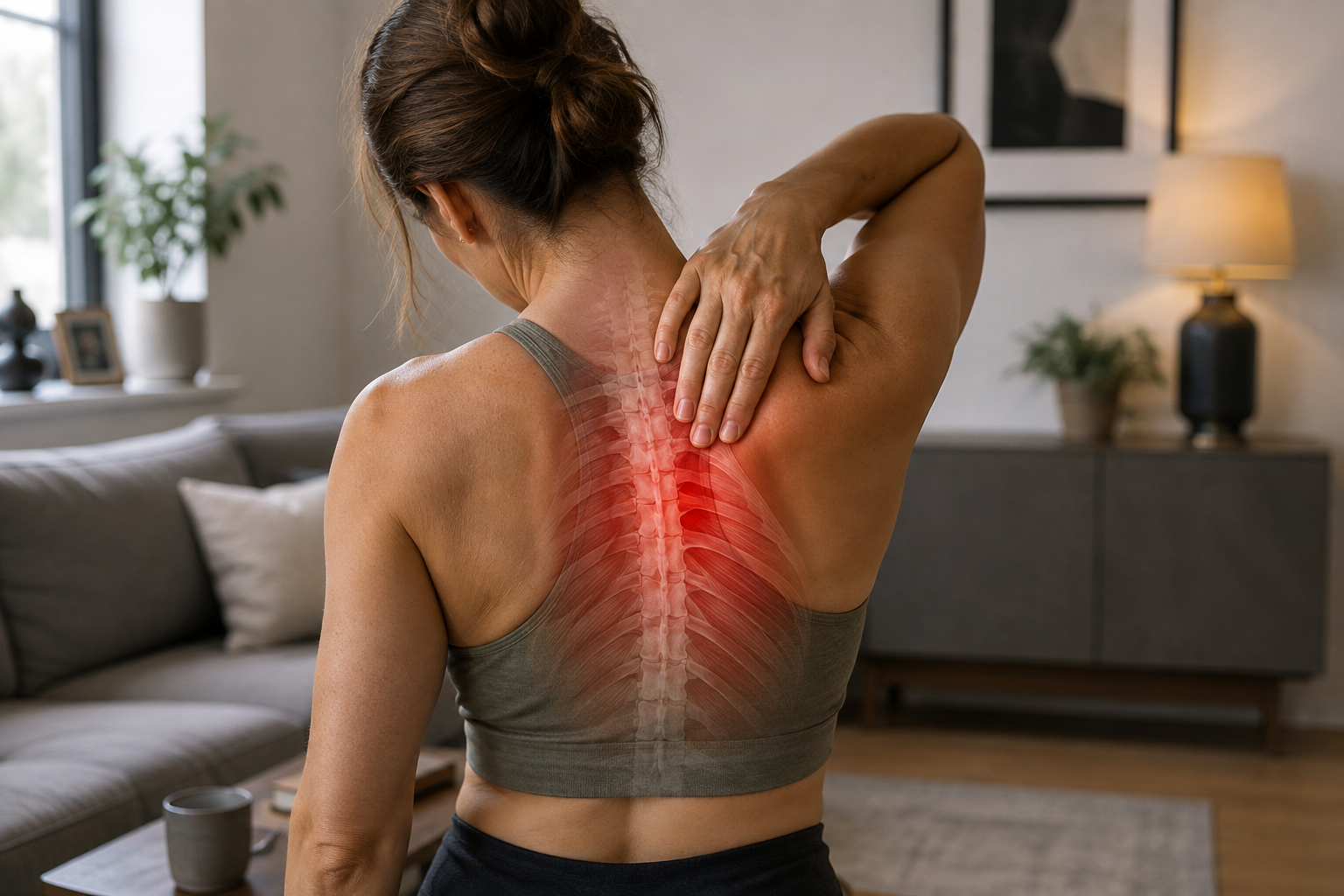
You may notice:
Aching or pain between the shoulder blades
Pain predominantly on one side of the upper back
Tender or tight muscles around the thoracic spine
Pain when twisting or reaching
Discomfort with prolonged sitting
Pain with certain shoulder or arm movements
Discomfort around the ribs or with deeper breathing
Thoracic Joint & Facet Pain
The facet joints are small joints between the vertebrae that help guide movement through the upper and middle back. These joints can sometimes become painful or irritated, causing a relatively localised ache or sharper pain around the spine, often more noticeable on one side.
Symptoms may be aggravated by rotation, extension or prolonged positions, and pain can sometimes be felt slightly away from the affected area.
Muscular Upper Back Pain
The muscles of the upper back help control movement of the spine, shoulder blades, ribs and shoulders. A sudden movement, unfamiliar exercise, increased physical load or prolonged time in one position can sometimes leave these muscles painful, tight or sensitive.
Symptoms may be felt beside the spine, across the upper back or around the shoulder blades.
Thoracic Disc Problems
Disc bulges and herniations can occur in the thoracic spine, although symptomatic thoracic disc problems are much less common than those affecting the neck or lower back.
You may see terms such as disc bulge, protrusion, herniation or prolapse on an MRI report. These findings don't automatically mean the disc is responsible for your symptoms.
When symptomatic, pain may be felt around the middle or upper back and can sometimes travel around the rib cage or trunk.
The Stiff Upper Back
A stiff upper back can make turning, reaching and moving your shoulders feel more restricted than usual.
The thoracic spine naturally has less movement than the neck or lower back because of its connection with the rib cage, but comfortable movement through this area remains important for everyday activity, exercise and overhead movement.
Stiffness may develop gradually or follow an episode of upper-back pain, injury or a period of reduced activity.
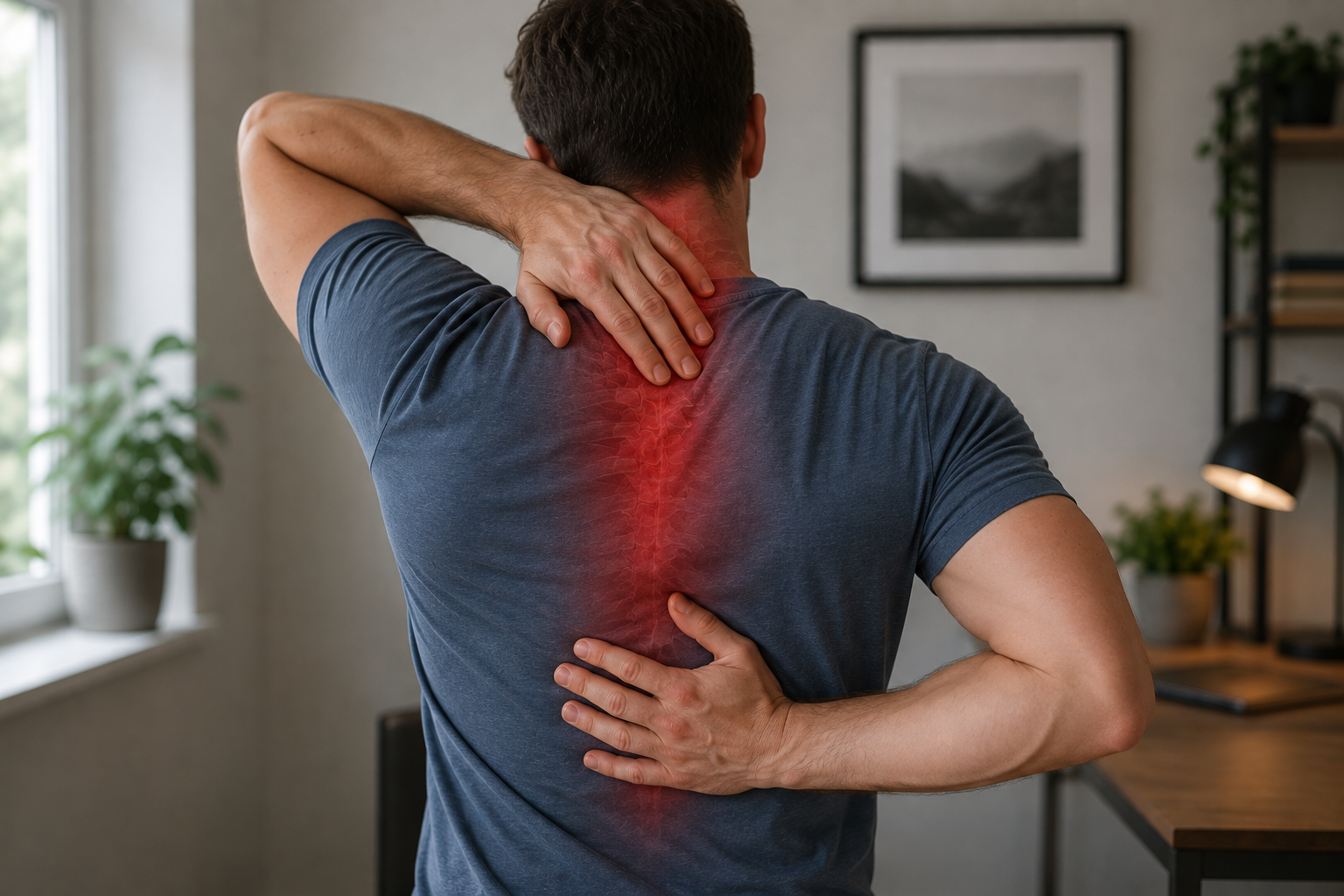
You may notice:
Difficulty rotating comfortably from side to side
A stiff or restricted feeling between the shoulder blades
Stiffness after prolonged sitting or driving
Feeling the need to repeatedly stretch or move your upper back
Difficulty comfortably reaching overhead
Your upper back loosening once you start moving
Restrictions during gym exercises or sport
Muscular Tightness & Joint Stiffness
Stiffness through the upper back can involve the muscles, joints or a combination of both. After prolonged time in one position, changes in activity, unfamiliar exercise or a previous episode of upper-back pain, the area can sometimes feel tight or restricted.
This may be felt through the middle or upper back, between or around the shoulder blades, or alongside the thoracic spine. Some people also describe repeatedly wanting to stretch, move, crack or massage the area to temporarily relieve the feeling of tightness.
Thoracic Osteoarthritis & Degenerative Changes
Age-related changes can develop within the joints and discs of the thoracic spine over time. You may see terms such as thoracic spondylosis, spondyloarthrosis or degenerative changes on an X-ray or MRI report.
These findings are common as we get older and don't automatically mean they're responsible for your symptoms. When associated with symptoms, you may notice aching, stiffness or reduced movement, particularly after periods of inactivity, which may ease once you start moving.
Rib & Chest Wall Pain
The ribs connect to the thoracic spine through small joints at the back of the chest and move alongside the spine and surrounding muscles during breathing, twisting and everyday movement.
Pain arising from the ribs, rib joints or surrounding muscles can be felt around the back of the rib cage, alongside the spine or shoulder blade, or travel around towards the side of the chest.
Symptoms may develop after coughing, exercise, lifting or an awkward movement, but can also develop gradually.

You may notice:
Localised pain around a rib or beside the thoracic spine
Pain wrapping around the side of the rib cage
Discomfort when twisting or reaching
Pain with coughing or sneezing
Discomfort when taking a deeper breath
Tenderness around the ribs or muscles between them
Pain following exercise, lifting or an awkward movement
Costovertebral & Rib Joint Pain
Each rib connects with the thoracic spine through small joints at the back of the rib cage. These costovertebral and costotransverse joints allow the ribs to move alongside the thoracic spine during breathing and movement.
Pain around these joints may be felt as a localised ache or sharper pain beside the spine or around the shoulder blade, and can sometimes spread around the side of the rib cage.
Intercostal & Chest Wall Muscle Pain
The intercostal muscles sit between the ribs and help move and stabilise the rib cage during breathing and movement. Other muscles around the chest wall and upper back also attach to the ribs and can contribute to pain in this area.
These muscles can sometimes become painful or strained following exercise, repetitive twisting, lifting, prolonged coughing or a sudden increase in activity. Pain may be relatively localised or spread along part of the rib cage.
When Chest or Upper Back Pain Needs Medical Attention
Most upper-back and rib pain is musculoskeletal, but pain around the chest or upper back can sometimes have other causes.
Seek urgent medical attention for new or severe chest pain, particularly if it feels like pressure, heaviness or tightness, or occurs alongside shortness of breath, sweating, nausea, faintness, or pain spreading into the arm, jaw or back.
Sudden unexplained difficulty breathing, coughing up blood, severe symptoms following significant trauma, or feeling acutely unwell also require urgent medical assessment.
Scoliosis & Upper Back Pain
Scoliosis describes a sideways curvature of the spine accompanied by rotation of the vertebrae. It can affect the thoracic spine, lumbar spine or both, and the shape and size of the curve can vary considerably from person to person.
Some scoliosis is structural, including idiopathic scoliosis that commonly develops during adolescence, while spinal curves can also develop or change later in life.
Having scoliosis doesn't automatically mean you'll experience pain. Many people with scoliosis remain active and experience few or no symptoms. For others, differences in how the spine, rib cage and surrounding muscles move and manage load may be associated with aching, stiffness or muscular fatigue.
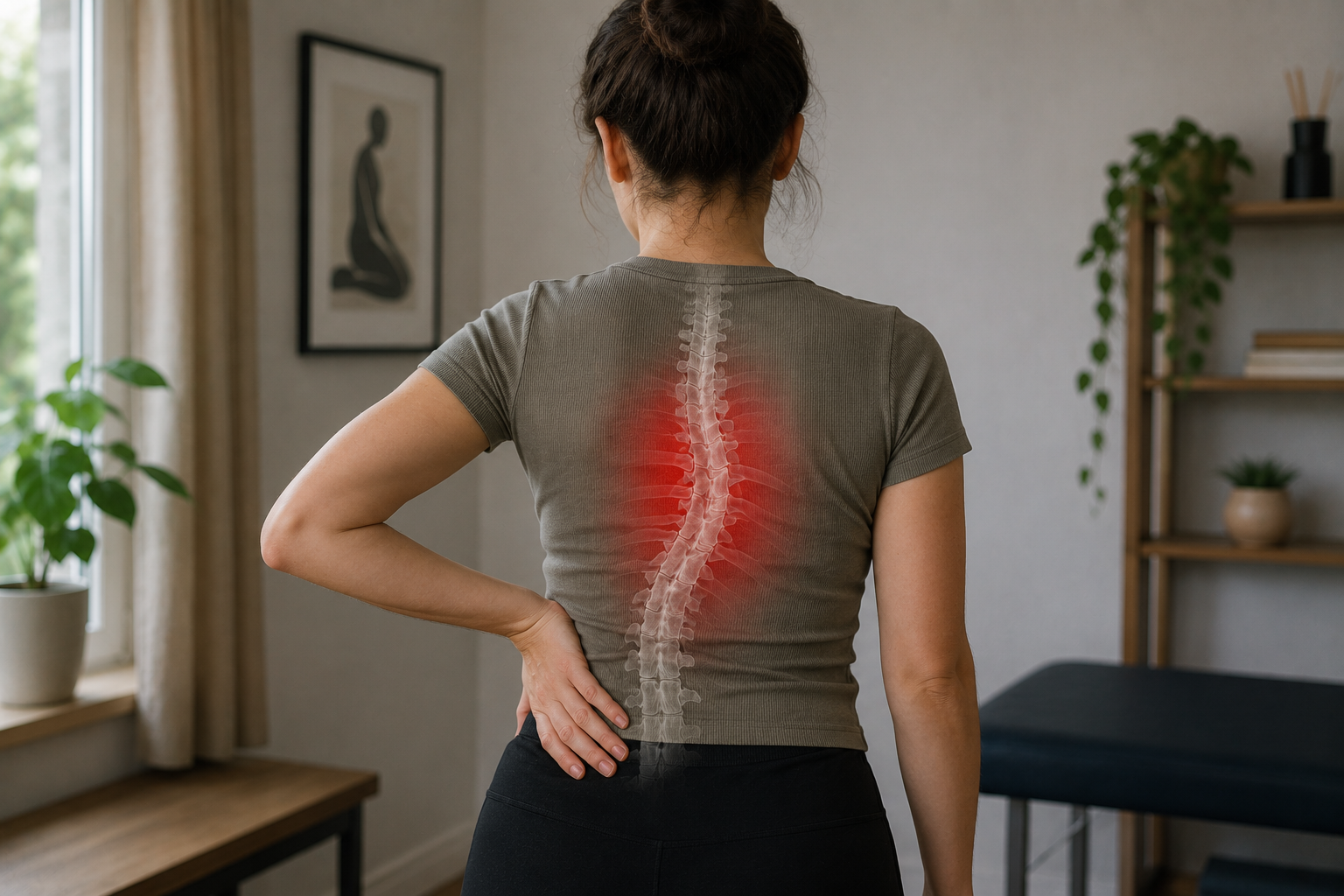
You may notice:
Aching or stiffness through the upper or lower back
One shoulder sitting higher than the other
One shoulder blade or side of the rib cage appearing more prominent
Differences in the shape of the waist or trunk
Muscular aching or fatigue after prolonged sitting or standing
Differences in movement from one side to the other
Discomfort during certain activities, exercise or sport
Managing Scoliosis-Related Pain & Stiffness
When scoliosis is associated with pain or stiffness, management can focus on the symptoms and activities that are affecting you rather than trying to “straighten” or correct the curve.
Hands-on treatment can be used to help relieve pain, muscular tightness or stiffness, alongside rehabilitation aimed at improving comfortable movement, strength and physical capacity. The overall goal is to help you remain active and manage the demands of everyday life, work, exercise or sport.
Posture & Upper Back Pain
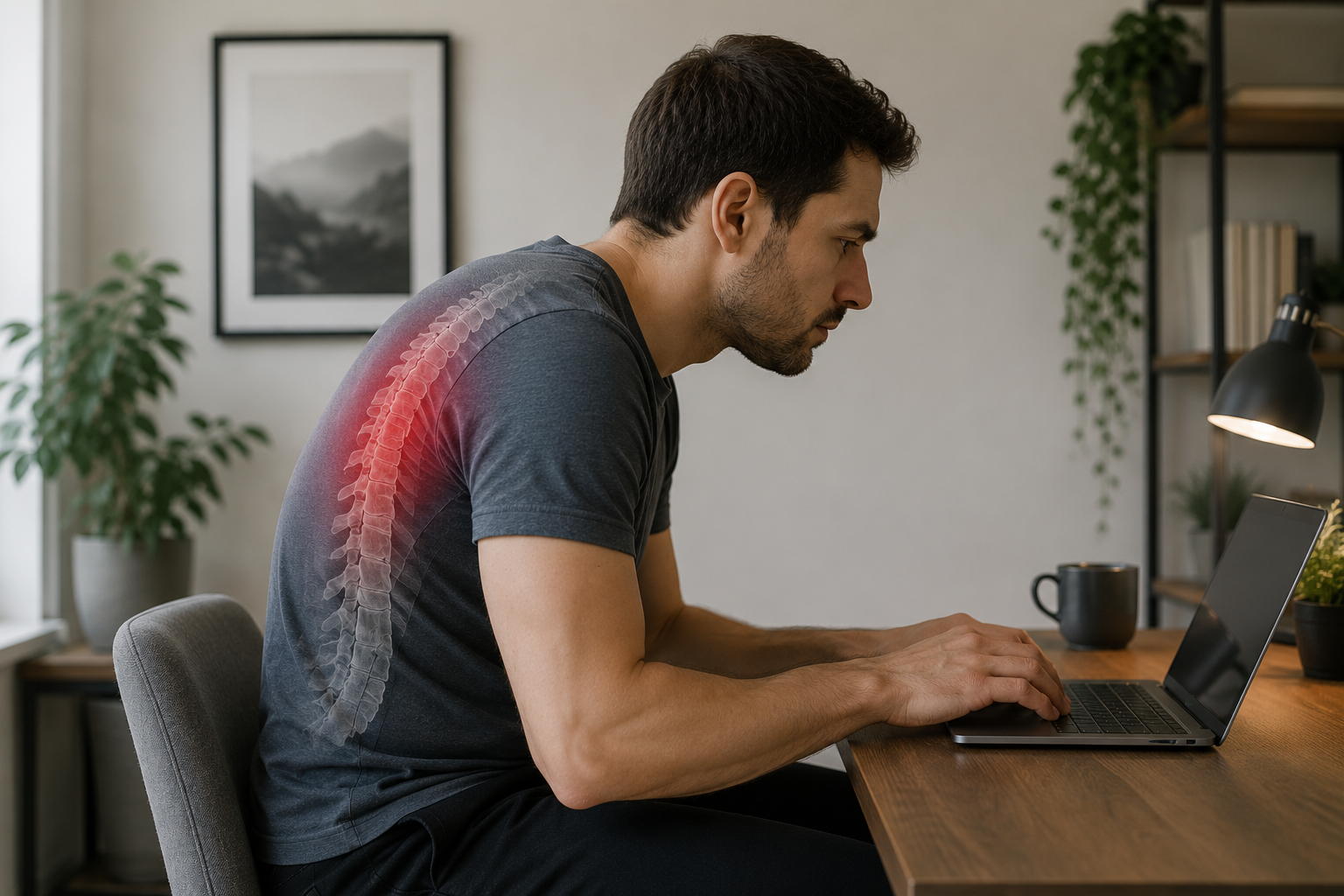
Upper-back pain and stiffness are commonly associated with desk work, prolonged sitting and spending long periods using laptops, phones or other screens. You may notice aching between the shoulder blades, tension across the upper back or a feeling that you're becoming increasingly stiff as the day progresses.
However, posture is rarely as simple as being told that you “sit badly” or need to sit up straight. There isn't one perfect posture that everyone needs to maintain, and even a supposedly good position can become uncomfortable if you stay there for long enough.
Often, what matters is how long you spend in one position, how frequently you move, your workstation setup and how well your body is currently able to tolerate the demands placed on it.
The upper back also works closely with the neck, shoulder blades, shoulders and rib cage. If the thoracic spine feels particularly stiff or you're spending long periods in one position, you may notice symptoms developing across several of these areas rather than in one isolated spot.
You may notice:
Aching or stiffness between the shoulder blades
Upper-back discomfort that builds throughout the working day
Feeling increasingly stiff or “rounded” after prolonged sitting
Neck and shoulder tension alongside upper-back symptoms
Discomfort after prolonged laptop, phone or screen use
Feeling the need to repeatedly stretch, move or “crack” your upper back
Symptoms that improve when you get up and move around
It's Not About Having “Perfect” Posture
Rather than trying to hold yourself upright all day, the focus is often on finding comfortable working positions, improving your workstation setup and regularly changing position, rather than spending hours loaded in exactly the same way.
Hands-on treatment can help with pain, muscular tension and areas that feel stiff or restricted, alongside rehabilitation to improve movement, strength and your ability to comfortably tolerate the demands of work and everyday activity.
For more detail on desk posture, ergonomics, driving and how posture can relate to neck, back and headache symptoms, see our Posture-Related Pain page.
Upper Back Pain During Gym & Sport
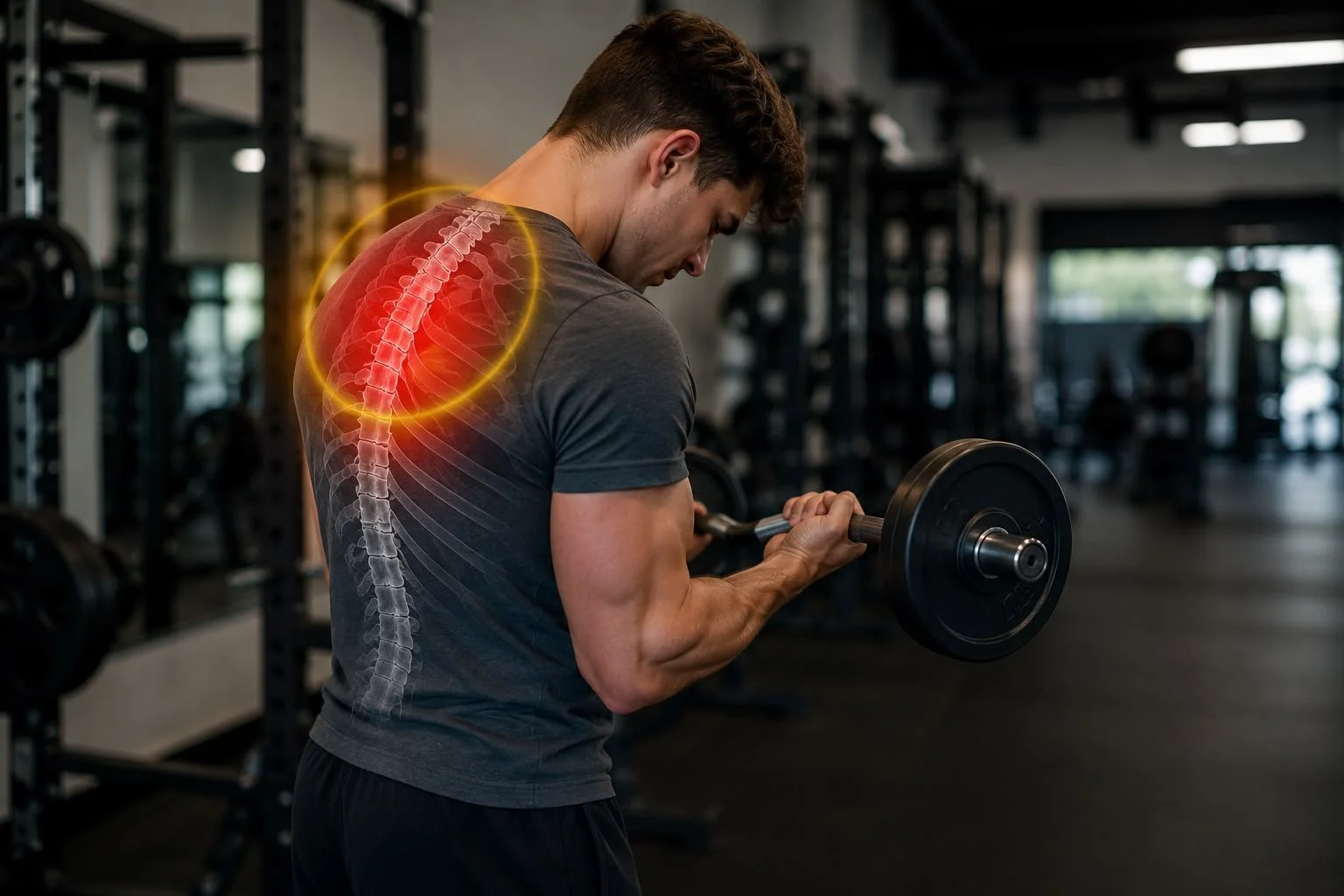
The upper back has to tolerate load through a wide range of movements, and shoulder mobility, shoulder blade movement and thoracic mobility all influence how pressing, rowing, pull-ups and Olympic lifts feel. Getting into position for a low-bar squat is another common example, if the thoracic spine and shoulders are restricted, this can often be felt across the upper back.
Symptoms often follow a sudden increase in training, heavier lifting or unfamiliar exercise. That doesn't usually mean stopping. Training can often be modified while symptoms settle, before gradually rebuilding tolerance to the movements and loads you want to return to.
You may notice:
Pain or stiffness during rows or pulling exercises
Discomfort pressing or reaching overhead
Upper-back restriction when positioning a bar for squats
Symptoms with twisting or rotational exercises
Aching or stiffness after training
Symptoms appearing as weight, volume or training frequency increases
Upper Back Pain at Work
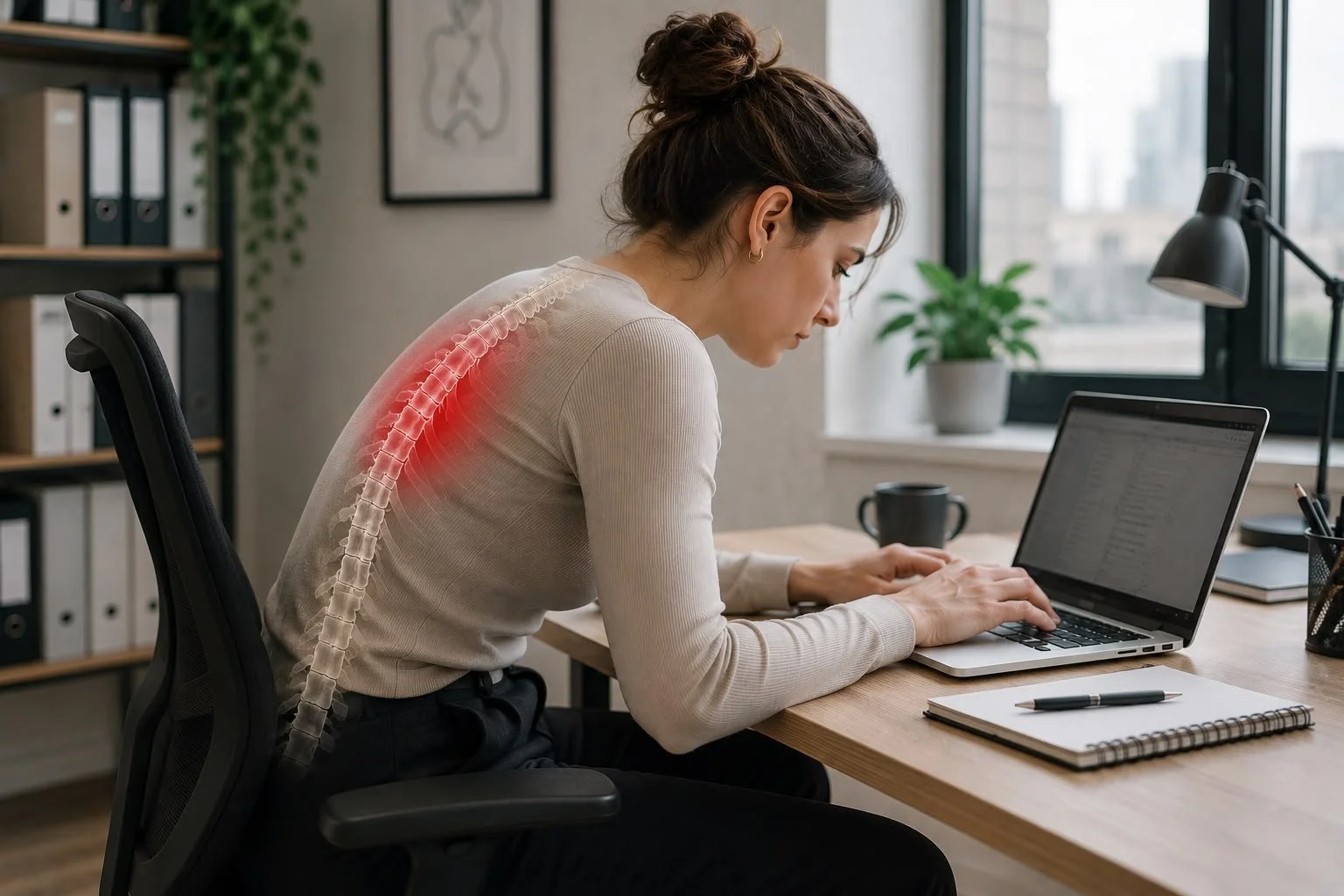
Upper-back pain can become increasingly noticeable during the working day, whether you spend hours at a desk, drive for long periods or have a more physically demanding job.
For desk-based work, there isn't one single “perfect posture” everyone needs to maintain. Workstation setup and ergonomics can be relevant, alongside regularly changing position and moving throughout the day.
For more physical jobs, repeated lifting, carrying, reaching, twisting, pushing, pulling or working overhead may aggravate symptoms, particularly during heavier or busier periods at work.
Driving and commuting can also be challenging, particularly when you're sitting for long periods or repeatedly turning and reaching.
You may notice:
Aching or stiffness that builds throughout the working day
Pain between the shoulder blades during desk work
Neck and shoulder tension alongside upper-back symptoms
Discomfort after prolonged sitting or driving
Pain with repeated lifting, carrying or twisting
Symptoms during reaching or overhead work
How We Treat Upper & Mid Back Pain
Treatment may combine hands-on techniques to help with painful or restricted joints, ribs and muscles, with exercises to improve mobility, strength and confidence through your upper and mid back.
Your assessment helps guide what you need. We have a broad range of treatment techniques and tools available, allowing treatment to be adapted to you rather than following a set approach. Because the upper back, ribs, shoulders and neck work closely together, treatment may also involve these surrounding areas where they're relevant to your symptoms. We'll consider work, training and everyday activities too, shaping treatment and rehabilitation around what you're finding difficult and what you want to get back to.
What Patients Say
Upper Back Pain FAQs
-
Pain between the shoulder blades can come from several areas, including the muscles, joints of the thoracic spine, ribs, neck and shoulders. Prolonged positions, changes in activity, exercise and irritation of local muscles or joints can all contribute.
The location of your pain can give us useful information, but it doesn't always tell us exactly which structure is responsible. Looking at what movements or activities aggravate your symptoms and how the surrounding areas are moving can help build a clearer picture.
-
Posture can influence how your upper back feels, particularly if you spend long periods sitting or working at a screen, but there isn't one universally “bad” posture that causes upper-back pain.
Often, how long you stay in one position, how frequently you move, your workstation setup, activity levels and physical capacity are more useful things to consider than trying to sit perfectly upright all day.
-
Yes. The ribs connect to the thoracic spine through small joints and are surrounded by muscles and other tissues that can become painful or irritated.
Rib-related pain may be felt beside the spine, around the shoulder blade or further around the side of the chest and can sometimes be aggravated by twisting, coughing, sneezing or taking a deep breath.
-
Yes, although symptomatic thoracic disc bulges and herniations are much less common than disc problems affecting the neck or lower back.
Disc changes can also be found on MRI scans in people without symptoms, so seeing a disc bulge on a scan doesn't automatically mean it is responsible for your pain.
-
Yes. The shoulder, shoulder blade and upper back work closely together, so some shoulder problems can be experienced as discomfort around the shoulder blade or upper-back region.
Equally, pain around the shoulder blade doesn't automatically mean there is a problem with the shoulder itself. Looking at the neck, thoracic spine, shoulder and scapular movement can help determine which areas may be contributing.
-
Moving or stretching a stiff upper back can feel helpful, and some people find that cracking the area provides temporary relief. However, feeling as though you constantly need to stretch or crack your back doesn't necessarily mean that something is “out of place.”
If stiffness repeatedly returns, it may be more useful to look at movement, strength, activity levels, prolonged positions and the demands you're placing on the area, rather than relying on repeatedly stretching or cracking it.
-
Most upper-back pain is musculoskeletal and isn't caused by anything serious. However, pain around the upper back and chest can occasionally come from other areas of the body.
New or severe chest pain, unexplained shortness of breath, significant trauma, rapidly worsening weakness or neurological symptoms, or feeling acutely unwell alongside your pain should be medically assessed rather than assumed to be a musculoskeletal problem.
Not Sure What's Causing Your Upper Back Pain?
Upper-back pain can have a number of different causes, and you don't need to know exactly what's wrong before booking. That's what the assessment is for.
GET IN TOUCH
Ready to Get Started?
Whether you’re dealing with pain, stiffness, injury, or simply want to move better, we’re here to help. Get in touch and we’ll guide you in the right direction.
☎︎︎ Phone: 0203 773 5310
/ 07983 656 671
✉︎︎ Email: info@jigsawosteopathy.com
⌖︎ Clinic location: 70 Seaton Rd, Hayes, UB3 1NU
➜︎ Directions: View on Google Maps →
◷︎ Opening Hours: By Appointment Only | Monday – Thursday | 9am - 7pm
◎︎ Instagram: @osteo.arj
◉︎ Facebook: Jigsaw Osteopathy Clinic